Law Student | Passionate about Advocacy, Legal Research & Social Justice | Future Litigator
Latest publications and insights

The Supreme Court expresses dissatisfaction with FSSAI over delays in mandatory 'Front-of-Pack' labels for high sugar and fat foods. Learn how this landmark case impacts your Right to Health and the future of food safety in India.

Supreme Court landmark ruling: Cheque bounce complainants are 'victims' under CrPC. Now, you can appeal an acquittal directly without seeking High Court's special leave. Understand your new legal rights in NI Act cases.

The Supreme Court clarifies that a bank's internal NPA classification doesn't strictly define the IBC limitation period. Learn how restructuring and balance sheet acknowledgments can extend the "Date of Default" for Section 7 applications.

Supreme Court acquits contractor in 30-year-old cement stockpiling case. The Court ruled that conviction under the Essential Commodities Act is invalid for decontrolled cement, citing major police investigative lapses.

The Supreme Court rules that an absconding accused cannot seek anticipatory bail solely because co-accused were acquitted. Read the full analysis of Balmukund Singh Gautam v. State of MP.

The Supreme Court of India rules that telecom spectrum is a "community resource" and national wealth. The IBC cannot be used to determine its ownership or control, marking a major shift in telecom insolvency laws.

The Supreme Court flags "complete failure" in ground-level enforcement of Solid Waste Management Rules. As the new 2026 Rules approach, the Court impleads top Union and State Secretaries to ensure infrastructure matches regulatory changes. A deep dive into the 2016 vs 2026 regime.

Supreme Court dismisses P&H High Court's plea against the quashing of a District Judge's compulsory retirement. Read the full analysis of the judgment on judicial service rules and Article 235.

The Supreme Court recently dismissed a PIL seeking a rehabilitation plan for disabled children leaving institutional care at 18. Read our detailed legal analysis on the JJ Act, RPwD Act, and why the Court left this to the Government's policy domain.

The Supreme Court slams Rajasthan authorities for "total inaction" against illegal sand mining, stating that official apathy pushed villagers toward violence. Read the full details of the Court's demand for officer accountability.

The Supreme Court clarifies that an accused's silence or refusal to answer an IO's questions does not mean non-cooperation. Learn how this landmark ruling protects your right to bail and silence.

Supreme Court refuses to entertain a plea against Maha Shivratri Puja at Aland Dargah, Karnataka. Learn why the court dismissed the Article 32 petition and what it means for the Places of Worship Act. Stay updated on the latest legal news.

The Supreme Court is set to decide if a Civil Judge (Senior Division) acting as a Commercial Court can hear trademark passing off suits under Section 134 of the Trade Marks Act. A crucial ruling for IPR jurisdiction in India.

The Supreme Court clarifies Section 29A of the Arbitration Act, ruling that substitution of an arbitrator is not mandatory upon termination of the mandate. Learn about the jurisdictional shift and how the "toolkit" approach saves late arbitral awards from being declared a nullity.

The Supreme Court uncovers a massive "wide racket" of fake motor accident claims (MACT) involving "planted" insured vehicles. Read how a single vehicle in Odisha exposed a potential nationwide insurance fraud involving multiple stakeholders and prompted the SC to seek systemic reforms.

Supreme Court orders reinstatement of Telangana court staff dismissed over forgery charges. The Court ruled that grave charges like forgery require strict proof and handwriting experts. Read the full analysis of the K. Rajaiah vs. Telangana High Court judgment.

The Supreme Court rules that civil suits alleging coercion, undue influence, or fraud cannot be dismissed at the start under Order VII Rule 11 CPC. Read about this landmark judgment in J. Muthurajan v. S. Vaikundarajan.

The Supreme Court rejects a plea for safeguards against inadvertent TDS defaults by property buyers under Section 194-IA. Learn why buyers of property above ₹50 lakh must be extra cautious with tax compliance and how to avoid heavy penalties.

Supreme Court blocks arbitrary evictions in Assam forests. Read about the new 7-point mandatory procedure for the State Government, the role of the Forest Rights Act, and the Court's balance between the 'Rule of Law' and 'Environmental Protection'.

Is your digital privacy at risk? The Supreme Court of India is examining a PIL challenging the Income Tax Act 2025's power to search phones, emails, and cloud storage. Read the full legal analysis of Section 247 and the fight for digital rights.

Stay updated on the Supreme Court's latest moves against Digital Arrest scams. Read about the MHA's new SOP, RBI's bank liability framework, and how the government plans to compensate cybercrime victims

The Supreme Court rules that High Courts cannot nullify past arbitral proceedings while appointing a substitute arbitrator under Section 15(2). A landmark judgment on minimal judicial interference and the IBC-Arbitration overlap. Read more for legal insights.

Communist parties (CPI and CPM) have moved the Supreme Court seeking urgent action against Assam CM Himanta Biswa Sarma for alleged hate speech and inciting economic boycott against the Miya community.

Explore the Supreme Court's landmark examination of whether the State Police or CBI should investigate multi-state financial scams. Understand the jurisdictional challenges, federal implications, and the impact on investor protection in India.

The Supreme Court has reduced the ₹2 crore compensation awarded to a model for a bad haircut at ITC Maurya to ₹25 lakh. Read the full analysis of why the SC slammed the NCDRC's decision and the importance of evidence in consumer law.

The Bombay High Court hears UK doctor Dr. Sangram Patil's plea to quash an FIR over social media posts about PM Modi. Read why the defense calls it a 'political vendetta' and how the Mumbai Police is defending the travel ban

The Madras High Court quashes an NDPS case against a law student, ruling that a search of a shirt pocket is a 'personal search' requiring mandatory Section 50 compliance. Read about the landmark judgment on procedural safeguards in drug cases.

The Calcutta High Court acquits a man in a 19-year-old assault case, ruling that vague allegations and contradictory witness testimonies cannot sustain a criminal conviction. Read the full legal analysis of the judgment.

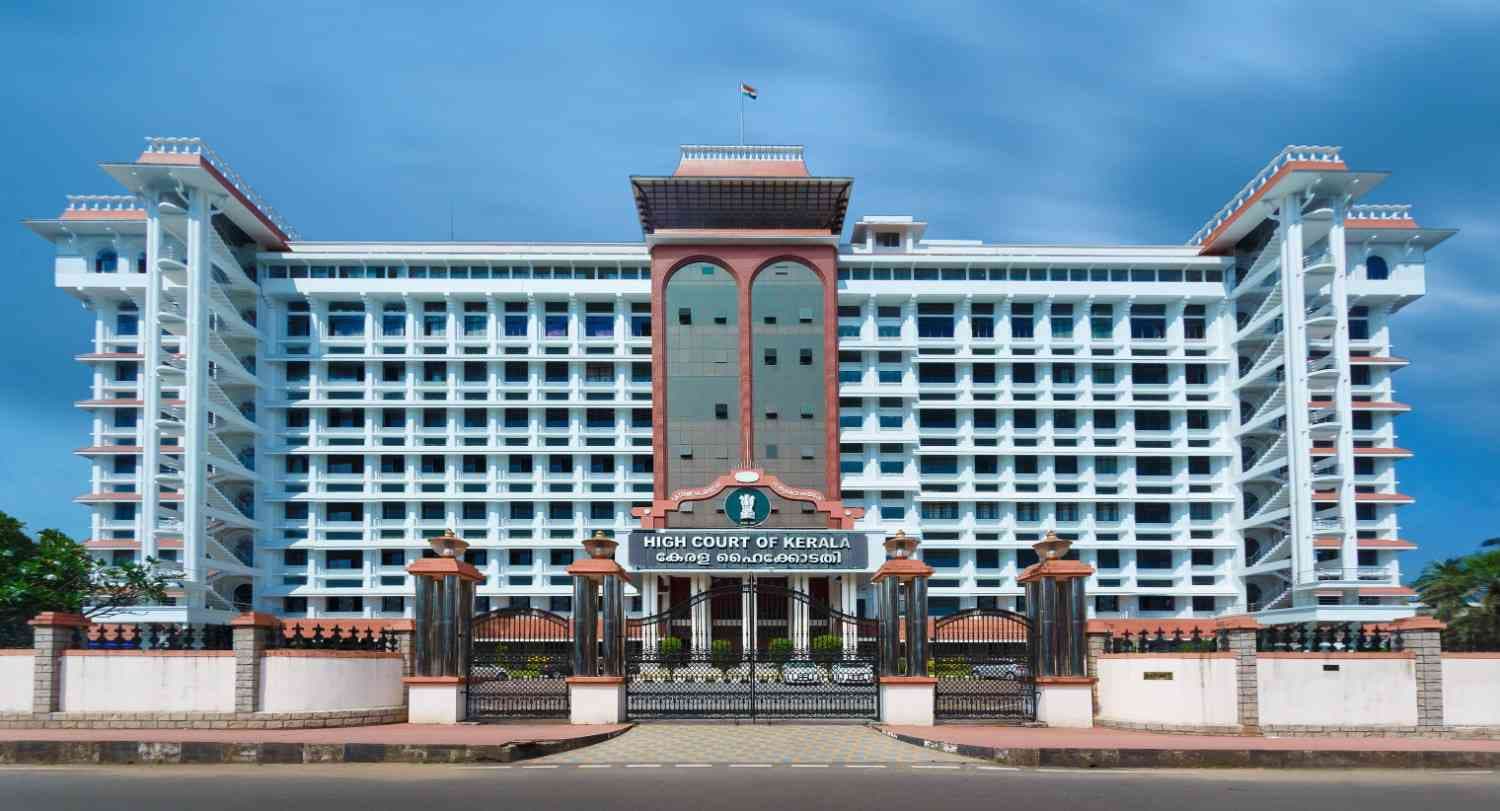
The Kerala High Court has ordered the Sree Padmanabhaswamy Temple Executive Committee to provide a fixed timeline for the renovation of the Principal Idol (Moolavigraha). Read the full details of the court's intervention and the steps being taken for temple preservation.

Karnataka High Court vacates the stay on framing charges against JD(S) leader HD Revanna in the 2024 kidnapping case. Read the full details of Justice S. Sunil Dutt Yadav's stern order against repeated adjournments.

The Kerala High Court rules that trial courts must provide specific reasons for each witness when withholding identities under UAPA Section 44, rejecting "blanket" protection orders.

The Gujarat High Court has ruled that municipal authorities cannot benefit private parties at the cost of the state, emphasizing the 'Doctrine of Public Trust' and transparency in disposing of public property.

The Gauhati High Court has acquitted a man sentenced to 20 years in a POCSO case, citing "serious deficiencies" in the police probe and a lack of child-friendly investigation techniques. Read the full analysis of the court's observations on victim support and medical evidence.

Bombay High Court refuses to reduce the 10-year sentence of an 83-year-old rape convict, stating it cannot ignore the victim's ordeal. Read the full legal analysis of this landmark judgment on child safety and sentencing.

The Bombay High Court quashes the "rigged" auction of a prime Vile Parle property, citing bidder syndicates and gross undervaluation. Justice Madhav Jamdar orders the forfeiture of ₹50 lakh in deposits to protect the sanctity of court auctions.

The Allahabad High Court imposes a ₹1 lakh fine on litigants for making baseless allegations that a Trial Judge issued an NBW under the 'persuasion' of an advocate. Read about Justice Samit Gopal’s stern warning against 'reckless' claims and 'illegible' court orders.

The Bombay High Court rules that access to toilets is a basic human right under Article 21 of the Constitution. The Court directed the MCGM to fix the "deplorable" sanitation in Mumbai slums within two months.

The Madhya Pradesh High Court has quashed an FIR against a house owner for Form-C delay, ruling that prosecution under the repealed Foreigners Act 1946 is illegal after the commencement of the Immigration and Foreigners Act 2025.

The Supreme Court rules that quasi-judicial authorities like Revenue Officers lack the inherent power to review their decisions unless specifically authorized by law. Read the breakdown of State of West Bengal v. Jai Hind Pvt. Ltd.

The Supreme Court rules that PMLA Special Courts cannot order property confiscation under Section 8(7) while an appeal against the attachment is pending. Read the full analysis of this landmark judgment on due process and property rights.

Patna High Court acquits POCSO accused, labeling Section 53A CrPC a "forgotten provision" in Bihar. The Court orders police sensitization on mandatory medical exams and DNA profiling in sexual offence cases.

The Supreme Court of India mandates trial courts to record the offer of free legal aid to the accused before witness examination begins. Read about the new guidelines for fair trials under Article 39A.

The Supreme Court rules that housing societies cannot delay membership decisions indefinitely. Statutory authorities like the Registrar have the power to intervene and grant membership if a society fails to act. A major win for flat owners' rights.

Supreme Court rules BNSS Section 35(6) arrests require "fresh material." Police cannot arrest based on old grounds used in Section 35(3) notices. Legal analysis of Satender Kumar Antil judgment.

In a landmark ruling, the Supreme Court of India allows a minor to terminate a 30-week pregnancy, declaring that no woman can be compelled to complete an unwanted pregnancy. Read the full details of Justice Nagarathna's judgment on reproductive autonomy.

Gauhati High Court rules on Section 528 BNSS (formerly 482 CrPC), holding that settled possession is no defense against land grabbing charges. Read the analysis of Khanindra Deka vs State of Assam (2026).

The Delhi High Court rules that consenting adults do not need societal or parental approval to marry. Justice Saurabh Banerjee affirms that the right to choose a life partner is a fundamental part of Article 21. Read the full legal analysis here.

The Punjab & Haryana High Court recalls anticipatory bail for "Shopping for Liberty." Justice Sumeet Goel rules that bail granted on the basis of a settlement can be cancelled if the accused breaches the compromise. A must-read for legal professionals on the misuse of judicial leniency.

The Allahabad High Court has ordered the Consortium of NLUs to revise the CLAT 2026 merit list. Read about the judgment in Avneesh Gupta vs. Consortium, the disputed questions, and how this impacts NLU admissions and rankings.

The Supreme Court expresses concern over the health of activist Sonam Wangchuk, currently detained under the NSA in Jodhpur Jail. Read the full details of the SC's urge to the Centre to review his detention and the legal arguments from Kapil Sibal and Tushar Mehta.

Supreme Court quashes Madras High Court's late-evening order staying Tamil Nadu's Vice-Chancellor appointment laws. Read about the "deemed assent" controversy and the SC's take on judicial procedural propriety.

The Supreme Court rules that police cannot conduct further investigation under Section 173(8) CrPC (193(9) BNSS) without prior court permission after a closure report is accepted. Read the full analysis of the Pramod Kumar v. State of UP judgment.

Allahabad High Court warns advocates against character assassination of rape victims, ruling that labeling a survivor as a "woman of easy virtue" violates Article 21 and the Indian Evidence Act. Read the full analysis of the Bechan Prasad vs State of UP judgment.

Delhi High Court replaces jail term with ₹10 lakh fine for Yamuna polluter. Read how the 2024 Water Act Amendment decriminalized environmental offenses and what it means for businesses

The Punjab & Haryana High Court dismisses a retired employee's pay fixation claim raised 28 years after the cause of action. Learn why the "continuing wrong" doctrine ends at retirement and how "delay and laches" can bar your legal remedies.

Supreme Court slams UP Government, ruling that paying primary teachers a stagnant ₹7,000 monthly honorarium for 10 years amounts to 'forced labour' (Begar). Read about the landmark verdict ordering a hike to ₹17,000 with back-dated arrears.

Supreme Court rules that a husband's duty to provide alimony doesn't end if the ex-wife is educated or has parental support. Read the full analysis of the Court's decision to double the maintenance for a doctor’s ex-wife to ₹30,000/month

The Calcutta High Court has set aside the conviction of individuals accused of abetment of suicide, ruling that allegations of theft and public humiliation do not meet the legal threshold of Section 306 IPC without proof of direct instigation or "mens rea." Read the full analysis of the judgment in Pabitra Roy vs. State of West Bengal

The Delhi High Court denies bail to a POCSO accused and issues strict orders to the Delhi Police to ensure the anonymity of sexual assault survivors in all court documents and status reports. Read the full judgment by Justice Swarana Kanta Sharma.

The Court observed that while a minor’s consent is legally void, the "romantic nature" of a relationship and proximity to the age of 18 are vital factors in bail considerations.

The Supreme Court has directed the Enforcement Directorate (ED) to constitute a Special Investigation Team (SIT) to probe alleged bank fraud involving Anil Ambani and the Reliance ADA Group. The Court also recorded a formal undertaking that Ambani will not leave India without judicial permission.

"Is this a joke?" — Supreme Court slams J&K administration over a 7-year murder trial delay with zero progress in 82 hearings. Read about the summons issued to the J&K Home Secretary and the Court's intervention in the Anoop Singh v. UT of J&K case.

In a major reprieve for the e-commerce giant, the Court halted the enforcement of a penalty concerning the sale of unauthorized radio equipment, questioning the platform's direct liability as an intermediary.

Mamata Banerjee moves SC against ECI’s Special Intensive Revision (SIR) in West Bengal. Read about the logical discrepancy row & 1.36Cr voter notices.

An Indian wife moves the Supreme Court under Article 32 to halt "oppressive" divorce proceedings in the USA. Learn how the landmark Y. Narasimha Rao judgment protects Indian marriages from foreign court jurisdiction.

The Supreme Court rules that "fence-sitters" who approach courts after long delays cannot claim parity with successful litigants. Read the full analysis of the court's stance on stale claims, the principle of finality in litigation, and the duty of lawyers to discourage repetitive petitions.

The Supreme Court has reserved its verdict on a plea challenging the bail granted to men accused of murdering a Scheduled Caste man in broad daylight. The Bench questioned the High Court's logic of requiring "specific injury" attributions in a mob assault case.

The Supreme Court has ordered all States and Union Territories to release all outstanding compensation amounts to acid attack survivors by March 10, 2026, slamming systemic delays as a "national shame."

Karnataka High Court quashes FIR against a juvenile, ruling police cannot register FIR for petty offences under the Juvenile Justice Act.

Madras High Court holds gold medals aren’t enforceable legal rights; eligibility remains within academic authority, with equitable relief in exceptional cases.

Allahabad High Court directs statewide review of UP assistant teacher appointments after fake certificates uncovered, mandates cancellations and action.

Explore the MP High Court's landmark ruling in Ramdayal Carpenter v. IFFCO Tokyo, where the Court held a wife as a ‘third party’ for insurance compensation.

The Kerala High Court rules that a wife who deserts her husband without justification is not entitled to past maintenance. Read the breakdown of this landmark Divorce Act interpretation.

The Rajasthan High Court warns that the POCSO Act is being 'mechanically' used to criminalize consensual teenage relationships. Read why Justice Anil Kumar Upman is calling for a 'Romeo-Juliet' clause to protect adolescent autonomy and prevent the law from becoming an engine of destruction for youth.

Delhi High Court, Kusum Sehgal vs Heritage Conservation Committee, MCD illegal construction survey, Delhi heritage properties, building bye-laws Delhi, Heritage Conservation Committee HCC, unauthorized construction Delhi, Delhi Municipal Corporation Act, heritage site protection laws, legal news India, Chief Justice Devendra Kumar Upadhyaya, monument preservation Delhi, encroachment near heritage sites, sanctioned building plan violations.

Does a 30-year-old Will automatically become valid? The Chhattisgarh High Court rules that the "presumption of truth" under Section 90 of the Evidence Act does not apply to Wills. Learn why strict proof of execution is mandatory for old Wills and what happens if attesting witnesses have passed away. Read the full legal analysis.

The Karnataka High Court has initiated a Suo Motu PIL over illegal sand mining. "No hope if Home Minister is helpless," remarked the Bench after G. Parameshwara admitted to a political-mafia nexus. Read the full legal report here.

The Supreme Court slams the Union Govt for a decade of "targeted vendetta" against an IRS officer, imposing ₹5 lakh costs for blocking his ITAT appointment.

The Supreme Court has issued notice in the Woodland (Aero Club) case to settle the debate on tax deductions for delayed PF & ESI contributions. Read more here.

Supreme Court rules that an advocate’s mere presence or professional advice cannot be treated as criminal intimidation under Section 506 IPC. Read the full analysis of the Beri Manoj v. State of AP judgment.

In a landmark ruling (Dr. Jaya Thakur v. Union of India), the Supreme Court declares menstrual hygiene a fundamental right under Article 21. Discover the Court's mandatory directions for free sanitary pads, separate toilets, and sensitizing boys and male teachers in schools.

The Supreme Court quashes a demolition order in Santiniketan, ruling that property rights under Article 300-A require clear statutory grounds and scientific proof.

Karnataka High Court suggests empowering Civil Courts to stay mutation orders in title and possession disputes. Learn how the latest ruling on Section 136(3) of the KLR Act aims to reduce parallel litigation and protect property rights.

Supreme Court clarifies that the ₹30 lakh compensation for manual scavenging deaths applies to cases prior to the 2023 Balram Singh judgment if unpaid. Read the full analysis of the SC's latest ruling on sewer cleaning deaths, compensation arrears, and the status of the National Commission for Safai Karamcharis.

CJI Surya Kant announces a major AI digital platform to track case pendency. Explore the Supreme Court’s administrative reforms, from AI case management to digital payments.

The Supreme Court has stayed the UGC Equity Regulations 2026, warning of "dangerous consequences" and social division. Read our detailed analysis of the legal challenge against Section 3(c), the argument for caste-neutral protection, and the Court's decision to restore the 2012 framework.

The Supreme Court rules that principal employers must prioritize former contract workers when hiring regular staff for the same roles. Read the full analysis of the M/S Premium Transmission judgment on contract labour rights, sham contracts, and Section 33(1) of the ID Act.

The Madhya Pradesh High Court has rejected a husband’s plea for a wife’s virginity test, ruling that the denial of sex is not a direct ground for divorce under the Hindu Marriage Act. Read the court’s landmark observations on the right to privacy, the medical irrelevance of the hymen, and the deprecation of the two-finger test in matrimonial disputes.

The Andhra Pradesh High Court rules that AI-generated fake citations won't invalidate a judicial order if the legal principles applied are correct. Read more about the risks of AI 'hallucinations' in the Indian judiciary and the duty of verification for judges and lawyers.

Madhya Pradesh High Court clarifies that marking a cheque "Not Negotiable" does not prevent prosecution under Section 138 of the NI Act. Read the analysis of the Dr. Sandeep Patel v. Anil Kumar Gupta judgment regarding cheque bounce liability.

The Calcutta High Court has ordered the West Bengal government to hand over all acquired land for Indo-Bangladesh border fencing to the BSF by March 31, 2026, ruling that national security concerns must override electoral and administrative delays

Supreme Court rules Waqf Tribunals lack jurisdiction over properties not registered or specified in the 'List of Auqaf' under the Waqf Act, 1995.

A deep dive into the UGC's 2026 Equity Regulations: Explore the new campus anti-discrimination framework, the shift toward mandatory compliance, and the legal battle in the Supreme Court over caste-neutrality and potential misuse.

Supreme Court rules that complaints against public servants under Section 175(4) BNSS require a mandatory prior approach to the SP and a supporting affidavit per Section 175(3).

Supreme Court questions objections to using Aadhaar for voter verification, noting that even passport issuance is outsourced to private agencies.

The Division Bench expressed strong disapproval of the High Court Registry's "pedantic" approach in treating previous judicial precedents as applicable only to specific individuals rather than establishing a general legal rule.

The Delhi High Court rules that court fees are not a penalty to dissuade litigants, ordering a ₹8.7 lakh refund for RI Networks after its suit was redirected to TDSAT without a hearing on merits.

The Kerala High Court has ruled that false allegations of "sexual harassment" under Section 12 of the POCSO Act do not attract prosecution under Section 22, as the law only penalizes false complaints related to sexual assault. Read the full legal analysis of this significant judgment

Madhya Pradesh High Court upholds the death penalty for the brutal sexual assault and murder of a 5-year-old in Bhopal, classifying the case as ‘Rarest of Rare’.

The Karnataka High Court refuses to quash a voyeurism FIR against a shop assistant for filming a woman in a trial room, stating 'no woman is safe' if such acts are ignored.

The Supreme Court rules that uncorroborated confessional statements cannot be the sole basis for conviction, emphasizing the constitutional right to legal aid.

Madras High Court sets aside order for 'U/A' certificate for Vijay's 'Jana Nayagan,' citing natural justice lapses; directs fresh hearing for CBFC to respond.

Kerala Law Reforms Commission proposes decriminalizing "giving dowry" to encourage victims to report abuse. Read how this bold shift aims to redefine the Dowry Prohibition Act and empower families.

Allahabad HC directs UP trial courts to frame charges immediately after rejecting discharge pleas, ruling that pending revisions or appeals do not stay proceedings without an explicit order

Allahabad High Court sets a strict 30-day deadline for Mahakumbh stampede compensation, warning the UP government of a "serious view" over administrative delays and citizen apathy.

Madras High Court rules that religious character cannot justify encroachment on public streets. Read about the court's directive to remove unauthorized shrines from public roads to ensure citizen convenience and statutory compliance.

Supreme Court upholds conviction under Section 326 IPC but reduces 5-year sentence to period already undergone (2 years, 3 months) following a compromise between the appellants and the victims.

In a significant ruling on urban governance and public rights, the Madras High Court has clarified that religious structures built on public pavements or roads cannot claim immunity from demolition, asserting that the "long duration of an illegality does not make it legal."

Former Kerala High Court Judge Justice S. Siri Jagan passes away at 74. A look back at his judicial career and key roles, including the Stray Dog Compensation Committee and Sabarimala High Power Committee.

The Bombay High Court (Nagpur Bench) has ruled that the 60-day deadline for testing drug samples under Rule 45 is mandatory. Justice M.M. Nerlikar quashed a prosecution against Oscar Remedies, warning that procedural delays by the FDA benefit sub-standard manufacturers and endanger public health. The Court ordered strict action against erring officers and mandated a real-time online tracking system for drug analysis.

Madras High Court quashes Tamil Nadu's order to collect sensitive personal data of school students, citing "absolute abuse of power" and a violation of the fundamental right to privacy. The Court held that documenting "stigmatic backgrounds" leads to discrimination and ill-treatment.

Gujarat High Court rules that a temple priest (pujari) is a "servant of the deity" and cannot claim land ownership or adverse possession, upholding the removal of an unauthorized temple on a public road.

Allahabad High Court rules that sending a child to boarding school is not a "black and white" fix for parental conflict, emphasizing that children must not be treated as collateral damage in matrimonial disputes.

Karnataka High Court lifts the ban on bike taxis, ruling that motorcycles qualify as transport vehicles. A major vitory for Ola, Uber, Rapido, and commuters.

The Supreme Court, in a Bench comprising Justice Manmohan and Justice Rajesh Bindal, has ruled that registered sale deeds cannot be branded as 'sham' based on vague assertions. The Court also recommended using Blockchain for land records.

In a significant legal victory for the Aam Aadmi Party (AAP) supremo, a Delhi Court has acquitted former Chief Minister Arvind Kejriwal in two cases filed by the Enforcement Directorate (ED) regarding his alleged failure to comply with agency summons.

Delhi's Rouse Avenue Court acquits former MP Sajjan Kumar in the 1984 Janakpuri anti-Sikh riots case, citing a lack of reliable evidence and decades-long delay in witness testimonies. Despite the acquittal, Kumar remains in Tihar Jail serving life sentences in other riot-related cases.

The Allahabad High Court has quashed the summons issued against L&T’s Chairman and Directors in an air pollution case, noting that the Magistrate relied on "incorrect facts" regarding the company's operational consent.

In a significant ruling, Justice Vivek Jain observed that if a husband seeks a DNA test specifically to prove a wife’s adultery rather than to escape maintenance responsibilities or declare the child illegitimate, such a request is legally sustainable.

The Supreme Court has dismissed UCM Coal Company’s challenge to a ₹126 crore arbitral award in favor of Adani Enterprises, affirming the High Court's ruling on contractual interpretation and the validity of using prior awards as evidence.

Supreme Court rules that subordinate legislation becomes binding only upon publication in the Official Gazette, not the date of issuance. Read the full analysis of the Viraj Impex judgment.

Supreme Court slams "extreme socialism" in Kerala Land Reforms Act, directing Indian Oil (IOCL) to return commercial land held since 1994. Justice Nagarathna questions protecting corporate entities under laws meant for farmers.

The Supreme Court has announced its intention to formulate a nationwide Standard Operating Procedure (SOP) to ensure the timely recovery of missing children. Observing that such incidents are rampant and often neglected by authorities, the Court impleaded all States and Union Territories to establish a uniform, high-priority investigative framework.

Supreme Court to examine if PMLA grants ED substantive power for "further investigation" as IAS officer Saumya Chaurasia challenges her arrest and alleges a practice of "evergreen custody" to frustrate personal liberty.

Supreme Court to decide if legal heirs can be held liable for a deceased doctor's negligence. A landmark examine of the Consumer Protection Act's "wide ramifications."

SC flags "exploitative" airfare surges during festivals like Kumbh Mela; seeks Centre's response on capping prices and regulating extra charges.

"There is no case against me on merits. I am in jail for 7 years! What is this country coming to?" Gadling's counsel told the Court today.

Rajasthan High Court slams Jaisalmer police for publicly shaming arrested persons by posting photos on social media. Justice Farjand Ali rules that the "Right to Dignity" does not vanish with arrest. Read the full details of the Court's order on institutional humiliation and police reforms.

The Madras High Court has issued a show-cause notice to the Tamil Nadu DGP and Chennai Police Commissioner over "police inaction" following an attack on retired Judge Justice V. Parthiban. The Court termed the failure to act on the Pachaiyappa's Trust administrator's complaint a "direct attack on the judiciary." Read the full legal analysis of the Anbazhagan Vs Jeyachandran contempt case.

A Bengaluru court has directed over 30 media houses, including India Today and TV9, to take down defamatory content against suspended Karnataka DGP Ramachandra Rao K following a viral video row. Read the full legal update.

The Calcutta High Court has termed the recurring unrest in Murshidabad as 'worrisome.' Chief Justice Sujoy Paul directed the West Bengal government to deploy central forces (CAPF) with an 'iron hand' and left the decision for an NIA probe to the Central Government. Read the full legal update on the Beldanga violence case.

The Karnataka High Court quashes a "manipulated" rape FIR against an advocate, ruling that consensual relations cannot be termed rape due to a breach of promise to marry. Read the court's warning against using the criminal process as a "weapon of retaliation."

The Allahabad High Court rules in Shreya Pandey v. State of UP that the right to appear in an examination is a fundamental right under Article 21 (Right to Life and Dignity). Read about the Court's order for a special B.Sc. exam following a university portal glitch.

The Supreme Court has directed the Centre, CAQM, and state agencies to move beyond temporary "firefighting" measures and execute a structural action plan to combat the capital's pollution crisis.

The Supreme Court has decided to constitute an independent committee of domain experts to redefine the Aravalli Hills, keeping in abeyance the controversial "100-meter height" criterion that threatened to strip protection from 90% of the range.

The Supreme Court rules that High Courts cannot micromanage investigations by directing police to follow Section 41A procedures while simultaneously dismissing a plea to quash the FIR.

The Supreme Court flags the rise in 'vengeful' matrimonial litigation, warning that courts are not battlefields for settling personal scores. In Neha Lal vs. Abhishek Kumar, the Bench dissolves a 13-year legal feud and bats for pre-litigation mediation to prevent choking the judicial system. Read the full analysis of SC's advice for warring couples.

The Supreme Court has clarified that the Delhi Special Police Establishment Act (which governs the CBI) does not take away the power of state police forces to investigate bribery and corruption cases, even if the accused is a Central Government employee.

Supreme Court rules that non-disclosure of pending litigation or encumbrances by authorities (Banks/Improvement Trusts) in public auctions is a material irregularity. Learn about the landmark Viney Kumar Sharma v. Ludhiana Improvement Trust judgment directing a full refund with 9% interest.

In a significant judgment, the Supreme Court has clarified that the National Green Tribunal (NGT) does not have the authority to settle disputes that are essentially about land use, zoning laws, or building plan approvals, even if they are presented as environmental issues.

Gauhati High Court clarifies BNSS Section 223: Magistrates must examine complainants on oath before issuing notice to the accused. Read the full legal analysis.

The Supreme Court directs High Courts to decide applications for vacating interim orders within two weeks as mandated by Article 226(3). Read about the ruling in Giriraj v. Mohd. Amir.

The Supreme Court rules that an accused isn't required to appear on every hearing date after sentence suspension and bail. Read how this landmark judgment aims to end procedural harassment in long-pending criminal appeals.

Supreme Court of India reserves order on a massive batch of hate speech petitions, including 'Corona Jihad' and 'UPSC Jihad' cases. While closing general pleas, the Court keeps a key Noida hate crime case alive. Read the latest arguments on 'Constitutional Torts' and police compliance.

Supreme Court sets aside Patna High Court's recall of bail in Rambali Sahni v. State of Bihar. The Bench held that changing 'Allowed' to 'Rejected' is a reversal of judgment, not a mere clerical error under Section 362 CrPC.

The Supreme Court of India is set to examine a landmark constitutional question: Can the Enforcement Directorate (ED) file a writ petition under Article 226 against a State Government? This article breaks down the legal battle between the ED and the states of Kerala and Tamil Nadu, focusing on the definition of a "juristic person" and the boundaries of federalism in investigative law.

The Supreme Court issues notice to the BCI on a fresh plea challenging the 3-year ban on new law colleges. Explore the legal arguments behind the moratorium, its impact on educational institutions, and the upcoming hearing on January 30.

The Supreme Court has stayed a Rajasthan High Court order seeking the removal of 1,100+ liquor shops along highways. Read about the legal clash between road safety concerns and municipal exemptions.

Supreme Court orders ECI to publish names of 1.25 crore West Bengal voters flagged for "logical discrepancies" in the electoral roll. Justice Bagchi questions algorithmic errors, noting that "child marriages are a reality" in India, while CJI Surya Kant slams "governance by WhatsApp." Read the full court directions.

The Supreme Court quashes Punjab's mid-process change to the MBBS/BDS sports quota for 2024, ruling that "rules of the game cannot change midway." The Bench flagged a conflict of interest involving a coach’s daughter and emphasized that admission norms must be transparent and fixed from the outset to prevent nepotism and arbitrariness.

The Supreme Court clarified that under Section 15A(5) of the SC/ST (Prevention of Atrocities) Act, a victim has a mandatory procedural right to be informed and heard during bail proceedings. However, this is a right to participation, not a right to a specific outcome.

The Supreme Court has clarified that the power to take cognizance of a belated complaint under Section 138 of the NI Act is subject to the court first being satisfied with the reasons for the delay. The condonation of delay must strictly precede the act of taking cognizance.

Supreme Court grants bail to Amtek Auto promoter Arvind Dham, ruling that prolonged jail without trial violates Article 21. Learn why the Court held that PMLA cases cannot justify indefinite incarceration and how speedy trial rights override the gravity of the offence.

Supreme Court holds that a widowed daughter-in-law is a "dependant" under Section 21 of the Hindu Adoptions and Maintenance Act. Read the landmark judgment on the right to maintenance from a father-in-law's estate and the right to live with dignity.

The Supreme Court rules that filing a writ petition against its own judgment is the "grossest abuse of law," imposing a ₹1 lakh cost on an NGO. Learn why Article 32 cannot be used to challenge settled precedents like the Pramati RTE exemption case.

Supreme Court issues notice to CM Mamata Banerjee and stays West Bengal Police FIRs against ED officials in the I-PAC raid case. Read the full details of the high-stakes hearing, arguments by Kapil Sibal and Tushar Mehta, and the Court's warning on 'lawlessness' in the state.

The Allahabad High Court has set aside the 10-year rape conviction of Bhagwat Kushwaha, citing major contradictions in the victim's testimony and a "perverse" disregard for medical evidence. Read the full analysis of Justice Achal Sachdev’s judgment on consent and the burden of proof in rape cases.

The Allahabad High Court ruled that a married man concealing his status while promising marriage attracts Section 69 BNS. Read about the case of Kuldeep Verma vs State of UP.

A major legal paradox unfolds as the Singapore Coroner’s Court testifies to an accidental drowning, while the Assam SIT moves forward with murder charges against singer Zubeen Garg’s closest associates. Explore the latest updates on the Jan 17 hearing and the new fast-track prosecution team.

The Jharkhand High Court upholds a divorce decree, ruling that concealing a murder conviction and age misrepresentation breaks the "foundation of trust" in a marriage. Read the full analysis of Ranthi Kumari Devi vs. Suresh Kumar Sahu.

The Delhi High Court has ruled that the PM CARES Fund, even as a juristic or government entity, retains its right to privacy under the RTI Act. Read about the court’s landmark observations on Section 8(1)(j) and why public authorities don't automatically lose privacy protections.

The Gauhati High Court has ruled that only Family Courts or District Judges have the jurisdiction to authenticate Talaq or grant divorce decrees, declaring a Junior Civil Judge's order a nullity.

Patna HC slams Bihar Police for the unlawful arrest of a minor, ordering ₹5 lakh compensation to be recovered from the personal salaries of erring officers.

From hunger strikes to a historic boycott of the CJI’s foundation ceremony, the Gauhati High Court Bar Association is at war with the Assam government over the proposed shift to Rangmahal. Discover the full timeline, the referendum results, and what the CJI had to say about the ‘Judicial City’ project.

Supreme Court sets aside Allahabad High Court’s directions for mandatory medical age tests in POCSO cases at the bail stage. The Bench urges the Centre to consider a 'Romeo-Juliet' clause to prevent the criminalization of consensual adolescent relationships and curb the misuse of the POCSO Act.

Can a Government Law Officer represent a private party in a case where the State is involved? The Allahabad High Court seeks a report from the UP Principal Secretary (Law) on the duties and limitations of Additional Chief Standing Counsel. Read the full details of Smt. Meera Devi vs. State of U.P.

The Supreme Court slams the "mockery of justice" caused by a 23-year delay in a Rajasthan dowry death case. Read about the new directives to all High Courts to prioritize trials for murder, rape, and sensitive crimes held up by interim stay orders.

The Delhi High Court has ruled that naming a live-in partner as a spouse in official records is not "gross misconduct" if the relationship was transparent. Read how the Court restored a retired official's full pension and gratuity with 6% interest.

The Delhi High Court rules that forcing a woman to continue an unwanted pregnancy violates her bodily integrity and mental health. Read about the landmark judgment on reproductive autonomy, marital discord, and why a husband's consent is not required for abortion under the MTP Act.

ED moves Calcutta High Court seeking CBI probe against West Bengal CM Mamata Banerjee over alleged obstruction during I-PAC raids linked to the coal smuggling case.

Delhi Court orders framing of charges against RJD chief Lalu Yadav, Rabri Devi, Tejashwi, and others in the high-profile Railways land-for-jobs scam. Read how the court slammed the 'criminal enterprise' for using the Railway Ministry as a personal fiefdom and why 52 accused were discharged.

Supreme Court hears habeas corpus plea challenging Sonam Wangchuk’s NSA detention. Senior Advocate Kapil Sibal argues procedural lapses, non-supply of documents, and suppression of peace-appealing videos vitiate the order. Next hearing on January 12. Read the full legal analysis of Gitanjali Angmo vs. Union of India.

The Supreme Court warned that treating a Section 11 petition (appointment of arbitrator) as the trigger for starting arbitration would distort the law and undermine the statutory scheme.

The Karnataka High Court has quashed a criminal case against a woman accused of "instigating" her neighbor's marital disputes. Justice M. Nagaprasanna ruled that Section 498A IPC is a penal provision that must be strictly interpreted; since a neighbor is not a "relative" by blood or marriage, they cannot be prosecuted for matrimonial cruelty, even if allegations of provocation exist.

The Supreme Court has referred the legal question of whether the 10% triennial escalation on motor accident compensation applies to older cases to a Larger Bench. A bench of Justices Ahsanuddin Amanullah and K. Vinod Chandran expressed doubt over applying this hike based on the final order date, stating that compensation values should ideally be assessed as of the date of the accident and that delays should be compensated through interest rather than inflationary escalations.

The year 2025 has been a watershed moment for Indian jurisprudence. The Supreme Court, acting as the ultimate interpreter of the Constitution, delivered several landmark verdicts that redefined the relationship between the citizen and the State, and settled long-standing conflicts between different Constitutional wings.

Advocate Saket Sourav moves the National Commission for Women (NCW) seeking suo motu action against the misuse of AI tool 'Grok' on X (formerly Twitter). The petition highlights a systematic pattern of digital sexual violence, citing violations of the Right to Privacy and Dignity under Article 21, and calls for urgent safeguards against AI-generated non-consensual obscene imagery.

The year 2025 has redefined several constitutional and procedural norms in India. To help our readers stay ahead of the curve, we have analyzed 25 landmark rulings from the Supreme Court, focusing on the specific Questions of Law addressed and the final Verdicts delivered.

Can police freeze bank accounts in corruption cases using CrPC? In the landmark judgment State of West Bengal v. Anil Kumar Dey (2025), the Supreme Court clarifies the power of investigating agencies to freeze assets under Section 102 CrPC alongside the Prevention of Corruption Act. Read the full analysis of how 'Seizure' and 'Attachment' co-exist in Indian law.

The Supreme Court has stayed the Delhi High Court's order suspending the life sentence of Kuldeep Singh Sengar in the Unnao rape case. CJI Surya Kant flagged critical legal questions on the definition of a 'public servant' under the POCSO Act. Read the full details of the special vacation bench hearing and the arguments presented by the CBI.

In a significant development for national security and the legal landscape of Northeast India, the Special Court of the National Investigation Agency (NIA) in Guwahati, Assam, has convicted and sentenced a key operative of the proscribed terror outfit Hizb-ul-Mujahideen (HM).

A Public Interest Litigation (PIL) has been moved in the Supreme Court following the tragic death of 24-year-old Tripura student Anjel Chakma in Dehradun. The plea seeks urgent judicial intervention to recognize racially motivated violence as a distinct constitutional wrong and calls for binding "Vishaka-style" guidelines to protect citizens from India’s North-Eastern states against targeted abuse and systemic discrimination.

The Allahabad High Court has sought a response from the UPPSC regarding a petition filed by OBC candidates who were excluded from the PCS 2025 Mains despite scoring higher than General category cut-offs. The plea challenges the lack of a final answer key and the denial of "migration" benefits, raising significant questions about transparency and reservation rules in state civil services recruitment.

A comprehensive guide to the Supreme Court’s landmark ruling in Paramvir Singh Saini v. Baljit Singh. This article explains the mandatory installation of high-definition CCTVs with night vision and audio in all police stations and central agencies (CBI, ED, NIA) to ensure transparency, preserve evidence for 18 months, and eliminate custodial torture in India.

The Karnataka High Court has set aside the life imprisonment of a Bengaluru man, Arun Kumar, noting that the prosecution failed to provide a complete chain of evidence in a case involving the gruesome murder and mutilation of his wife.

"Understand India's New 2025 Rental Law: Mandatory registration, 2-month security deposit cap, and fast-track Rent Courts. Essential guide for tenants and landlords."

Supreme Court of India defines 'Aravali Hills and Ranges' in a landmark November 2025 judgment. Read about the new 100m elevation rule, the ban on new mining leases, and the Court's plan to halt desertification in Delhi, Haryana, and Rajasthan.

CBI challenges Delhi HC's bail to Kuldeep Sengar in Unnao rape case at the Supreme Court. The agency slams the HC's finding that an MLA is not a 'public servant' under POCSO, calling the order perverse and a threat to the victim's safety. Read the full legal analysis.

The Court noted that while the allegations were serious, the primary requirement of the SC/ST Act—that the offence must occur in a place within public view—was not met in a private telephonic conversation.

The Delhi High Court has sought the Centre’s response on a PIL seeking to reduce GST on air purifiers from 18% to 5%. In a public health emergency caused by severe air pollution, the court questions if air purifiers should be classified as medical devices rather than luxury items. Read the latest updates on the Kapil Madan v. Union of India case and the GST Council's upcoming review.

"Indian Rupee falls 23 paise to 89.94 against the US Dollar due to FPI outflows and rising crude oil prices. Read the full analysis of the December 2025 slide."

Madras High Court suggests an 'Australia-style' law to ban social media and restrict internet use for children in India. Read about the Court's observations on parental control, NCPCR duties, and the fight against online child abuse material.

In State of U.P. & Anr. v. Mohd. Arshad Khan & Anr. (2025 INSC 1480), the Supreme Court held that High Courts cannot grant blanket protection from arrest or impose rigid investigation timelines after refusing to quash an FIR. Reiterating Neeharika Infrastructure, the Court ruled that such directions amount to backdoor anticipatory bail and impermissible interference with police autonomy, particularly in serious offences involving fraud against the State. The Allahabad High Court’s orders granting “no arrest” protection and a 90-day probe deadline were set aside, with limited interim protection only to pursue regular bail remedies.

The Allahabad High Court rules that the State must protect live-in couples. Read about the landmark judgment on personal liberty vs social morality in India.

The Bombay High Court is hearing a copyright infringement suit by PPL against Kapil Sharma and producers of The Great Indian Kapil Show for unlicensed music.

Supreme Court holds Section 138 NI Act offences are quasi-criminal and compoundable; conviction set aside after settlement between parties.

In a landmark ruling to curb forum shopping, the Supreme Court has clarified that for Account Payee Cheques, jurisdiction under Section 138 NI Act lies exclusively with the court where the payee’s home branch is located. Depositing a Cheque at any other branch for convenience does not confer jurisdiction. The Court also declared its 2023 ruling in Yogesh Upadhyay v. Atlanta Ltd. as per incuriam.

The Supreme Court has held that while exercising power under Section 319 CrPC, courts must only examine whether the evidence prima facie indicates involvement of additional accused and must not conduct a “mini-trial.” Setting aside the Allahabad High Court’s order, the Court ruled that credibility of witnesses and detailed appreciation of evidence are matters for trial, not for summoning. The Court also clarified that dying declarations remain relevant under Section 32(1) of the Evidence Act regardless of time gap or mode of recording.

The Delhi High Court has suspended the life imprisonment sentence of former BJP MLA Kuldeep Singh Sengar in the Unnao rape case, holding that the offence of “aggravated penetrative sexual assault” under Section 5(c) POCSO was prima facie not made out. The Court ruled that an MLA is not a “public servant” under the IPC definition applicable to POCSO.

The Delhi High Court ruled that HIV-positive status alone cannot be a ground for termination or declaring an employee unfit. Setting aside the discharge of a BSF Constable, the Court held that the HIV Act, 2017 and the RPWD Act, 2016 prohibit such discrimination and mandate reasonable accommodation, ordering reinstatement with continuity of service.

This article examines the Supreme Court’s landmark judgment in Ravi S/o Ashok Ghumare v. State of Maharashtra (2019), exploring the delicate balance between aggravating brutality and mitigating human factors in death penalty cases. It also reflects on the recent rejection of the mercy petition under Article 72, highlighting how the Indian legal system ultimately draws the line between reformative justice and irreversible crimes against children.

In a significant ruling on fair trial rights, the Supreme Court held that a mechanical or vague examination of the accused under Section 313 CrPC (now Section 351 BNSS) causes grave prejudice and can be fatal to the prosecution. Acquitting the accused in a 35-year-old case, the Court ruled that failure to confront the accused with specific incriminating circumstances, coupled with unreliable evidence and ignored defence testimony, vitiates the conviction.

In a landmark judgment, the Supreme Court has declared dowry not merely a criminal offense but a “Constitutional Wrong,” holding that it violates women’s rights to equality, dignity, and liberty. Restoring a conviction in a 24-year-old dowry death case, the Court issued mandatory directions to governments to strengthen enforcement, education, and awareness to eradicate the practice.

The Supreme Court has dissolved a 25-year-old "dead" marriage, ruling that a long-pending legal battle serves no social purpose when the relationship exists only on paper. Invoking Article 142, the Court held that a prolonged refusal to accommodate each other constitutes cruelty, allowing both parties to move on from a marriage that had irretrievably broken down.

In a significant ruling, the Supreme Court held that a husband’s dominance over household finances and demands for "penny-wise" accounts do not constitute criminal cruelty under Section 498A IPC. Describing such behavior as a "mirror reflection of Indian society," the bench quashed an FIR against the husband, stating that vague allegations of harassment and "daily wear and tear" of marriage should not be used as tools for personal vendetta or to trigger the state's criminal machinery without evidence of tangible harm.

The Kerala High Court has ruled that a child born shortly after marriage is a legitimate heir entitled to an equal share of their father's property. Relying on Section 112 of the Evidence Act, the Court clarified that legitimacy is determined by the date of birth within a valid marriage, not the date of conception, protecting children's rights against claims of pre-marital conception.

This article details the Delhi High Court's significant ruling on Hindu customary divorce, emphasizing that any custom asserted to override the provisions of the Hindu Marriage Act, 1955, must be supported by "solid evidence." It highlights the "heavy burden of proof" placed on the asserting party to establish the custom's antiquity, certainty, and conformity with public policy.

Quashing proceedings against an IAS officer facing an 11-year unexplained delay in further investigation, the Supreme Court lays down crucial guidelines to ensure judicial control, transparency, and timely completion of criminal probes.

In a landmark ruling on a Presidential Reference, the Supreme Court has clarified the limits of the Governor’s powers under Articles 200 and 201. The Constitution Bench held that Governors cannot indefinitely withhold assent to State Bills and must choose among constitutionally permitted options. While preserving gubernatorial discretion, the Court barred judicially imposed timelines and rejected any concept of ‘deemed assent,’ reshaping the legislative relationship between States and the Union.

The Supreme Court of India delivered a landmark judgment holding that Railways cannot deny compensation merely because a passenger boarded the wrong train. The Court restored ₹8 lakh compensation to the victim’s family, reaffirming strict liability under Section 124A of the Railways Act.

In a major relief to the real estate and infrastructure sectors, the Supreme Court has recalled its May 2025 judgment that barred ex-post facto Environmental Clearances. In a 2:1 split verdict, CJI B.R. Gavai and Justice K. Vinod Chandran prioritized public interest and precedent, while Justice Ujjal Bhuyan penned a sharp dissent terming the move a "step in retrogression."

The Supreme Court of India has issued a landmark directive requiring Trial Courts to electronically transmit previous statements to witnesses testifying via video conferencing. This ruling closes a major procedural gap in virtual trials, ensuring effective cross-examination and protecting the fundamental right to a fair trial.

In a landmark judgment reinforcing the rights of senior citizens, the Kerala High Court has held that a son’s legal obligation to maintain his mother is independent of her husband's support. Justice Dr. Kauser Edappagath termed it a "moral failure" for an affluent son to expect his 60-year-old mother to rear cattle for a livelihood. Read the full analysis of Farookh vs. Kayyakkutty and what Section 144 BNSS means for parental maintenance.

A major ruling by the Delhi High Court clarifies that official notices, orders, and summons under the GST Act are validly served when sent solely to the email address provided during registration. This decision solidifies the digital shift in tax compliance and places a strong responsibility on taxpayers to monitor their official email communications.

The Supreme Court has referred the crucial legal question of whether High Courts should routinely entertain anticipatory bail pleas before Sessions Courts to a larger three-judge bench, while also agreeing to hear the Kerala High Court Advocates' Association, which strongly defends the current practice.

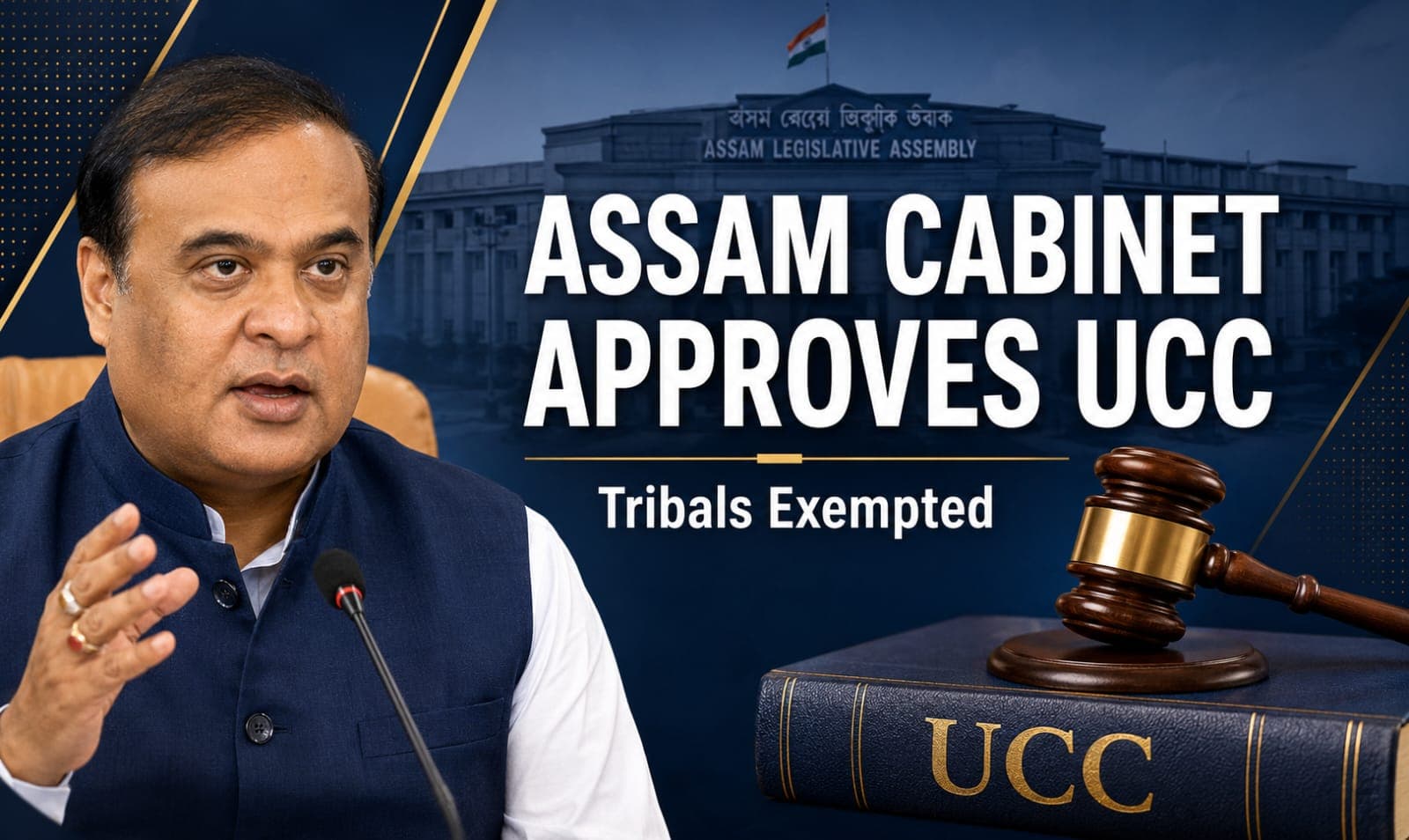
Assam Cabinet Greenlights Polygamy Ban Bill; proposes seven years rigorous imprisonment for offenders and establishes a dedicated compensation fund for affected women. Tribal and Sixth Schedule areas are exempted initially.

In a landmark ruling, the Supreme Court held that grounds of arrest must be given in writing for all offences, including BNS/IPC. Failure to provide them at least 2 hours before remand will render the arrest illegal.

The Supreme Court reinstated two UP teachers, holding that termination was wrongful as they had acquired the mandatory TET qualification within the extended deadline provided by the RTE Act.

The Supreme Court dismissed a woman's suit for 24 acres of land based on an oral Hiba (gift), holding the claim was unproven due to non-delivery of possession and fatally barred by limitation after two decades of silence.

In a major relief for road accident victims, the Supreme Court has passed an interim order directing tribunals and High Courts not to dismiss motor accident compensation claims for being filed after the 6-month limitation period, pending a final decision on the constitutionality of Section 166(3) of the Motor Vehicles Act.

The Kerala High Court, enforcing the Supreme Court’s Sampurna Behura mandate, issued 15 time-bound directives to the State Government to rectify systemic failures in the Juvenile Justice (JJ) system. The court ordered the immediate filling of vacancies in key bodies (KeSCPCR, JJBs, CWCs), mandatory 21-day monthly meetings for CWCs, the establishment of Special Juvenile Police Units (SJPUs), and annual social audits of Child Care Institutions (CCIs) to ensure effective, on-ground protection for children.

The Supreme Court of India has raised concern over the “increasing misuse” of the POCSO Act in marital disputes and consensual adolescent relationships. Hearing a PIL by Senior Advocate Aabad Harshad Ponda, a Bench of Justices B.V. Nagarathna and R. Mahadevan emphasized the need for legal and moral education to prevent both sexual offences and the misuse of stringent laws. The matter is set for further hearing on December 2, 2025.

Barpeta, Assam: In a landmark judgment, the District and Sessions Court, Barpeta, has awarded the death penalty to Rishab Das, convicting him of the brutal murder of his wife and minor daughter. The court, presided over by Sessions Judge Dipak Thakuria, pronounced the sentence on October 22, 2025, in Sessions Case No. 14/2024, marking the first time the court has delivered a capital punishment verdict since its establishment in 1983.

In a landmark judgment, the Madurai Bench of the Madras High Court held that a government-owned public ground cannot be reserved exclusively for one religious community, even if backed by long-standing practice. Justice G.R. Swaminathan quashed the Tahsildar’s order denying Hindus permission to hold Annadhanam on land traditionally used by Christians for Easter celebrations, ruling that such denial violates Articles 15 and 25 of the Constitution. The Court reaffirmed that administrative fears of “law and order issues” cannot override citizens’ fundamental rights in a secular democracy.

Delhi High Court rules law students can't be barred from exams over low attendance. Read the key directions, new "ameliorative measures," and BCI re-evaluation order.

In Rekha Minocha v. Amit Shah Minocha & Ors. (Criminal Appeal No. 1595 of 2025), the Supreme Court exercised its extraordinary powers under Article 142 of the Constitution to dissolve a marriage that had remained broken for over 15 years. Despite the wife’s opposition, the Bench of Justices Vikram Nath and Sandeep Mehta held that there was no purpose in perpetuating a “legally dead relationship.” The Court approved a ₹1 crore lump-sum alimony as a fair and final settlement, quashing all pending proceedings. The decision reinforces the Court’s evolving jurisprudence on irretrievable breakdown of marriage and its commitment to doing “complete justice” beyond statutory limitations.

The Supreme Court rules that investigating agencies, including the Enforcement Directorate, cannot summon lawyers to inquire about advice given to clients, except in rare, specific circumstances outlined in the new Bharatiya Sakshya Adhiniyam.

Taking serious note of contempt, the Supreme Court slammed a UP police officer who ignored its interim order and assaulted the petitioner despite being shown the protection order.

Justice Surya Kant has been appointed as the 53rd Chief Justice of India, taking charge on November 24, 2025. This article examines the career of the first CJI from Haryana, detailing his landmark contributions in judgments concerning constitutional law (like Article 370), free speech, and gender equality.

The Madras High Court upheld an adoption deed executed by grandparents with the consent of the biological mother, ruling that adoptions under the Hindu Adoptions and Maintenance Act (HAMA) do not require validation under the Juvenile Justice Act (JJ Act). Justice M. Dhandapani criticized the Registrar of Births and Deaths for ignoring a Civil Court decree that had already confirmed the adoption, terming it “administrative overreach.” The Court clarified that the JJ Act applies only to orphaned, abandoned, or surrendered children and directed the authorities to issue a new birth certificate naming the adoptive parents within four weeks.

Justice Tempered with Mercy: The Supreme Court set aside a conviction under Section 6 of the POCSO Act, noting the consensual nature of the relationship, the subsequent marriage, and the birth of a child, stating that the crime stemmed from "love, not lust."

In Varun Kumar alias Sonu v. State of Himachal Pradesh & Ors. (Criminal Appeal No. 1295 of 2018), the Supreme Court on October 14, 2025, upheld the conviction of a man for the rape of a 15-year-old girl, stressing that a minor’s consent to sexual intercourse holds no legal validity. A Bench of Justices Manoj Misra and Vipul M. Pancholi found the victim’s testimony to be that of a “sterling witness” and affirmed the Himachal Pradesh High Court’s decision overturning the trial court’s acquittal. The Court ruled that even if the minor had voluntarily engaged in the act, such consent is immaterial under law, thereby confirming the seven-year rigorous imprisonment imposed on the accused.

In a move to protect the integrity of the Karur stampede investigation, the Supreme Court has empowered the CBI to examine not just the incident but also reports of threats to the victims’ families, distancing the probe from state influence.

In a compassionate yet balanced ruling, the Supreme Court has reaffirmed that accident victims must not be denied compensation even if the offending vehicle breaches its route permit. The Court directed the insurer to pay ₹31.84 lakh to the deceased’s family and then recover the amount from the bus owner, reinforcing the ‘Pay and Recover’ principle to ensure timely justice for victims while protecting insurers’ rights.

In a sensitive case involving allegations of sexual intercourse under the false promise of marriage, cheating, and intimidation, the Supreme Court of India approved a mutual settlement between the complainant and the accused. The Bench of Justices BV Nagarathna and R Mahadevan prioritized closure and compassion, directing the return of money and gold to the complainant.

The Apex Court in Nawang v. Bahadur (2025) set aside the Himachal Pradesh High Court’s direction applying the Hindu Succession Act to tribal communities, reaffirming the statutory exclusion under Section 2(2).

The Madras High Court (Madurai Bench), in a judgment by Justice G.R. Swaminathan, held that adoption by Muslim couples must strictly comply with the Juvenile Justice (Care and Protection of Children) Act, 2015, and Adoption Regulations, 2022, and cannot be validated merely by executing and registering an Adoption Deed. Citing Shabnam Hasmi v. Union of India (2014), the Court reaffirmed that the JJ Act overrides personal law and applies uniformly across religions. The petition seeking a direction to register a private Adoption Deed was dismissed, though the Court permitted the couple to pursue adoption through the proper statutory process.

The Himachal Pradesh High Court, in Kashmir Chand Shadyal v. State of H.P. (2025:HHC:34567), has issued sweeping directives ensuring that temple donations are used strictly for religious and charitable purposes. The judgment prohibits political or personal expenditure, enforces public audits, and declares misuse of funds a criminal breach of trust. This decision reinforces the sanctity of devotees’ faith and redefines the fiduciary responsibilities of temple trustees across the state.

In a landmark decision, the Supreme Court of India (Justices J.B. Pardiwala and Sandeep Mehta) has clarified how courts should determine whether a worker is truly an “employee” of an organization. The judgment in the U.P. Cooperative Bank canteen dispute lays down a structured approach—balancing control, integration, multifactor, and economic reality tests—to ensure fairness and consistency in industrial relations.

In a landmark decision, the Allahabad High Court ruled that child protection laws override social customs of marriage. The court refused to send a minor wife to her husband’s home, stressing that under the POCSO Act, any sexual act with a minor—even within marriage—is a punishable offence. The girl has been placed in a government protective home until she turns 18.

The Kerala High Court has taken a firm stand in the Sabarimala gold theft case, calling it part of a “larger, well-planned conspiracy.” The court directed the SIT to expand its investigation, seize Travancore Devaswom Board records, and probe possible collusion among officials. All proceedings will now be held in-camera to ensure confidentiality and fairness.

In a landmark decision, the Allahabad High Court has delivered a clear message: school and college property, including playgrounds, cannot be used for commercial activities, such as running fairs, exhibitions, or selling goods.This ruling is a huge win for students across Uttar Pradesh, ensuring that the land meant for learning and playing stays that way.

Justice Surya Kant of the Supreme Court recently made a powerful statement: "Mediation is not just an alternative to adjudication but a constitutional value in itself." This means mediation (where a neutral person helps people find a solution) is not just a quick fix to clear court backlogs. It’s seen as a fundamental way to achieve justice, protect people’s dignity, and ensure everyone has access to a fair resolution, just as the Constitution intends.

In a landmark decision (2025 INSC 1249), the Supreme Court of India cancelled several police cases (FIRs) filed under Uttar Pradesh's anti-conversion law. The Court gave major relief to Rajendra Bihari Lal (Vice-Chancellor of SHUATS) and others. The ruling is crucial: it clearly states that only the person directly affected or their family can complain under this law. The Court warned that allowing "strangers" to file cases turns the criminal process into a "tool of harassment" against citizens.

An in-depth analysis of the Supreme Court's 2025 judgment in Chetan v. State of Karnataka. The article explains how ballistic reports, the recovery of a gold chain, and the accused's unexplained conduct were used to form a complete chain of circumstantial evidence, allowing the Court to uphold a murder conviction despite a multi-day time gap between the victim being last seen and the body's discovery. It clarifies the refined standard for relying on the "last-seen together" theory.

The Delhi High Court has delivered a powerful and clarifying judgment that scrutinizes the true intent behind awarding permanent alimony. This ruling emphasizes that alimony under the Hindu Marriage Act (HMA) is a measure of social support for the financially vulnerable, not a mechanism to equalize the wealth of two capable, independent individuals.

Legal Spotlight on Ladakh: Former Supreme Court Justice BS Chauhan has been appointed to lead a judicial inquiry into the recent fatal violence in Leh, offering hope for accountability and clarity for the victims and the region's future.

The Supreme Court of India has taken suo motu cognizance of the growing “digital arrest scams,” where fraudsters impersonate officials to extort money. Shocked by forged court orders and misuse of judicial authority, the Court has sought responses from the Centre, CBI, and Haryana Cybercrime Police, calling the scam a grave threat to public trust in the judiciary.

Network Marketing, or Multi-Level Marketing (MLM), is often portrayed as a path to financial freedom—but research shows it operates more like a disguised pyramid scheme. With a 99% loss rate, MLMs profit mainly from endless recruitment and internal purchases, not real sales. Targeting vulnerable and rural communities, these schemes exploit trust, promote debt, and sustain themselves through deceptive promises of success that only enrich those at the top.

The Bombay High Court has upheld actor Akshay Kumar’s personality rights, ruling that his name, image, and voice cannot be used without consent. The court also warned against AI-generated deepfakes, calling them a serious threat to public order and personal safety—marking a landmark judgment protecting celebrities from digital misuse of their identity.

The Allahabad High Court recently delivered a significant ruling concerning the application of Muslim Personal Law in a decades-old case. The court acquitted a man who had been convicted for the alleged kidnapping and rape of a 16-year-old girl, holding that the marriage between the two was valid under Muslim Law.

In a rare and significant move, the Madras High Court recently overturned a conviction in a Protection of Children from Sexual Offences (POCSO) Act case and, even more surprisingly, ordered the trial judge to attend mandatory judicial training. Why? Because the High Court found a "grave error and illegality" in the way the judge handled the evidence, showing a fundamental misunderstanding of basic criminal law.

The landmark Supreme Court judgment in S. Rajaseekaran v. Union of India (2025) has mandated a complete, time-bound overhaul of national road safety. Invoking the Right to Life (Article 21), the Court ordered all states to create and implement rules within six months for pedestrian safety and the quality standards of local roads, transforming road safety from a policy goal into a constitutional command.

Supreme Court issues notice on a pivotal Public Interest Litigation (PIL) that challenges the current restrictive practice and demands that the right to counsel’s presence during police and investigative agency interrogations be recognized as a fundamental and unalienable right.

Allahabad, UP (September 10,2025): The Allahabad High Court, in a significant directive emphasizing judicial decorum, has instructed all trial court judges across Uttar Pradesh to refrain from recording or reproducing abusive and "filthy" language in their judicial orders and during the recording of witness statements.

New Delhi: (13 October)The Supreme Court of India on Monday ordered a Central Bureau of Investigation (CBI) probe into the tragic Karur stampede that occurred on September 27 during a political rally in Tamil Nadu. The incident, which claimed the lives of 41 people and left scores injured, has been transferred to the central agency to ensure a "fair and impartial investigation," which the apex court emphasized is the fundamental right of every citizen.

New Delhi: (13 October)The Supreme Court of India on Monday dismissed a Public Interest Litigation (PIL) that sought a court-monitored Special Investigation Team (SIT) probe into the allegations of large-scale electoral roll manipulation in the Bengaluru Central constituency, particularly concerning the 2024 Lok Sabha elections.

The Supreme Court has made a powerful statement about the Maintenance and Welfare of Parents and Senior Citizens Act, ruling that judges must interpret the law liberally—meaning they must side with the elderly when in doubt.

In a landmark decision, the Supreme Court of India recently delivered a powerful verdict underscoring the "age of innocence" principle, even in cases of heinous crimes and decades-long delays.

New Delhi, October 14 — The complex, decade-long legal battle between the Sahara Group and the Securities and Exchange Board of India (SEBI) took a decisive turn today, as the Supreme Court began examining a proposal by Sahara India Commercial Corporation Ltd (SICCL) to sell 88 of its properties to Adani Properties Pvt Ltd.

Patna: The Bharatiya Janata Party (BJP) on Tuesday announced its first list of 71 candidates for the upcoming Bihar Assembly elections, strategically positioning its core leadership and setting the stage for the crucial two-phase contest scheduled for November 6 and November 11. Counting of votes will take place on November 14.

The Shocking Truth: Why a Registered Deed Doesn't Guarantee Ownership For too long, Indian property buyers have relied on a single piece of paper: the registered sale deed. They believe that once the Sub-Registrar signs off, the property is legally theirs, secured against all disputes.

A significant legal challenge has been mounted against the Central Board of Film Certification (CBFC) in the Kerala High Court by the producer of the upcoming Malayalam film, 'Haal'. The petition directly contests the CBFC's directive for six modifications to the film, arguing that the suggested cuts amount to an arbitrary and unconstitutional overreach of the board’s certifying mandate. This case revives the critical debate on the limits of censorship in Indian cinema, particularly as it relates to contemporary social and cultural representation.

New Delhi, October 13, 2025 — A Delhi court today formally ordered the framing of criminal charges against Rashtriya Janata Dal (RJD) chief and former Union Railway Minister Lalu Prasad Yadav, his wife Rabri Devi, son Tejashwi Yadav, and several others in the alleged Indian Railway Catering and Tourism Corporation (IRCTC) hotels tender scam case.

The Supreme Court affirms the Magistrate's power to compel voice samples from any person (including a witness) for investigation. The ruling clarifies that a voice sample is material evidence, not testimonial compulsion, thus upholding Section 349 of the BNSS and prior Cr.P.C. precedent.

This article provides a concise overview of the Fundamental Rights guaranteed to Indian citizens by the Constitution, explaining their importance in ensuring dignity, equality, and justice, and highlights the key rights every citizen should know to protect themselves from injustice and uphold democracy.

This article explores how gender justice is a fundamental principle in the Indian Constitution, aiming to dismantle discrimination and unequal power structures against women. It details the Constitutional Framework (Articles 14, 15, 16, and DPSPs) and landmark Supreme Court judgments (like Vishaka and Shayara Bano) that guarantee equality, dignity, and political representation for women, demonstrating India's commitment to their empowerment.