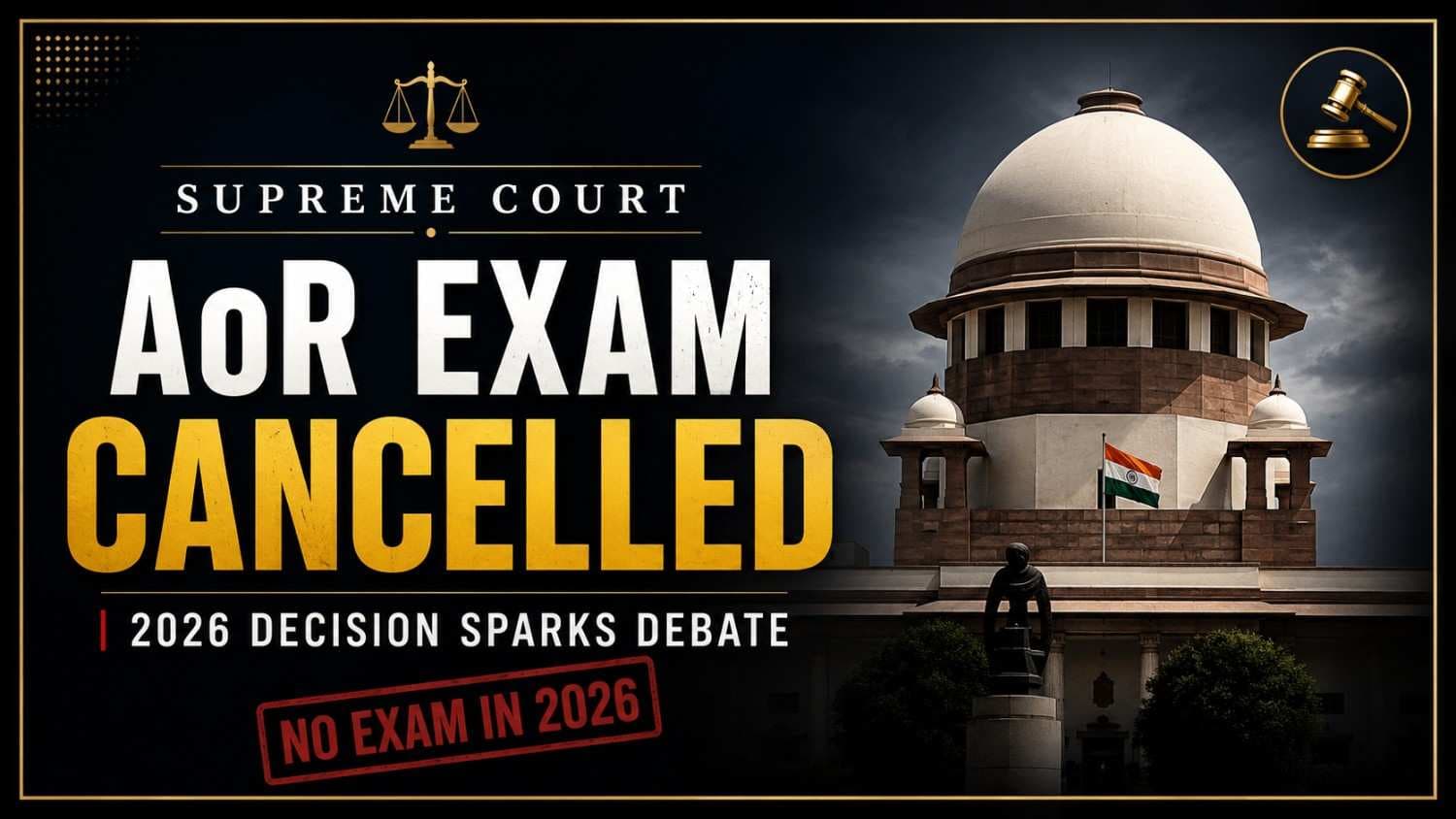
The legal community was recently stirred by the Supreme Court’s decision to cancel the Advocate-on-Record (AoR) examination for the year 2026. This move sparked immediate legal challenges from aspiring candidates who argued that the cancellation was "arbitrary" and hampered their professional advancement. However, in a significant development on May 11, 2026, a bench comprising Justice Aravind Kumar and Justice PB Varale declined to entertain these pleas on the judicial side, marking a pivotal moment for hundreds of legal practitioners.
The original notification, issued on April 30, 2026, cited the "overall strength of the AoRs" as the primary reason for skipping the 2026 cycle. With nearly 4,000 active AoRs currently practicing in the apex court, the administrative body determined that the current pool is sufficient to handle the court's litigation load. For candidates who had spent months in rigorous preparation, this administrative "pause" felt like a sudden roadblock to their career aspirations.
The petitioners, many of whom had already cleared three out of the four mandatory papers in the 2025 cycle, argued that the cancellation was a violation of their fundamental rights under Articles 14 and 19. They contended that the decision created an unfair "gap year" that disregarded the legitimate expectations of candidates who had structured their professional lives around the annual exam schedule. Some even highlighted that they had resigned from lucrative positions to dedicate time to this final qualifying step.
During the hearing, the Supreme Court made it clear that while it understood the candidates' frustrations, the matter was essentially an administrative policy decision. The bench observed that the judiciary should not easily interfere with the internal regulatory mechanisms of the court’s examination cell. Instead of passing a judicial order to force the exam, the court suggested a different route: a direct appeal to the administrative head of the judiciary.
The bench directed the aggrieved lawyers to submit a "consolidated representation" to the Chief Justice of India (CJI). By shifting the focus from a courtroom battle to an administrative plea, the court opened a door for a "sympathetic consideration" of the candidates' plight. Justice Aravind Kumar noted that the ends of justice would be better served if the CJI reviewed the data and grievances collectively rather than through piecemeal litigation.
This decision underscores the Supreme Court's delicate balancing act between maintaining a manageable number of practitioners and ensuring fair entry into the highest levels of the legal profession. While the 2026 exam remains officially off the calendar for now, the directive to approach the CJI offers a glimmer of hope that a special provision might be made for "carry-forward" candidates who only have one paper left to clear.
As it stands, the next AoR examination is likely to be held in 2027. For now, the legal fraternity must wait to see how the CJI responds to the upcoming representation. If the administration stands firm, 2026 will be remembered as a rare "silent year" in the history of the AoR exams—a reminder that in the world of high-stakes litigation, administrative logistics can sometimes override individual career timelines.
In conclusion, while the judicial challenge hit a dead end, the administrative path remains open. Candidates now have 10 days to compile their grievances and present them to the CJI. Whether this leads to a reversal or a compromise remains to be seen, but the outcome will undoubtedly set a precedent for how professional qualifying exams are regulated in India’s top court.