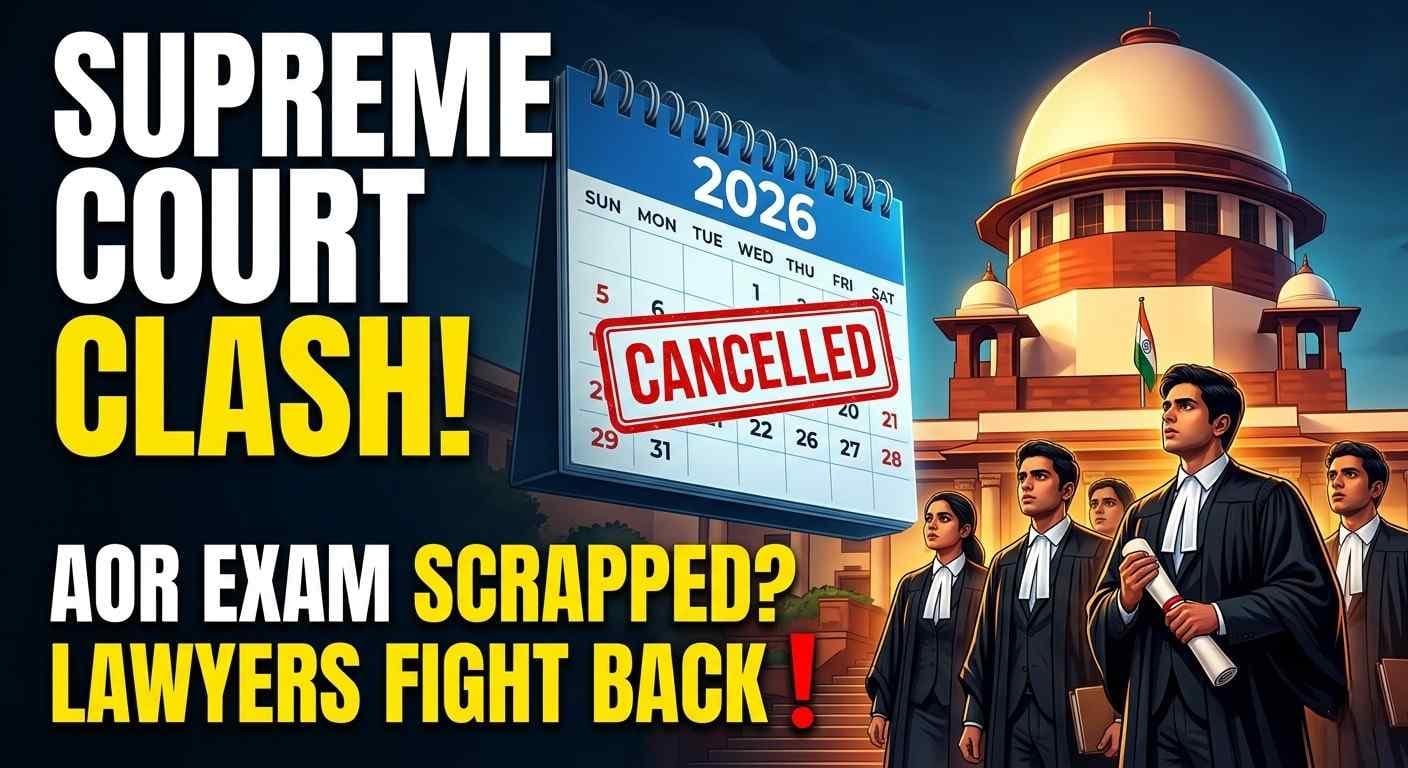
The Supreme Court of India is set to hear a unique petition filed by a group of advocates challenging the Registry’s decision not to conduct the Advocate-on-Record (AoR) Examination in 2026. The petitioners, many of whom were just one paper short of qualifying in the previous examination cycle, argue that the "gap year" creates an arbitrary hurdle in their professional advancement. This legal challenge brings into focus the administrative discretion of the Supreme Court Registry versus the career aspirations of the legal fraternity.
Under the Supreme Court Rules, 2013, an advocate must pass a rigorous four-paper examination to earn the title of an Advocate-on-Record, a designation mandatory for filing any matter before the apex court. The rules generally contemplate an annual examination process. However, the Registry’s recent notification indicating that no exam would be held in 2026 has left several candidates in a state of professional limbo, particularly those who have "carried over" papers from previous attempts.
The petitioners contend that the decision to skip a year is arbitrary and lacks a reasonable nexus with any administrative objective. They argue that for many, 2026 represents their final chance to clear the remaining papers before their previous results expire or their eligibility criteria change. By not holding the exam, the Supreme Court is effectively extending their waiting period by an additional year, which the advocates claim violates their right to practice their profession effectively.
A significant point raised in the plea is the "compartmental" system of the AoR exam. If a candidate passes three out of four papers, they are permitted to appear for the remaining paper in the next immediate examination. The petitioners argue that by cancelling the 2026 session, the Court is disrupting this statutory "next immediate" opportunity, thereby causing undue hardship to those who have already invested years in preparation.
The Registry’s decision to skip the exam often stems from logistical constraints or the need to manage the existing pool of AoRs. However, the advocates maintain that the administrative convenience of the Registry should not override the career progression of eligible practitioners. They have urged the Court to direct the Registry to schedule at least a "special examination" for those who only need to clear one or two papers to qualify.
This case also touches upon the broader interpretation of Article 145 of the Constitution, which empowers the Supreme Court to make rules for regulating its own practice and procedure. The petitioners seek a judicial clarification on whether "regularly" holding examinations implies an annual obligation or if the Registry can skip years at its discretion. The outcome of this case will set a precedent for how the administrative side of the judiciary interacts with the professional rights of the bar.
For young lawyers, the AoR designation is a critical milestone that grants them independent standing in the highest court of the land. The delay of even a single year can have significant financial and professional implications. The petition highlights the "anxiety and uncertainty" faced by candidates who have been preparing for the 2026 cycle, noting that the notification came as a sudden blow to their career timelines.
As the matter comes up for hearing, the legal community will be watching closely to see if the Supreme Court prioritizes its administrative schedule or the professional exigencies of the advocates. Whether the Court directs a mid-year examination or upholds the Registry's decision, the ruling will underscore the balance between institutional management and the right to professional growth within the Indian judicial system.