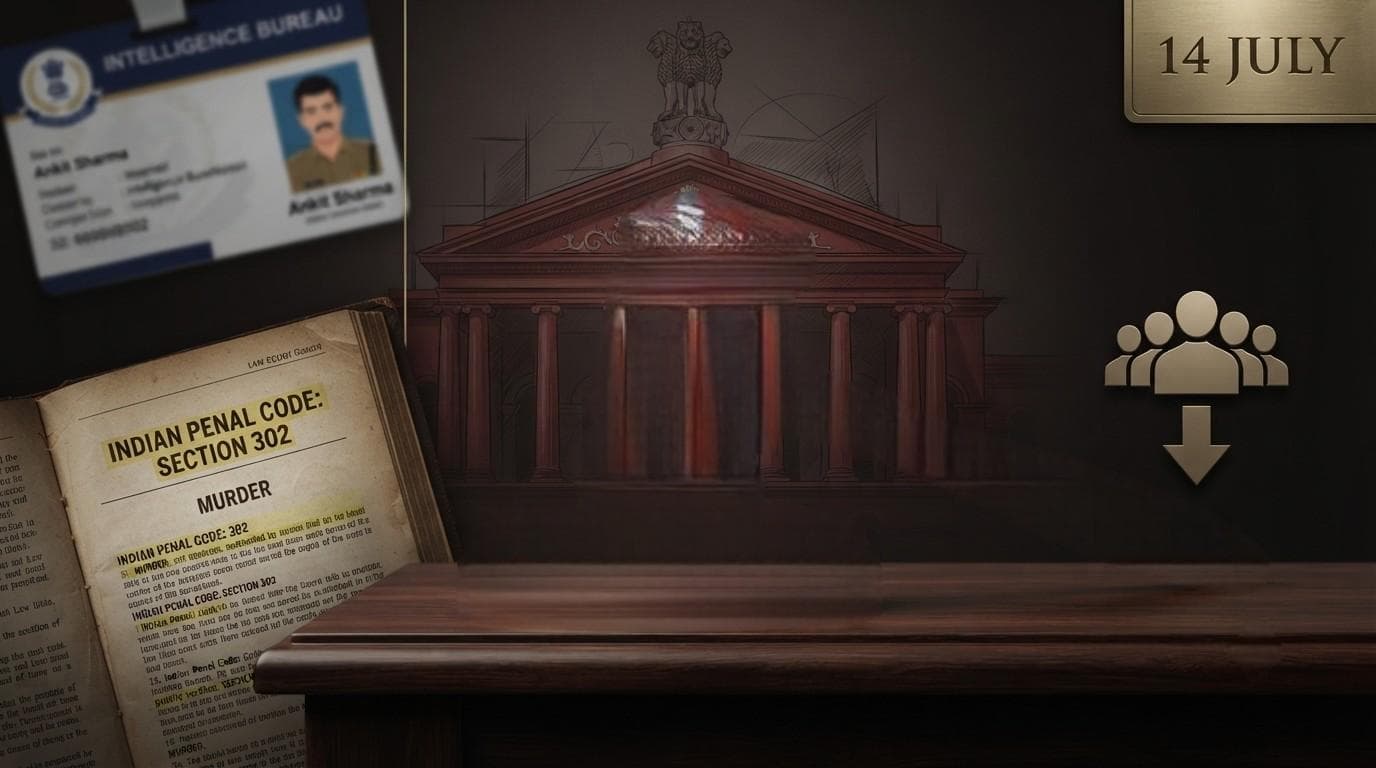
Session Judge Praveen Singh of the Karkardooma district court pronounced the verdict on Monday, finding Tahir Hussain, a former councillor of the Aam Aadmi Party, and four other individuals guilty of the murder of Intelligence Bureau officer Ankit Sharma. The conviction relates to the killing that occurred during the widespread riots that affected parts of north‑east Delhi in February 2020.
The court’s order states that the prosecution succeeded in establishing, beyond reasonable doubt, that the accused persons participated in the violent mob that attacked and killed Sharma while he was performing his official duties. The judgment notes that the evidence presented, including eyewitness testimony, forensic reports and documentary material, linked the accused to the incident and satisfied the legal requirements for murder under the Indian Penal Code.
During the trial, the prosecution argued that the accused were part of an organised group that targeted individuals based on their identity and that Sharma was singled out because of his official position. The defence contended that the identification of the accused was unreliable and that the charges were politically motivated. The judge, after examining the material on record, rejected the defence’s contentions and held that the prosecution’s case was proved.
The verdict specifies that each of the five convicted persons is liable for the offence of murder punishable under Section 302 of the Indian Penal Code, read with Section 34 for common intention. The court has reserved the question of sentence for a separate hearing, where it will consider aggravating and mitigating circumstances, including the nature of the crime, the impact on the victim’s family and the broader implications for public order.
Legal observers note that the judgment reinforces the judiciary’s approach to cases arising from communal violence, emphasizing that participation in a mob that results in loss of life attracts criminal liability irrespective of the accused’s political affiliation. The decision also underscores the importance of protecting public servants discharging their duties during periods of civil unrest.
The conviction marks a significant development in the series of prosecutions stemming from the 2020 Delhi riots, in which numerous individuals have been charged with offences ranging from rioting to murder. The Karkardooma court’s ruling adds to the growing body of judicial pronouncements that seek to address accountability for violence that claimed multiple lives and caused extensive property damage in the capital.
As the matter proceeds to the sentencing stage, the court will hear arguments on the appropriate quantum of punishment. The final order will determine the length of imprisonment and any fine imposed on each of the convicted individuals, in accordance with the statutory provisions governing murder.