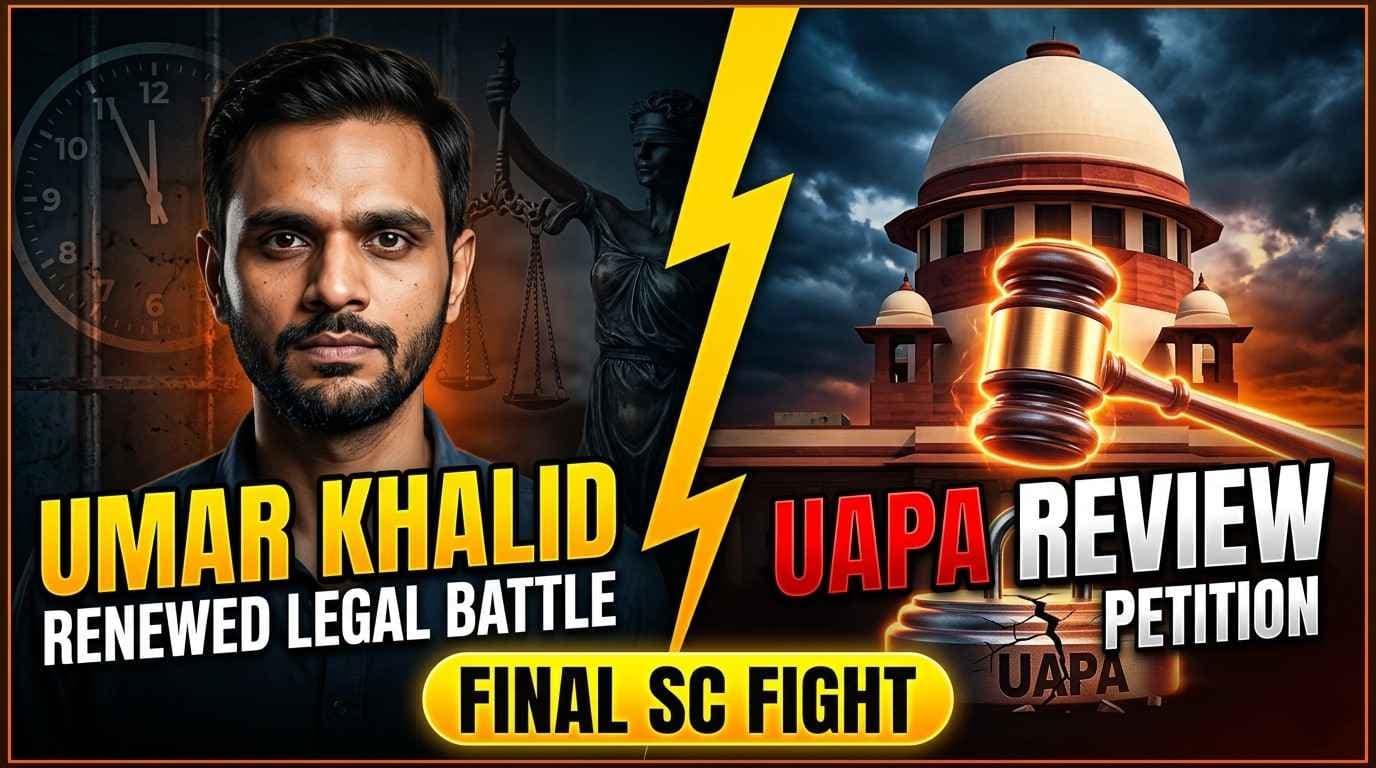
Umar Khalid has filed a review petition in the Supreme Court, challenging the earlier decision that denied him bail in the Delhi Riots larger conspiracy case. Khalid, who has been in custody since September 2020, argues that the previous judgment overlooked critical legal nuances regarding the standard of proof required under the Unlawful Activities (Prevention) Act (UAPA). The petition contends that the evidence presented against him—primarily based on witness statements and speech transcripts—does not meet the "prima facie true" threshold necessary to deny bail under Section 43D(5) of the UAPA.
The review petition seeks to address what Khalid’s legal team describes as "errors apparent on the face of the record." They argue that the earlier Bench failed to properly distinguish between democratic dissent and an incitement to violence. The petition emphasizes that Khalid’s speeches, which formed a significant part of the prosecution's case, were calls for peaceful protest and constitutional awareness rather than a conspiracy to orchestrate the February 2020 communal violence in North East Delhi.
Furthermore, the filing highlights the prolonged nature of Khalid's incarceration without the trial having commenced in earnest. His lawyers argue that "incarceration cannot be a substitute for trial" and that the continued denial of bail violates his fundamental right to personal liberty under Article 21 of the Constitution. By seeking a review, Khalid is making a final attempt within the Supreme Court's jurisdiction to have the judicial assessment of the charges against him reconsidered before the case moves deeper into the trial stage.
The prosecution, led by the Delhi Police, has consistently opposed Khalid's release, maintaining that he was a key conspirator in a pre-planned attempt to destabilize the government during the visit of President Donald Trump. They rely on "protected witnesses" and digital evidence to link Khalid to various protest sites and planning meetings. The Supreme Court's decision on this review petition will be a landmark moment, as it will further clarify the judiciary's approach to bail in high-profile national security cases where the line between activism and criminal conspiracy is heavily contested.
Beyond Khalid’s individual case, this legal battle serves as a litmus test for the application of the UAPA in the higher judiciary. Legal observers note that a review petition has a very narrow scope and is rarely successful unless a glaring oversight is proved. However, the move ensures that the legal arguments regarding the misuse of anti-terror laws against political activists remain at the forefront of the national judicial discourse.
The case will likely be heard by a Bench of similar strength to the one that originally denied bail. If the review is accepted, it could pave the way for a fresh hearing on the merits of his bail application; if dismissed, Khalid’s remaining legal recourse will be limited to the slow-moving trial proceedings in the lower courts.