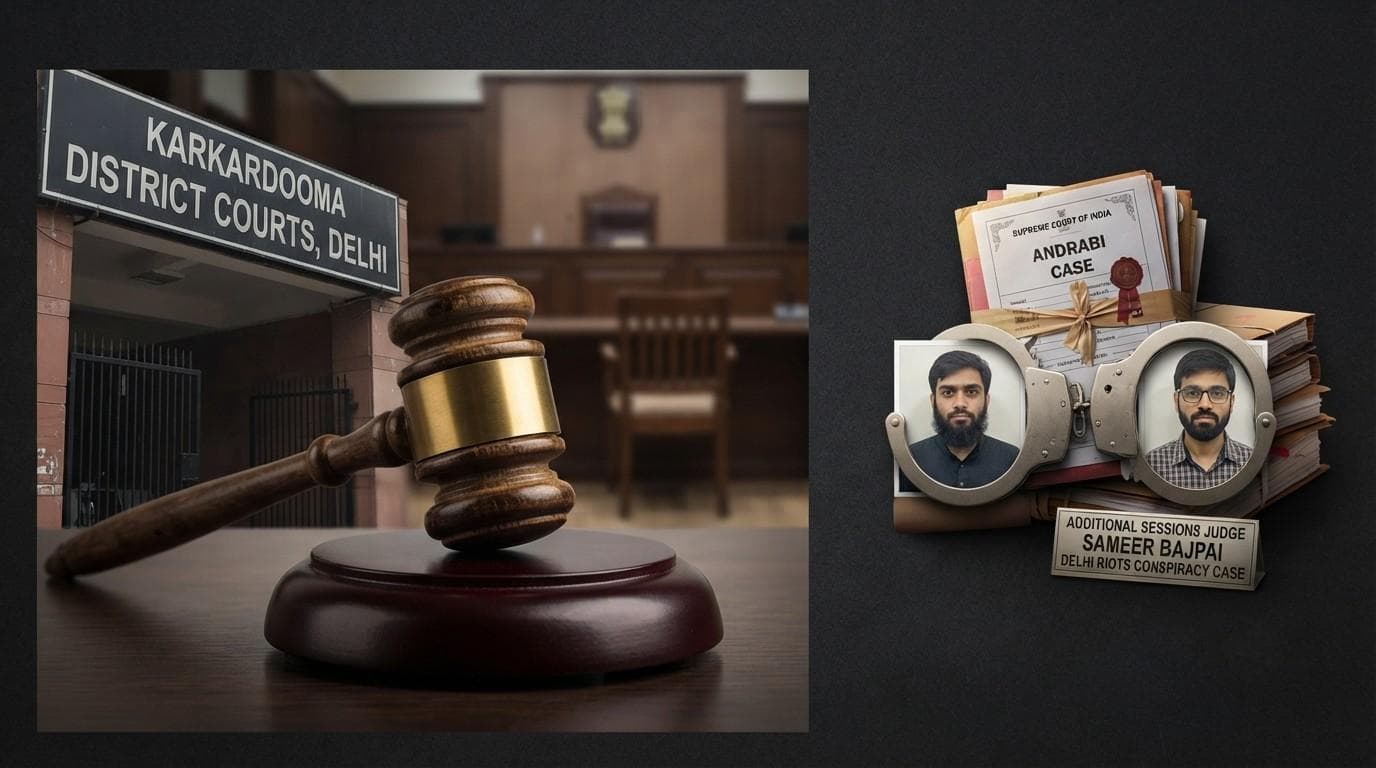
The Additional Sessions Judge (ASJ) Sameer Bajpai presiding over the Karkardooma sessions court announced on Saturday that the court had reserved its verdict on the bail pleas submitted by Sharjeel Imam and Umar Khalid. The judge stated that the order would be passed either later that evening or on Monday, 6 July 2026.
The bail applications were moved after a recent pronouncement by a bench of the Supreme Court that questioned the basis on which a different bench of the apex court had previously denied bail to the two accused. The applicants contended that, despite the lapse of more than six months since that Supreme Court judgment, the trial in the Delhi riots conspiracy case has not progressed meaningfully. They pointed out that the framing of charges remains incomplete and that no substantive evidence has been led.
Both Imam and Khalid submitted that they have been in custody for nearly six years in connection with the case. Their counsel argued that continued detention without advancement of trial violates the principle that incarceration should not be used as a punitive measure pending trial.
Senior Advocate Trideep Pais, appearing for Umar Khalid, relied on the Supreme Court’s decision in the Andrabi case, in which the court had examined the rationale for denying bail to Khalid and Imam. Pais submitted that, following that judgment, Khalid is entitled to bail. He further argued that the procedural bar imposed by the Supreme Court—which prohibits the accused from filing fresh bail applications for a period of one year or until witnesses are examined—does not apply in the present circumstances.
Advocate Talib Mustafa, representing Sharjeel Imam, submitted that the very propriety of imposing a one‑year embargo on fresh bail applications is a matter that requires consideration by a larger bench of the Supreme Court. Mustafa noted that several other co‑accused in the same case have already benefited from the reference of the matter to a larger bench, implying that a similar approach could be warranted for Imam and Khalid.
The counsel for the Delhi Police opposed the bail pleas, maintaining that until a larger bench of the Supreme Court provides clarity on the issue, the findings, directions and embargo emanating from the earlier Supreme Court order remain binding on the lower court. The police representative added that, if the accused have any grievance regarding the embargo or the denial of bail, the appropriate forum to seek clarification is the Supreme Court itself, and that the sessions court cannot override the apex court’s directives.
The court’s decision to reserve judgment reflects the need to weigh the competing arguments concerning the applicability of the Supreme Court’s earlier observations, the status of trial proceedings, and the length of pre‑trial detention. The parties await the forthcoming order, which will determine whether Imam and Khalid will be released on bail pending further trial or remain in judicial custody.