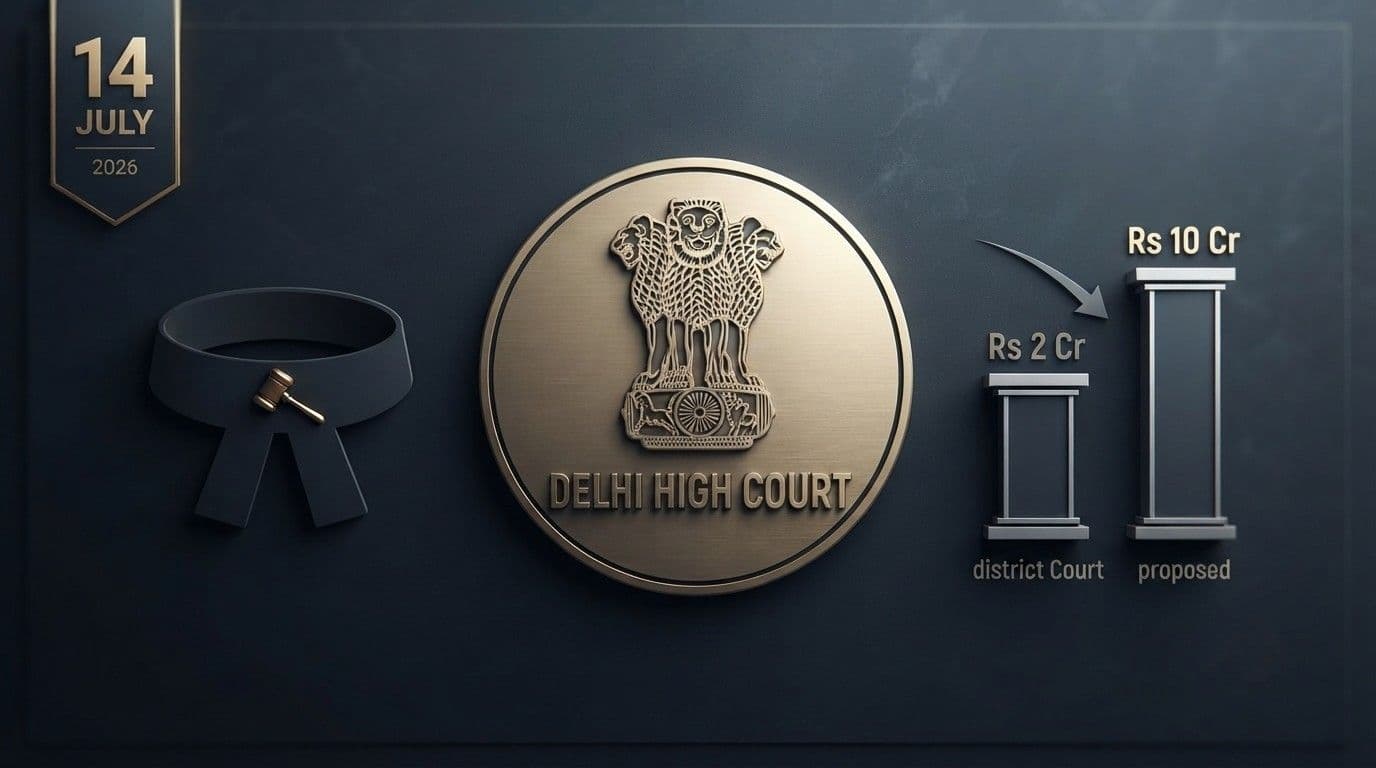
The Delhi High Court Bar Association (DHCBA) passed a resolution on 13 July 2026 stating that its members would abstain from work on the following day, 14 July 2026. The resolution was adopted after the Association’s Executive Committee considered the view expressed by the Full Court of the Delhi High Court on the proposal to enhance the pecuniary limits of the district courts. Despite the Association’s strong opposition to the measure, the Full Court’s position was taken into account before arriving at the decision to protest.
Grounds for Protest
The Executive Committee recorded its concern that the proposed increase would have far‑reaching ramifications for the justice delivery system. It argued that the change would adversely affect the practice, livelihood and professional interests of a substantial number of advocates who regularly appear before the Delhi High Court. The Committee emphasised that the enhancement would significantly diminish the Original Side jurisdiction of the High Court.
According to the resolution, the Association claimed that nearly seventy percent of the cases presently filed on the Original Side would be transferred to the district courts if the pecuniary limit were raised to Rs. 10 crore. This projection was presented as a basis for the apprehension that the High Court’s original docket would be markedly reduced.
Decision to Abstain
The Committee stated that the decision to abstain from work was taken after noting the serious adverse consequences likely to be faced by the members of the Association. It described the proposed enhancement as a matter that could impair the professional environment of advocates practising in the capital’s higher judiciary.
In the resolution, the DHCBA called upon all its members to observe a work stoppage on 14 July 2026 and requested full cooperation and solidarity in what it described as the collective interest of the Bar. The Association urged members to refrain from undertaking any professional duties on that day as a mark of protest against the proposed jurisdictional change.
Context of the Proposal
The pecuniary jurisdiction of a court determines the maximum monetary value of suits that it may try. At present, Delhi’s District Courts can entertain suits up to Rs. 2 crore. The proposal under consideration seeks to raise this ceiling to Rs. 10 crore. If implemented, a larger category of civil suits would fall within the district courts’ purview, thereby reducing the volume of cases that would otherwise be instituted directly before the High Court’s Original Side.
The Bar Association’s resolution reflects its view that such a shift would alter the distribution of work between the district courts and the High Court, with potential consequences for the administration of justice and the professional prospects of advocates who rely on High Court litigation for their livelihood.
The Association has not indicated any further steps beyond the one‑day abstention, and the resolution does not contain any directive to the judiciary or the government regarding the proposal. It remains a collective expression of concern by the Bar regarding the contemplated amendment to the pecuniary limits of the district courts.