The Hindu Marriage Act, 1955, under Section 14, imposes a temporal bar on the presentation of a petition for divorce. Except in cases of exceptional hardship or extraordinary depravity, no petition for divorce may be presented within one year of the date of marriage. The provision is intended to afford the parties an opportunity for reconciliation and to prevent hasty dissolution of matrimonial ties.
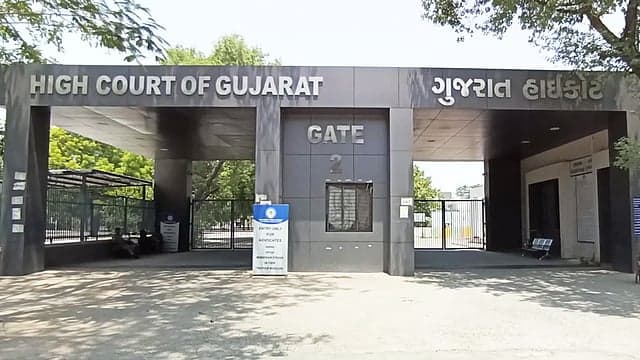
In the matter before the Gujarat High Court, the husband had instituted a divorce petition before the family court within a year of the marriage. The family court proceeded to examine the suit on its merits and passed an order that was subsequently challenged by the husband through an appeal. The appeal raised the question whether the family court was empowered to entertain and decide the merits of a suit that is prima facie barred by Section 14 HMA.
Court’s Reasoning
The Gujarat High Court, after considering the statutory language and the object behind Section 14, held that the bar operates as a jurisdictional limitation. The court emphasized that the prohibition is not merely a procedural irregularity but a substantive restriction on the maintainability of the suit. Consequently, a family court lacks the authority to delve into the merits of the controversy when the suit is presented within the prohibited period.
The court further explained that the appropriate course for the family court, upon noticing the prematurity of the suit, is limited to two alternatives. First, the court may return the plaint to the petitioner, directing him to re‑file the petition after the expiry of the one‑year period. Second, the court may dismiss the suit, but must do so with an explicit liberty to the parties to institute a fresh petition once the statutory period has elapsed. In either scenario, the court must refrain from making any findings on the substantive grounds for divorce, such as cruelty, desertion, or adultery.
The High Court relied on the principle that a court cannot confer jurisdiction upon itself by ignoring a statutory bar. It noted that allowing a family court to decide the merits would defeat the legislative purpose of Section 14, which is to impose a cooling‑off period. The court also observed that the parties’ right to seek divorce remains intact; they are merely required to await the lapse of the prescribed time before approaching the forum.
Implications
The ruling reinforces the strict application of Section 14 HMA and clarifies the limits of family court jurisdiction in premature divorce proceedings. Litigants and practitioners must now ensure that any divorce petition is filed only after the completion of one year from the date of marriage, unless they can bring themselves within the recognized exceptions of exceptional hardship or extraordinary depravity. The judgment also serves as a reminder that family courts, while empowered to adjudicate matrimonial disputes, must first ascertain the maintainability of the suit before proceeding to substantive adjudication.
By confining the family court’s role to returning or dismissing the plaint with liberty to re‑file, the Gujarat High Court has sought to uphold the legislative intent behind Section 14, thereby promoting marital stability and discouraging precipitate litigation. The decision is expected to influence family court practice across the jurisdiction, prompting a more rigorous scrutiny of the temporal aspect of divorce petitions at the outset of proceedings.