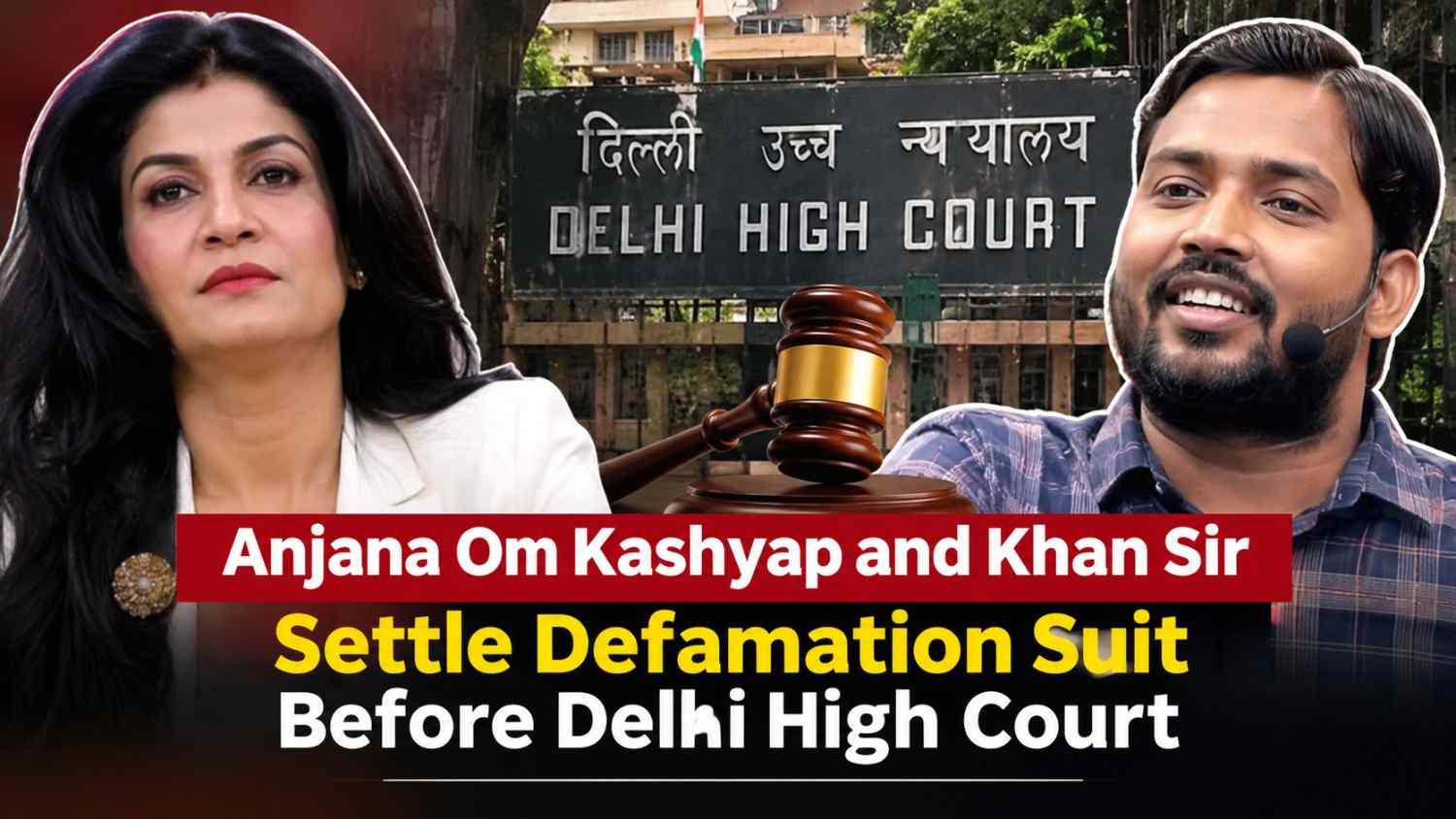
In an important legal development, journalist Anjana Om Kashyap and popular educator Faisal Khan, widely known as Khan Sir, have reached a settlement in a ₹2 crore defamation dispute before the Delhi High Court. The development took place on 4 November 2026 and attracted public attention because it involved two well-known personalities from the media and education sectors.
The dispute highlights important legal issues relating to freedom of speech, defamation, social media responsibility and the role of mediation in resolving disputes.
How Did the Dispute Begin?
The controversy began after a television debate on 29 May 2026 on Aaj Tak concerning the NEET examination system and the growing influence of online educators, popularly known as "star teachers".
During the debate, Anjana Om Kashyap reportedly raised questions about the increasing popularity of online teachers and the commercialisation of education. Her comments attracted criticism from several online educators.
Following the broadcast, certain comments and posts were allegedly made against the journalist and the news channel on social media platforms. According to the allegations in the defamation suit, some of these remarks were insulting and harmful to her professional reputation.
As a result, Anjana Om Kashyap and TV Today Network approached the Delhi High Court by filing a defamation suit seeking ₹2 crore in damages and the removal of the allegedly defamatory content from online platforms.
Why Did the Matter Reach the Delhi High Court?
The plaintiffs alleged that certain statements made by Khan Sir and other individuals damaged the reputation of the journalist and the news organisation.
The case involved comments circulated through social media, online platforms and other forms of public communication.
The matter raised an important question: Does freedom of expression give individuals the right to make personal and insulting statements about others?
The case also highlighted the responsibility of people with large social media followings. Statements made by popular journalists, teachers, educators and public personalities can reach millions of people within a short period.
The Role of Mediation in the Case
One of the most important aspects of this case was the use of mediation.
Instead of allowing the dispute to continue through lengthy court proceedings, the Delhi High Court encouraged the parties to explore an amicable settlement.
In July 2026, the Court appointed Senior Advocate Rajshekhar Rao as the mediator to help both sides resolve their differences.
Mediation is a form of Alternative Dispute Resolution (ADR) in which a neutral third person helps the parties communicate and reach a mutually acceptable solution. Unlike a judge, a mediator does not impose a decision on the parties.
During the hearing on 4 November 2026, the Court was informed that a settlement had been reached between Anjana Om Kashyap and Khan Sir, along with five other defendants.
The other parties covered by the reported settlement included Babita Tyagi, Arvind Bhadauriya, Manish Yadav and the operators of two X accounts, SamKhasa and Abhimanyu1305.
Justice Tushar Rao Gedela appreciated the efforts of the mediator and remarked:
"You have done something which was almost impossible."
However, the dispute was not resolved with every defendant. Mediation with 4 PM News had failed at that stage, while settlement discussions with educator Abhinay Sharma were still pending. The Court encouraged another attempt at mediation with 4 PM News.
Legal Importance of the Case
This dispute brings attention to some important legal provisions of the Indian Constitution and criminal law.
Article 19(1)(a) – Freedom of Speech and Expression
Article 19(1)(a) of the Indian Constitution guarantees citizens the fundamental right to freedom of speech and expression. It allows individuals to express their opinions, share information and criticise public issues.
Journalists and educators both play an important role in public discussions. They have the right to express their views, question each other and participate in debates.
Article 19(2) – Reasonable Restrictions
Freedom of speech is not an unlimited right. Article 19(2) allows the State to impose reasonable restrictions on certain grounds, including defamation.
This means that a person cannot automatically justify every statement simply by claiming it is an exercise of freedom of expression.
Section 356 of the Bharatiya Nyaya Sanhita, 2023
Section 356 of the BNS deals with criminal defamation. It provides for punishment where the legal requirements of defamation are satisfied, subject to the exceptions provided under the law.
Apart from criminal proceedings, a person may also seek civil remedies, including damages, where legally justified.
It is important to remember that the present settlement should not be treated as a judicial finding that either party committed defamation.
Why Is This Settlement Important?
The settlement demonstrates that every legal dispute does not necessarily need to end with a lengthy court trial.
Mediation provides an opportunity for parties to communicate, understand each other's concerns and find a mutually acceptable solution.
It can save time, reduce legal expenses and help avoid unnecessary hostility.
It also sends an important message to people who regularly use social media. Public criticism and disagreement are part of a democratic society, but personal attacks and potentially defamatory statements can create serious legal consequences.
At the same time, journalists and media organisations should also exercise responsibility while reporting and discussing individuals or institutions.
Conclusion
The settlement between Anjana Om Kashyap and Khan Sir is more than just a dispute between two well-known personalities. It highlights the importance of balancing freedom of expression with the protection of individual reputation.
In a country where social media has become a powerful platform for sharing opinions, everyone should understand the responsibility that comes with their words.
The law protects the right to express opinions, but that right must be exercised responsibly.