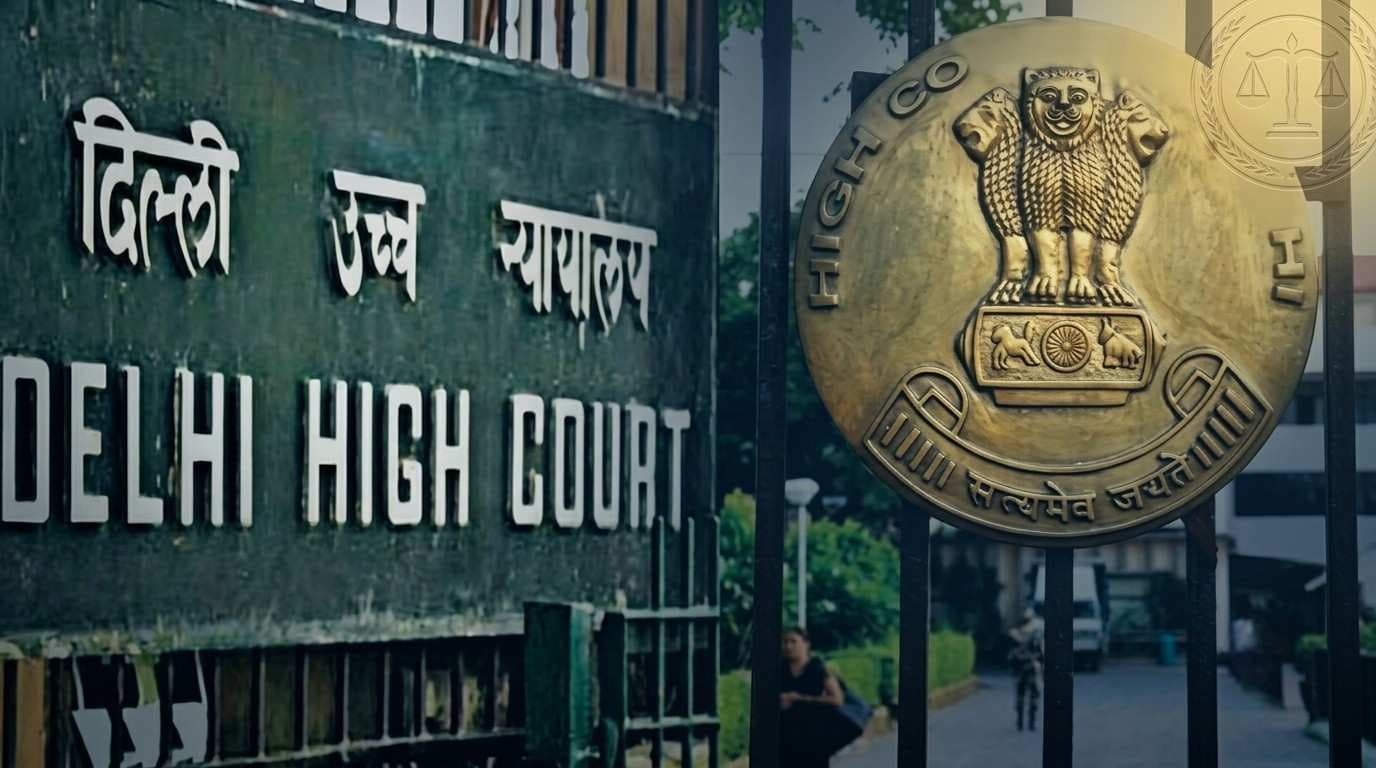
The Delhi High Court was hearing a petition filed by the Delhi Development Authority challenging earlier directions issued by the Court at the instance of property owners. Those owners, primarily from DLF South Court Mall in Saket, had submitted applications in 2023 seeking conversion of their leasehold properties to freehold. They alleged that despite paying the conversion charges demanded by the DDA, the transfer of title was not effected, while the authority retrospectively levied Goods and Services Tax on the petitioners.
On 5 December 2025 the High Court, acting on an undertaking by the petitioners to honour any GST liability if unsuccessful, directed the DDA to process the conversion applications. When the authority failed to comply, the petitioners returned to Court, resulting in further orders on 11 February 2026 and 18 March 2026 that again mandated processing of the pending requests. The DDA subsequently challenged those directions, leading to the present hearing.
Court’s Observations on Delay
During the hearing on 3 July 2026 the division bench comprising Justice Prathiba M Singh and Justice Vikas Mahajan expressed serious concern over the DDA’s inaction. The Bench noted that the authority had stalled all conversion applications for several months, describing the situation as a serious matter. It observed that the delay had brought property transactions in the city to a standstill, affecting family settlements, sales, succession arrangements and other private dealings.
The Court further stated that numerous cooperative societies and citizen groups had lodged complaints about the non‑processing of conversion applications. It rejected the DDA’s justification that its Interactive Disposal of Land Information System (IDLI portal) was non‑functional, holding that the authority could not keep applications in abeyance on that ground.
Legal Reasoning and Directions
The Bench held that the DDA cannot indefinitely withhold decisions on conversion requests. It emphasized that the authority’s statutory duty to dispose of such applications must be exercised within a reasonable time, and that prolonged inaction constitutes a failure to perform its public function.
Accordingly, the Court directed the DDA to hold urgent consultations with the Union Ministry of Housing and Urban Affairs and the Government of Delhi to formulate a decision on the pending applications. It also ordered the vice chairman of the DDA to file a detailed status report outlining the steps taken and the reasons for any further delay, and to appear personally before the Court on the next date of hearing fixed for 30 July 2026.
Implications of the Order
The order reinforces the principle that administrative bodies must act expeditiously on matters affecting private property rights. By linking the delay to broader impacts on family settlements and market transactions, the Court highlighted the societal cost of bureaucratic inertia. The directive to consult with central and state authorities signals an expectation that policy‑level issues, if any, be resolved swiftly so that the DDA can fulfil its statutory obligations.
The appearance of the vice chairman ensures direct accountability, while the status report requirement enables the Court to monitor compliance. Should the DDA fail to act in accordance with the directions, further judicial intervention may follow, potentially including costs or other consequential orders.