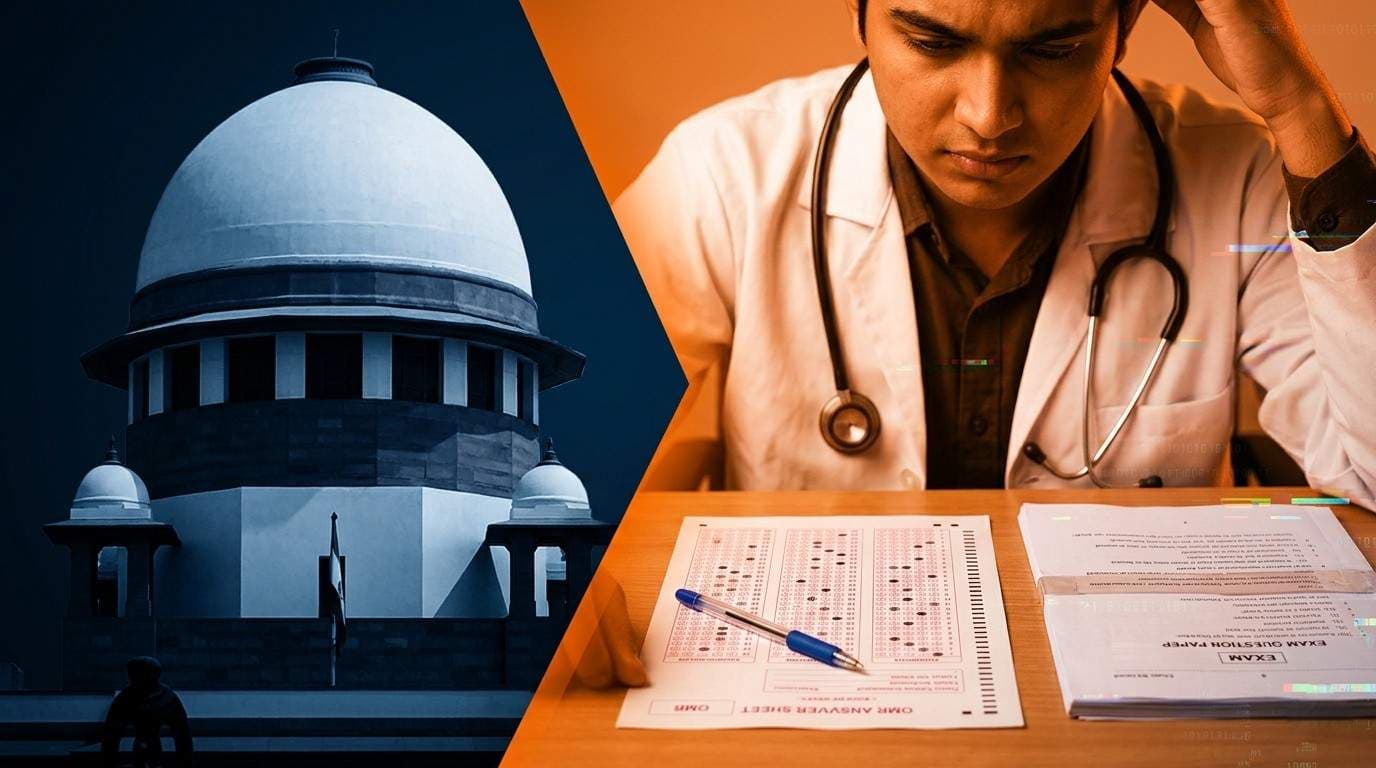
The high-stakes battle over the future of India’s most prestigious medical entrance exam has hit another major roadblock in the judiciary. The Supreme Court has flatly rejected an urgent petition demanding that the upcoming National Eligibility-cum-Entrance Test (NEET-UG 2026) re-examination be shifted entirely to an online, computer-based format. This decisive ruling ensures that over 22 lakh medical aspirants must once again prepare for the traditional pen-and-paper method, despite widespread anxiety surrounding the system's vulnerability.
This latest courtroom showdown follows a chaotic series of events that completely derailed the medical admissions calendar. The original examination, conducted on May 3, was cancelled nationwide on May 12 after explosive allegations of a leaked question paper surfaced on encrypted messaging platforms. With the Central Bureau of Investigation currently conducting a high-profile probe into the systemic breach, the National Testing Agency has been left scrambling to reorganize a fresh national test scheduled for June 21.
During the intense legal proceedings, a vacation bench consisting of Justices P.S. Narasimha and Aravind Kumar showed zero inclination to force a sudden, radical restructuring of the exam's infrastructure. The petitioners, including prominent political figures and student bodies, argued that moving to a Computer-Based Test (CBT) model was the only foolproof way to minimize the massive security risks associated with the physical transportation and custody of test booklets. However, the bench remained completely unmoved by this line of reasoning.
The judiciary’s refusal to intervene boils down to a pragmatic assessment of the sheer administrative chaos a sudden shift would trigger. The bench openly sympathized with the logistical nightmare the testing body is navigating, noting that the agency is already grappling with an overwhelming wave of operational challenges. Justices pointed out that altering the core examination format with just weeks left before the scheduled retest would break the system entirely, creating immense practical difficulties for students and organizers alike.
The Supreme Court emphasized that piling additional technical mandates onto a struggling institution right now is completely counterproductive. The court noted that the immediate priority must be the smooth, secure execution of the upcoming test, rather than introducing untested digital workflows under extreme duress. While the bench acknowledged the profound trauma and uncertainty millions of families are enduring, it firmly stated that the judiciary cannot micromanage emergency testing logistics from the bench.
Interestingly, official documentation reveals that a long-term transition to digital testing is already on the horizon. In a detailed status affidavit filed before the apex court, the testing agency revealed that a high-level expert committee has formally recommended a permanent shift to the CBT model, alongside multi-session testing. The agency confirmed that it is fully prepared to abandon the pen-and-paper format permanently starting next year, once comprehensive consultations with the Union Health Ministry are finalized.
For the immediate future, the Central government has assured the bench that an incredibly strict security architecture will safeguard the June 21 retest. Top legal officers informed the court that new, multi-layered authentication tools, AI-powered surveillance, and advanced inter-agency coordination will shield the physical paper trail from any external tampering. As the supreme judiciary defers the broader debate over structural overhauls and agency replacements to late July, anxious aspirants must refocus their energy on the physical exam halls.