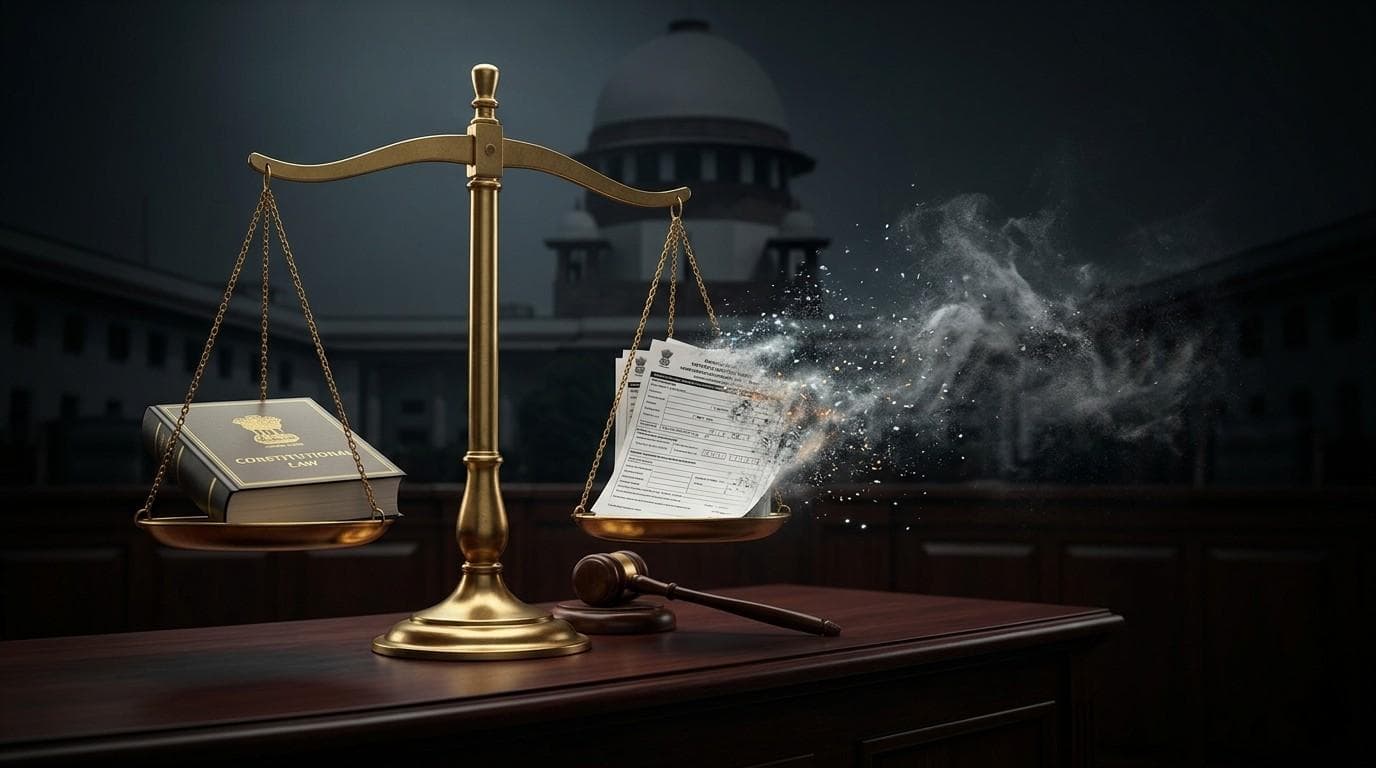
A massive constitutional crisis has moved from the polling booths of West Bengal straight to the corridors of the Supreme Court. The integrity of the democratic process is facing severe scrutiny following a high-stakes petition demanding absolute transparency regarding the sudden erasure of over 90 lakh names from the state's voter rolls. This aggressive legal challenge attacks the opaque bureaucratic maneuvers that critics claim systematically disenfranchised vast blocks of genuine citizens right before a crucial election.
At the center of this explosive legal battle is a controversial exercise known as the Special Intensive Revision. Under the guise of purging duplicate entries and unverified out-of-state migrants, election authorities initiated a sweeping cleanup that ultimately sliced off nearly 12% of the total electorate. This radical intervention left massive populations blindsided on election day, transforming routine administrative upkeep into an alleged weapon of targeted political exclusion.
The legal pushback gained serious momentum after a specialized committee, led by prominent political figure Prasenjit Bose, began compiling damning evidence against the revision process. Activists and legal teams discovered that the criteria used to identify "absentee or deceased" individuals were deeply flawed and lacked local field verification. Entire neighborhoods, particularly in minority-dominated and vulnerable border districts, found their generational voting rights completely wiped out with a single stroke of an official pen.
What was initially dismissed by officials as routine technical error has quickly evolved into a proven case of systemic negligence. Data compiled from emergency appellate tribunals, which were hurriedly established under supreme judicial orders to handle the crisis, revealed a startling pattern. Of the thousands of initial appeals processed, over 60% of the deleted individuals were found to be completely genuine residents who were subsequently ordered back onto the voting rolls—a statistic that highlights the sheer recklessness of the initial purge.
Despite these emergency corrections, the institutional damage was already done. Because the slow-moving tribunals could only process a tiny fraction of the staggering 34 lakh disputes before polling dates, millions of rightful citizens were forcefully blocked from casting their ballots. Legal experts argue that treating a citizen's core constitutional right as a administrative variable completely undermines the democratic mandate, raising troubling questions about the finality of the entire election outcome.
During preliminary hearings, the apex court has faced immense pressure to force the Election Commission to open its digital books. The petition explicitly demands a comprehensive, seat-by-seat breakdown of the exact methodology used to flag individuals under complex logical discrepancy categories. By forcing the regulatory body to justify these mass erasures, the litigation aims to dismantle the wall of administrative secrecy that currently shields the commission's automated algorithms.
The geopolitical ramifications of this legal standoff are causing immense friction across the political spectrum. While defending forces claim the massive revision was a necessary security measure to eliminate illegal listings, the unified opposition labels the operation a bloodless democratic erasure. As the division bench digs deeper into the systemic flaws of automated voter profiling, this case stands as a vital defense line against the technological weaponization of citizenship registries.