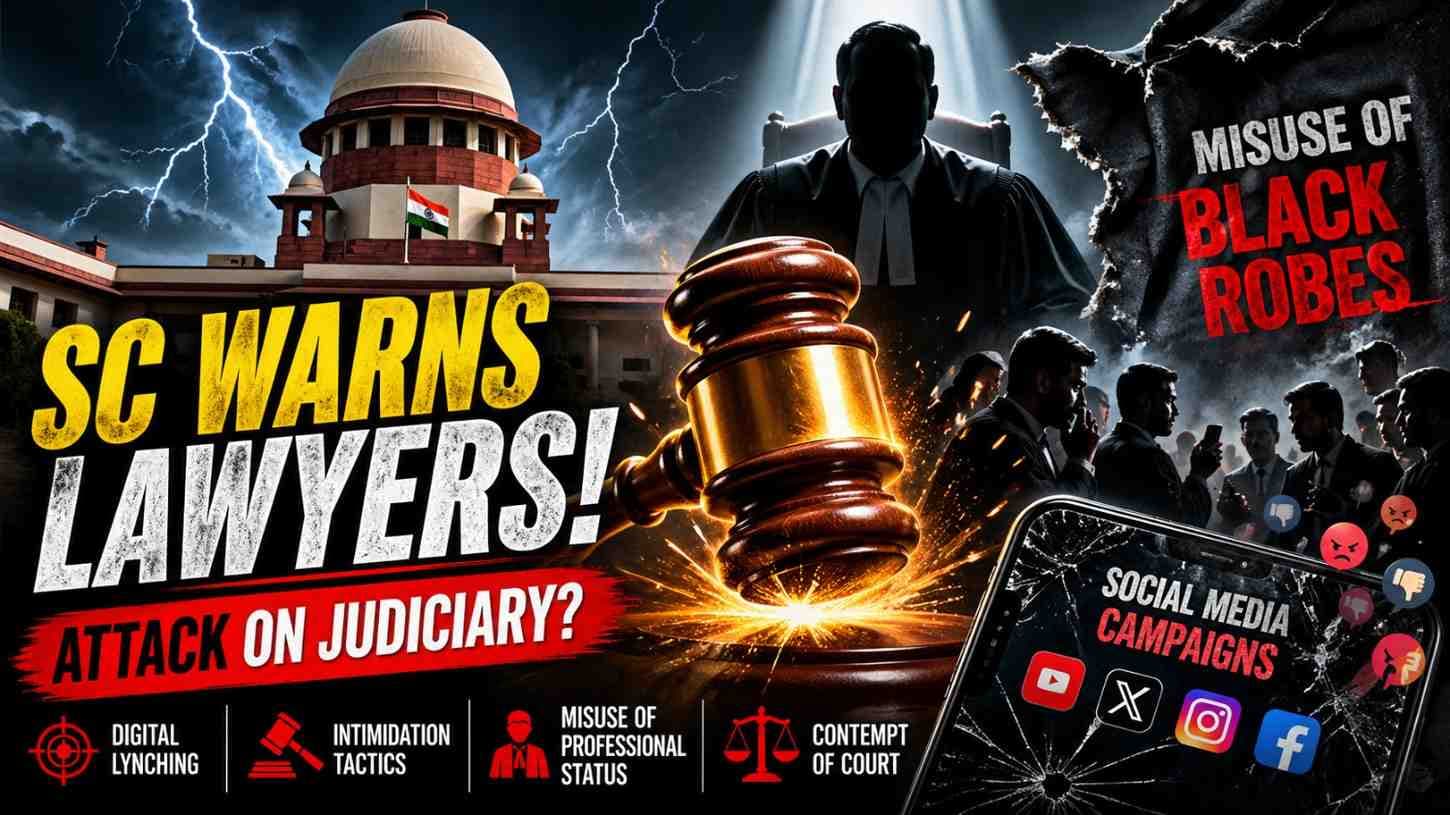
The Supreme Court of India has strongly condemned a series of social media campaigns directed against a sitting judge, describing the actions of certain legal practitioners as an "obnoxious" attempt to intimidate the judiciary and "misuse the black robes."
A bench comprising Justice B.R. Gavai and Justice Sandeep Mehta expressed grave concern over the growing trend of lawyers using digital platforms to launch personal attacks on judges when a ruling does not go in their favor. The Court observed that such behavior not only undermines the dignity of the legal profession but also threatens the independence of the judicial system.
Key Observations of the Court:
Attack on Judicial Independence: The Court noted that organized social media campaigns designed to malign a judge’s reputation are a "direct interference" with the administration of justice. The bench remarked that judges must be able to perform their duties without fear of being subjected to "digital lynching" by disgruntled litigants or their counsel.
Professional Ethics: The bench reminded the legal fraternity that the privilege of wearing the "black robe" comes with a responsibility to uphold the rule of law. Utilizing professional status to orchestrate a smear campaign was categorized by the Court as a gross violation of professional ethics.
Intimidation Tactics: The Court highlighted that these campaigns often appear "scripted" and are aimed at forcing a judge to recuse themselves from a matter or to influence the outcome of a pending case through public pressure.
Call for Accountability: The Supreme Court suggested that Bar Councils must take a proactive role in disciplining members who engage in such "scurrilous" activities. The bench warned that while fair criticism of a judgment is permissible, personal vilification of a judge is a matter of criminal contempt.
The ruling came during the hearing of a petition where it was brought to the Court's notice that several YouTube videos and social media posts had been systematically circulated to cast aspersions on a judge presiding over a high-stakes matter. The Court has reserved its right to initiate further action and has called for a report on the source of these campaigns.