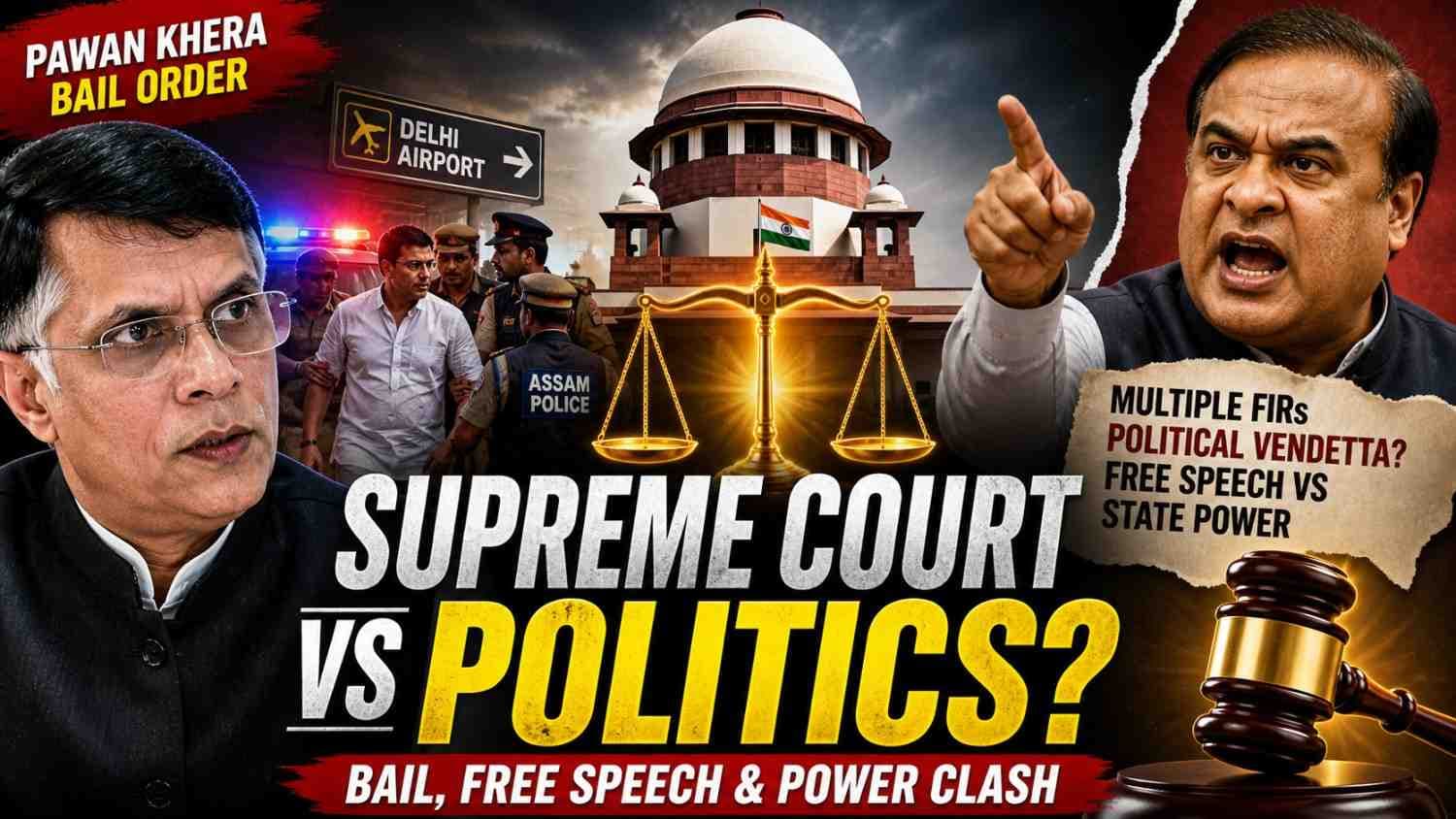
The Supreme Court of India recently released a detailed bail order concerning the high-profile case of Congress spokesperson Pawan Khera. The case, which originated from controversial remarks made by Khera regarding Prime Minister Narendra Modi, led to his dramatic arrest at the Delhi airport by Assam Police. However, the apex court’s final observations have shifted the spotlight onto the nature of the remarks made by Assam Chief Minister Himanta Biswa Sarma and the broader political motivations underlying the legal proceedings.
In its judgment, the Supreme Court noted that while the language used by Khera was undoubtedly "unparliamentary" and perhaps beneath the dignity of public discourse, the reaction it elicited appeared to be disproportionate. The bench emphasized that the primary role of the judiciary is to ensure that the law is not used as a tool for political vendetta. By granting bail, the court signaled that mere verbal slips or distasteful rhetoric should not necessarily result in the immediate deprivation of personal liberty.
A significant portion of the discourse surrounding the order involves the conduct of the complainants and the state machinery. The court hinted at the fact that the multiple FIRs registered across different states—specifically Assam and Uttar Pradesh—pointed toward a coordinated effort to harass the individual. This "multiplicity of proceedings" is a trend the Supreme Court has frequently discouraged, as it places an undue burden on the accused and the judicial system alike.
The court specifically addressed the involvement of Assam CM Himanta Biswa Sarma’s administration in the pursuit of the case. Observations suggested that the legal machinery was being influenced by political considerations rather than a purely criminal investigation. The court's stance serves as a reminder that the executive branch must maintain a clear distinction between political rivalry and the enforcement of the Indian Penal Code.
Furthermore, the Supreme Court reiterated the importance of free speech, even when that speech is offensive or controversial. While it did not condone Khera’s wordplay regarding the Prime Minister’s name, it maintained that such actions do not automatically constitute a threat to public order or national security—the high thresholds required for the stringent actions taken by the police during the arrest.
The bail order also serves as a precedent for how lower courts should handle cases involving "political speech." By consolidating the FIRs and ensuring Khera’s protection from arrest, the Supreme Court sent a clear message: the criminal justice system should not be a playground for political score-settling. This move was widely seen as a victory for civil liberties in an increasingly polarized political climate.
In conclusion, the case of Pawan Khera vs. The State of Assam highlights the delicate balance between maintaining public decorum and protecting the right to dissent. The Supreme Court’s critical view of the "unparliamentary" atmosphere and the "politically influenced" nature of the charges underscores the need for a more tolerant and legally grounded approach to political disagreements in India.
Moving forward, this judgment will likely be cited in cases where state power is perceived to be used against political opponents. It reinforces the idea that while politicians should remain mindful of their language, the state must remain even more mindful of its power to arrest and prosecute. The integrity of the democratic process relies on this very balance.