Introduction
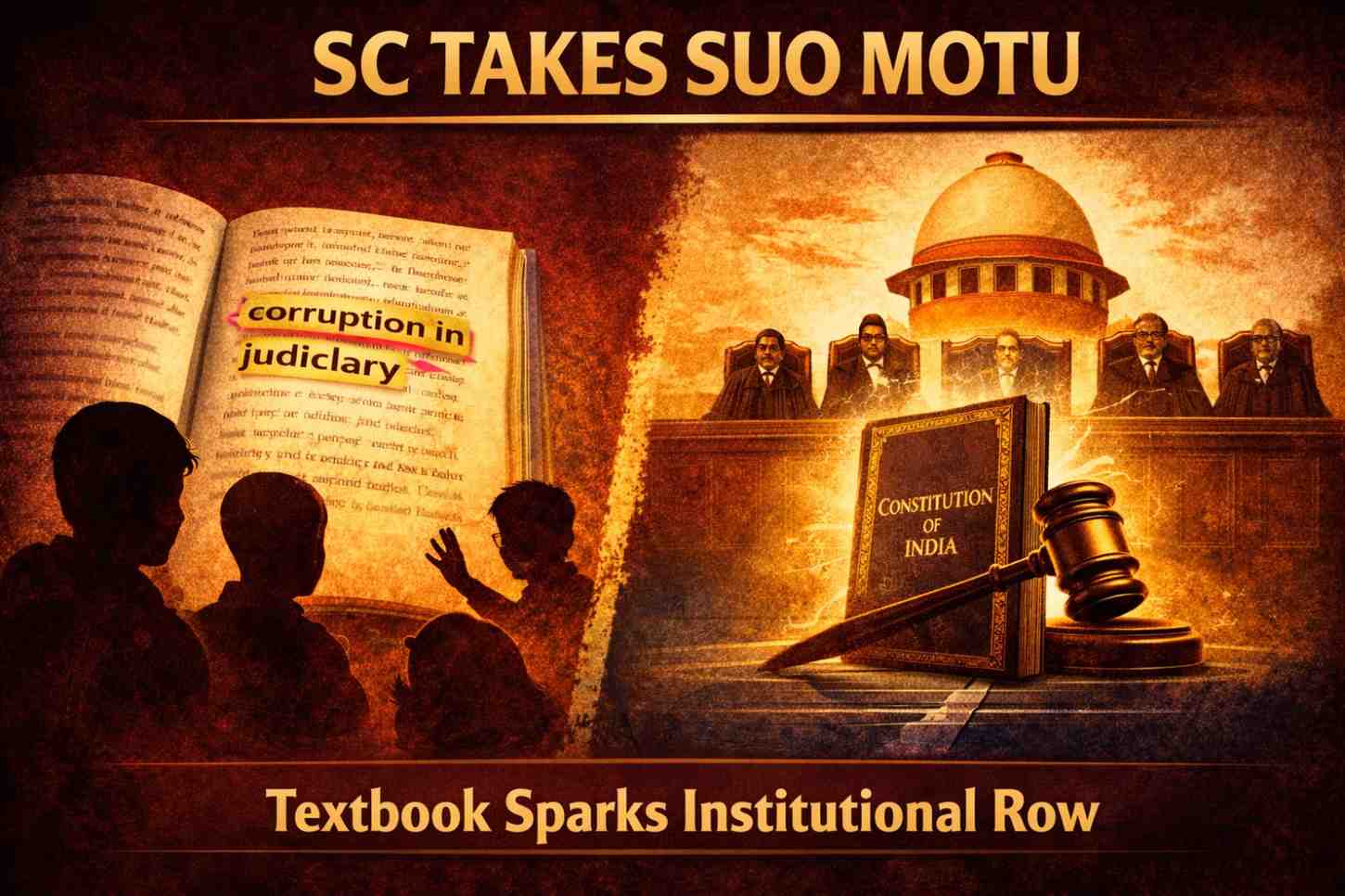
In a significant courtroom development, the Supreme Court on Wednesday initiated suo motu proceedings after concerns were raised over a Class 8 NCERT textbook referencing “corruption in judiciary” and case backlogs. The issue was mentioned before a Bench led by Chief Justice of India Surya Kant, who expressed strong displeasure and assured action to protect the institutional integrity of the judiciary.
What Happened in Court
Senior Advocate Kapil Sibal, along with Dr. Abhishek Manu Singhvi, brought the matter to the Court’s attention, stating that young students were being taught content that could undermine public confidence in courts.
The Bench responded that it was already aware of the controversy and had received multiple representations from members of the Bar and Bench. The CJI confirmed that proceedings had been initiated on the Court’s own motion.
“I will not allow anyone on earth to taint the integrity of the institution… the law will take its course.”
The Chief Justice remarked that judges across the country were deeply concerned about the portrayal of the judiciary in the textbook. According to the Court, the issue was not merely academic — it directly impacted public faith in constitutional institutions.
Concerns Raised by the Bench
The Court indicated that institutional credibility forms the backbone of constitutional governance. The Bench emphasized that criticism must be balanced and responsible, especially when directed at constitutional organs in educational material meant for minors.
Justice Bagchi also observed a structural concern:
“Constitutional integrity and basic structure values appear missing in the presentation.”
Senior counsel argued that highlighting corruption selectively within one institution — without discussing systemic issues in other organs — could create a distorted understanding among students.
Legal Questions Emerging
The case opens multiple legal and constitutional questions:
- Can educational bodies critique constitutional institutions in textbooks?
- Where is the line between academic discussion and institutional defamation?
- Does the State have a duty to preserve institutional trust in school education?
- How should constitutional morality be taught to minors?
The Court’s intervention signals that academic freedom, though important, must operate alongside responsibility when dealing with constitutional institutions.
Why This Matters
This development goes beyond a textbook dispute. It touches the delicate balance between freedom of expression, academic autonomy, and institutional dignity.
Courts historically tolerate criticism — even harsh criticism — in a democracy. However, the judiciary appears concerned about how impressionable students perceive the justice system at an early age.
The forthcoming proceedings may shape future guidelines for curriculum design across India, especially regarding how public institutions are portrayed in school education.
The ruling could ultimately define a new constitutional standard: not censorship, but calibrated accountability in teaching constitutional governance.