Introduction
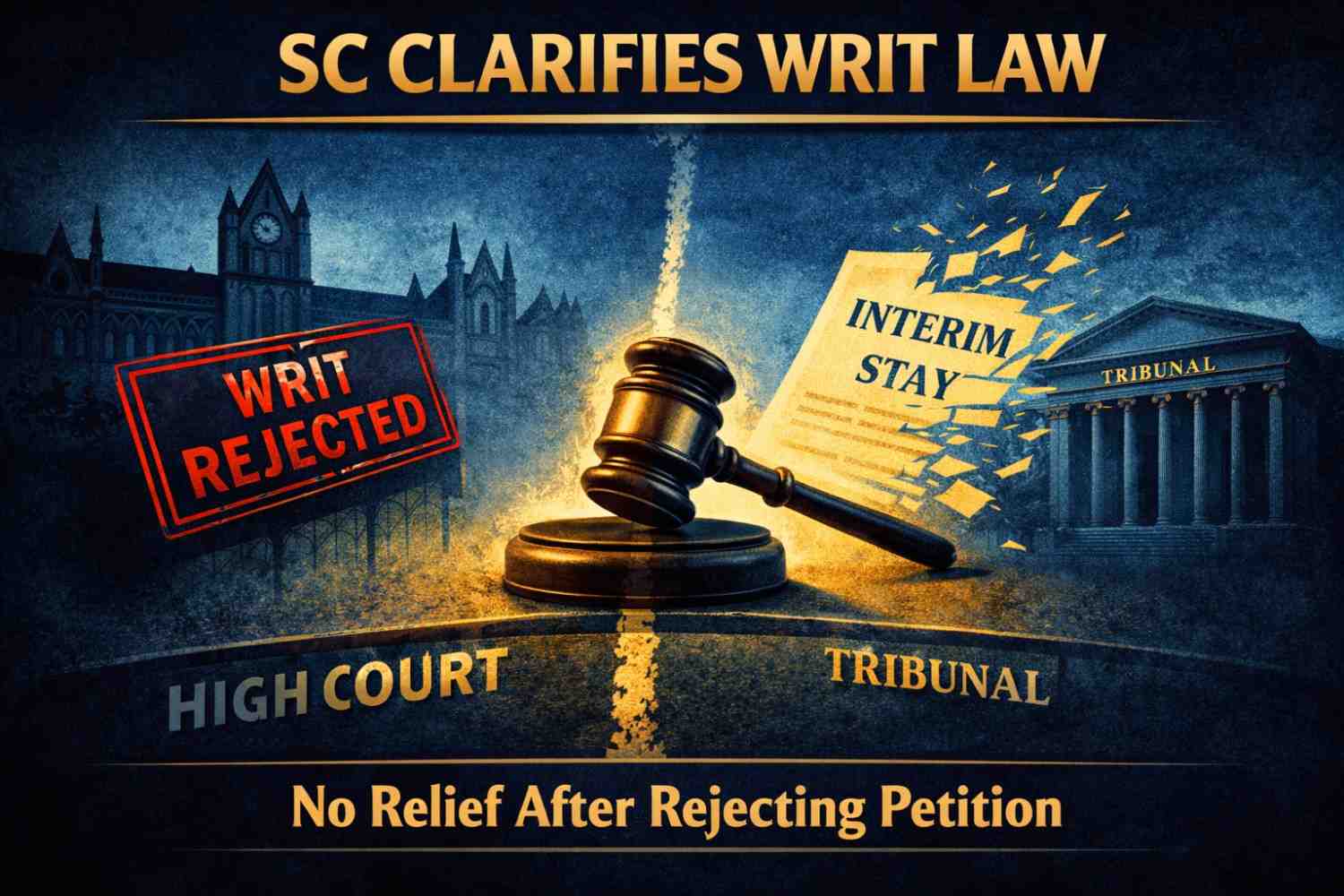
In an important ruling on judicial procedure, the Supreme Court of India has deprecated the practice of High Courts granting interim protection while simultaneously refusing to entertain writ petitions on the ground of availability of alternate statutory remedy.
A Bench comprising Justice Abhay S. Oka and Justice Ujjal Bhuyan held that such orders are legally contradictory and undermine the hierarchy of remedies established in law.
The Legal Issue
High Courts frequently face petitions under Article 226 of the Constitution challenging administrative or quasi-judicial actions. Courts often dismiss such petitions when an alternate statutory remedy — such as appeal, revision, or tribunal proceedings — is available.
However, some courts still grant temporary protection (like stay of recovery, arrest, or proceedings) even after declining jurisdiction.
The Supreme Court was called upon to decide:
Can a court refuse to hear a case but still grant relief in it?
Court’s Reasoning
The Bench answered firmly — No.
“Once the writ petition is not entertained on the ground of availability of alternate remedy, the High Court cannot continue interim relief.”
The Court explained that granting protection after declining jurisdiction defeats statutory mechanisms created by Parliament and encourages forum-shopping.
“Such orders virtually nullify the legislative intent behind providing a complete adjudicatory mechanism.”
The judges observed that interim orders in such situations effectively decide the matter indirectly without judicial examination on merits.
Principle of Judicial Discipline
The ruling reinforces the doctrine that writ jurisdiction is discretionary, not a substitute for statutory appeal procedures.
The Bench emphasised:
- Courts must either hear the matter or refuse it
- Hybrid orders create legal uncertainty
- Interim protection should not bypass specialised tribunals
Courts cannot exercise jurisdiction in part and decline it in part.
The decision will significantly impact litigation strategy across tax, regulatory, and administrative law matters.
Key consequences:
- Reduces forum shopping through Article 226 petitions
- Strengthens tribunals and appellate authorities
- Ensures procedural consistency nationwide
- Prevents indefinite stays without adjudication
For lawyers and litigants, the message is clear:
If a statutory remedy exists, it must ordinarily be pursued fully — without parallel judicial shelter.
The judgment restores procedural clarity and reinforces constitutional balance between High Courts and statutory adjudicatory bodies.