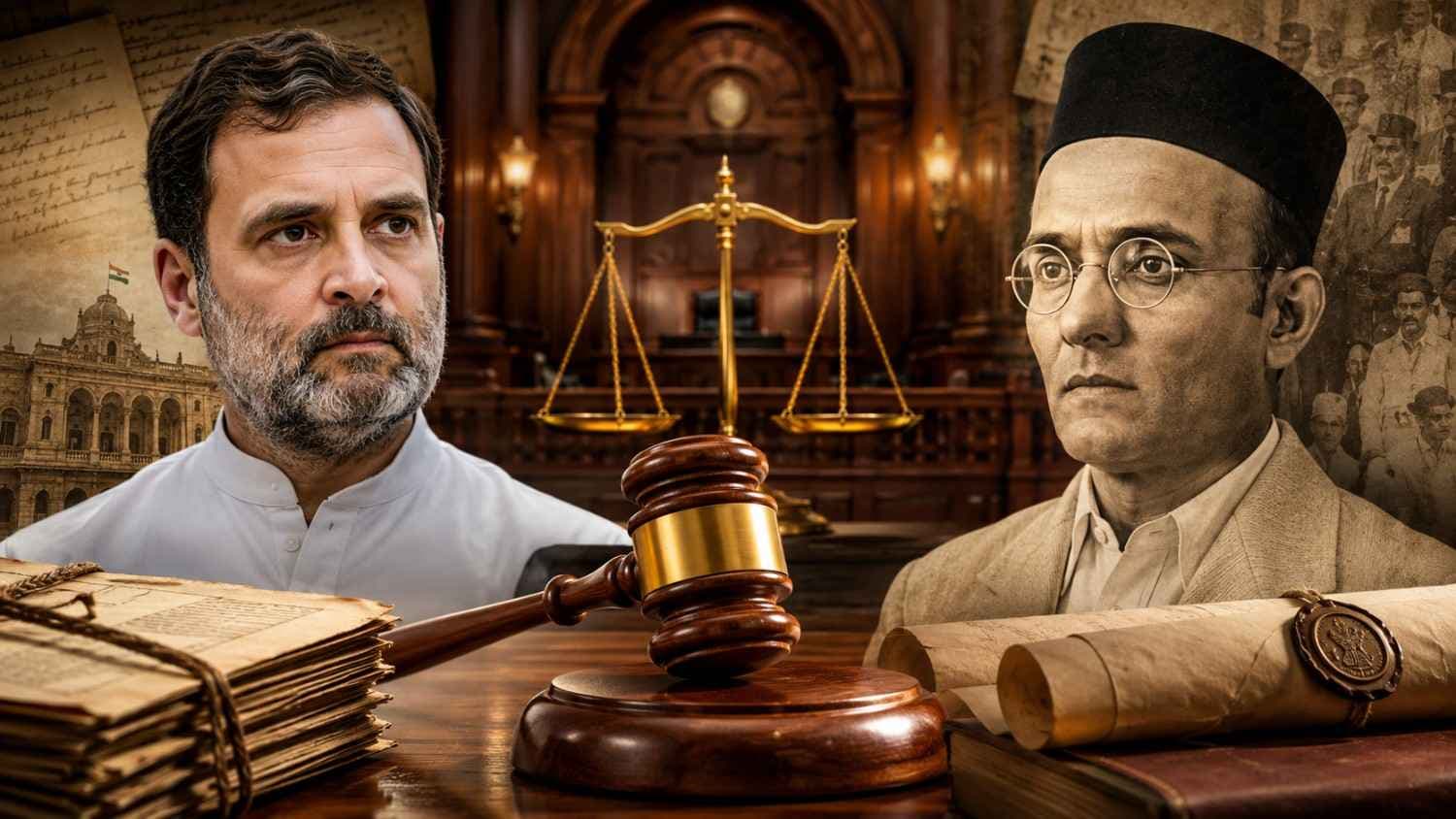
Background of the Defamation Complaint
The present matter originates from a complaint filed by Satyaki Savarkar under Section 500 of the Indian Penal Code against Rahul Gandhi. The complaint alleges that Gandhi, during a speech delivered in London in March 2023, referred to writings of Vinayak Damodar Savarkar and asserted that Savarkar, together with certain associates, had assaulted a Muslim individual and found the act pleasurable. Satyaki Savarkar contends that no such incident is mentioned in any of Savarkar’s published works and therefore characterises Gandhi’s remarks as factually incorrect, misleading and defamatory. The complainant seeks Gandhi’s conviction for criminal defamation and an award of damages.
The case is presently before the Judicial Magistrate, Amol Shinde, in Pune, where the cross‑examination of Satyaki Savarkar by counsel for Rahul Gandhi is underway.
Witness Testimony Before the Pune Magistrate
On Wednesday, during his deposition, Satyaki Savarkar volunteered several historical assertions concerning the circumstances of Vinayak Damodar Savarkar’s release from detention. The witness stated that Savarkar was not liberated owing to the mercy petitions he submitted to the British authorities but due to political efforts undertaken in the National Assembly in 1937. He further noted that the said Assembly was non‑Congress governed at that time.
The witness also referred to earlier political advocacy for Savarkar’s liberation. He submitted that in 1923 the Kakinada session of the Indian National Congress adopted a resolution demanding Savarkar’s release, a move initiated under the presidency of Mohammad Ali Johar. According to the witness, the growing popularity of Savarkar and the consequent public pressure prompted the Congress to pass that resolution.
Extending the argument, Satyaki Savarkar suggested that analogous political intervention could have altered the fate of Bhagat Singh, Sukhdev and Rajguru. He asserted that if a comparable resolution had been enacted by the Congress prior to Bhagat Singh’s execution, the hanging of Bhagat Singh, Sukhdev and Rajguru might have been avoided.
Regarding the mercy petitions themselves, the witness expressed uncertainty about their content. He stated that he could not affirm whether the petition dated 14 November 1913, which was produced in court, contained an expression of loyalty to the British Government or an indication that Savarkar was willing to serve the British administration.
Court’s Recording of Statements
Judicial Magistrate Amol Shinde recorded the witness’s submissions as voluntary statements. The court’s note reflects that the witness declared Savarkar’s release to be the outcome of political efforts in the 1937 National Assembly, not of mercy pleas. The court also recorded the witness’s account of the 1923 Kakinada Congress resolution and his observation that public pressure and rising popularity of Savarkar influenced that decision. Additionally, the magistrate noted the witness’s contention that a similar congressional initiative could have prevented the execution of Bhagat Singh and his companions. Finally, the court recorded the witness’s inability to confirm any loyalist sentiment in the 1913 mercy petition.
Implications and Next Steps
The testimony contributes to the factual matrix underpinning the defamation claim, particularly insofar as it addresses the historical narrative advanced by the complainant to counter Gandhi’s alleged remarks. The court has not yet expressed any opinion on the merits of the defamation allegation; it is merely preserving the witness’s declarations for the record. The cross‑examination of Satyaki Savarkar is scheduled to continue on 7 July, when advocate Milind Pawar is expected to pose further questions on behalf of Rahul Gandhi. Until the conclusion of the examination and any subsequent arguments, the matter remains sub judice.