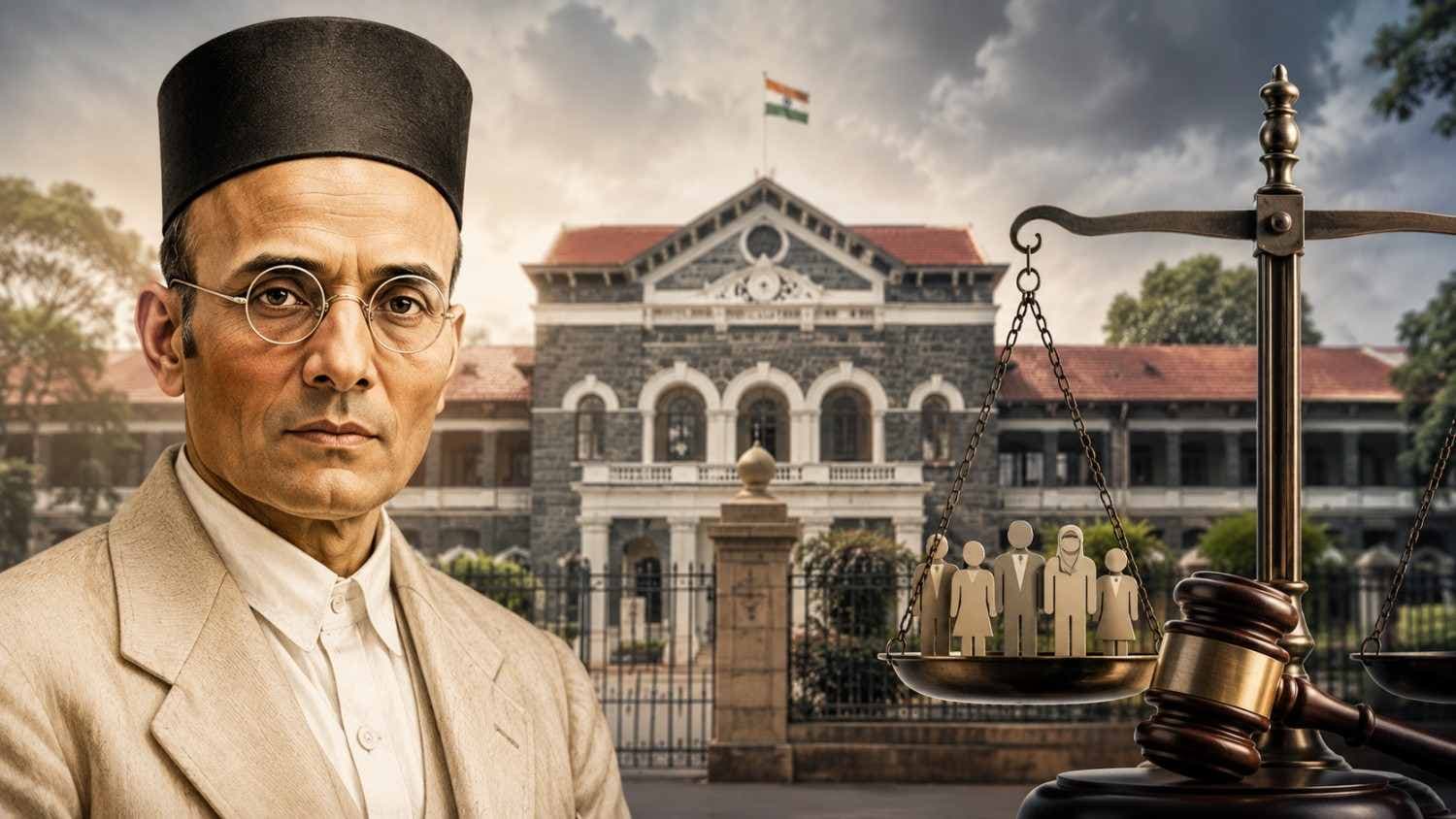
Satyaki Savarkar, the grandnephew of Vinayak Damodar Savarkar, appeared before Judicial Magistrate Amol Shinde in Pune on Tuesday as part of the ongoing criminal defamation case filed by him against Rahul Gandhi. The suit stems from Gandhi’s alleged remarks made during a speech in London in 2023, in which Satyaki claims Gandhi described Savarkar as having assaulted a Muslim man and found the act pleasurable.
During cross-examination by Gandhi’s counsel, advocate Milind D Pawar, Satyaki was asked to recount the exact words used by Gandhi that formed the basis of the defamation claim. In response, Satyaki stated that Gandhi had claimed Savarkar had written a book in which he and a couple of his friends were described as beating a Muslim man and finding the act enjoyable.
Satyaki vehemently rejected this characterisation, asserting that such allegations portrayed Savarkar as an extreme hater of Muslims and a mob lyncher, which he maintained was entirely untrue. He emphasised that Vinayak Savarkar never harboured hatred towards Muslims and, instead, through his writings, consistently advocated for their progress and outlined ways and means for their advancement.
The testimony also touched upon historical aspects of Savarkar’s life under British rule. When questioned by Pawar about Savarkar’s criminal record, Satyaki stated, to the best of his knowledge, that the British had accused Savarkar of waging war against the British Empire and of involvement in the murder of Collector Jackson at Nashik.
Further, during the cross-examination, Satyaki was asked about the Kapur Commission, which was constituted to inquire into the assassination of Mahatma Gandhi. He clarified that the Commission was not formed to determine Vinayak Damodar Savarkar’s involvement in the assassination. Instead, he explained, it was set up to investigate whether individuals such as Balukaka Kanitkar or the government had prior knowledge of the assassination plot and what administrative actions were taken thereafter.
Satyaki also acknowledged that after Gandhi’s assassination, his maternal grandfather, Gopal Godse, had written books related to the trial, including one titled ‘Gandhi Hatya Ani Mee’, in which he described the proceedings concerning Gandhi’s assassination.
During the proceedings, Pawar presented video interviews of Gopal Godse to the court. The transcript of these interviews, read aloud in court, featured Gopal Godse discussing the ideological differences between the Hindu Mahasabha and the Rashtriya Swayamsevak Sangh (RSS), and confirming that Nathuram Godse was a swayamsevak (volunteer) of the RSS.
Satyaki’s counsel, Sangram Kothalkar, objected to certain questions posed by Gandhi’s lawyer during the cross-examination. However, the court ruled that these objections would be considered at the time of delivering the final judgment.
The court noted that during the previous hearing on August 17, Satyaki had disclosed that his maternal grandfather, Gopal Godse, and granduncle, Nathuram Godse, were active members of the RSS.
The cross-examination of Satyaki Savarkar is scheduled to resume on September 3 before Judicial Magistrate Amol Shinde in the Pune court.