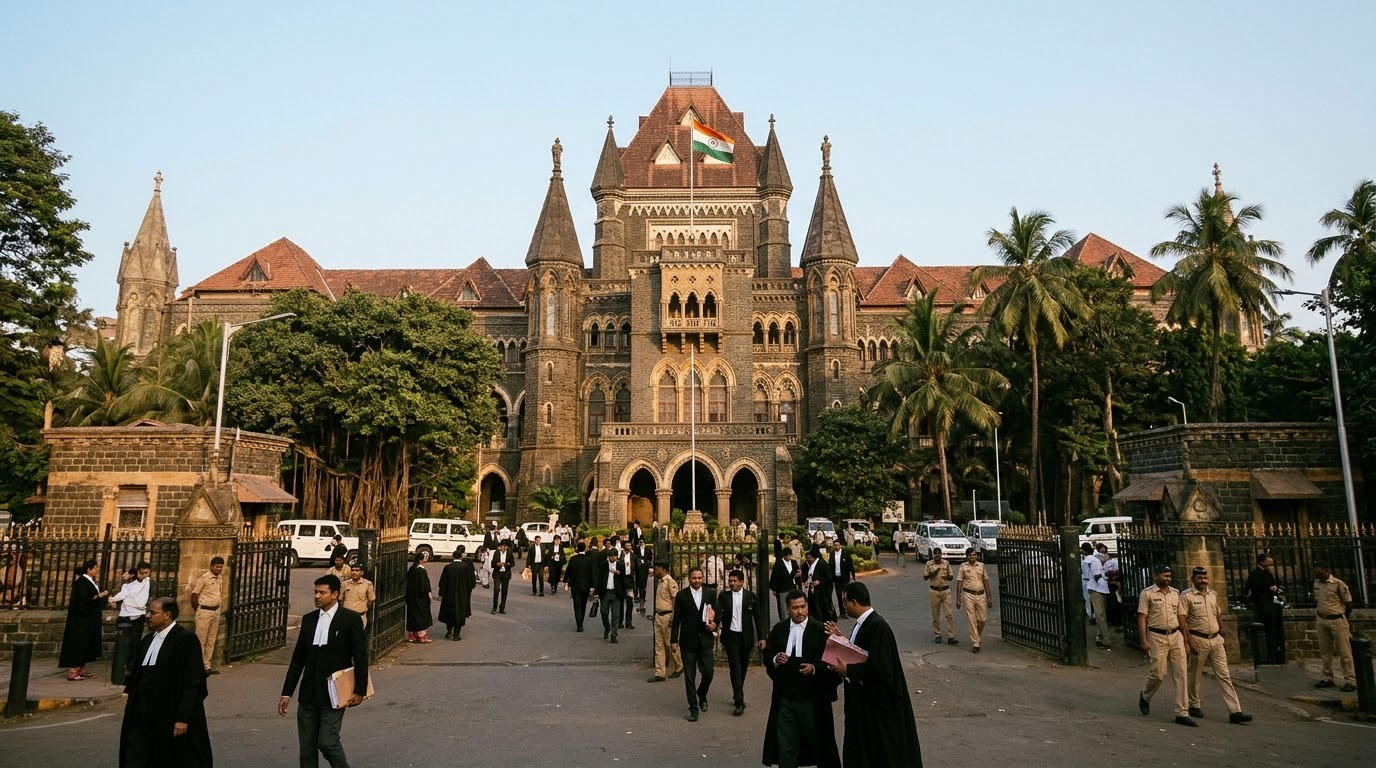
Across India's High Courts, judicial benches delivered landmark pronouncements balancing procedural compliance, personal liberty, and criminal accountability during the week of 26 October to 01 November 2026. Setting strict boundaries under the Indian Penal Code, the Allahabad High Court ruled that acid burns must cause permanent damage to attract Section 326A IPC, altering a conviction to Section 324 IPC in its absence. On bail jurisprudence, the Delhi High Court dismissed the National Investigation Agency’s appeal against bail granted to a Kashmiri youth in a terror conspiracy case, while the Himachal Pradesh High Court granted bail in an NDPS matter, observing that possession of an intermediate quantity negates the presumption of commercial peddling.
Procedural discipline, natural justice, and statutory bounds were forcefully reiterated in administrative and commercial spheres. The Gauhati High Court quashed adverse findings recorded against two senior civil servants for failure to observe mandatory safeguards under Sections 8-B and 8-C of the Commissions of Inquiry Act, 1952. Addressing property transactions, the Delhi High Court ruled that earnest money cannot be forfeited automatically upon breach of an agreement to sell unless the seller proves actual monetary loss. Meanwhile, the High Court of Jammu & Kashmir and Ladakh struck down water usage charges levied on hydropower generation, holding the levy to be an unconstitutional tax on electricity generation.
Matrimonial jurisprudence and familial duties saw significant clarifying directives across multiple benches. In an important ruling on child welfare and gender equality, the Bombay High Court held that a major unmarried daughter remains entitled to claim maintenance under Section 125 of the Code of Criminal Procedure, regardless of parallel remedies under the Hindu Adoptions and Maintenance Act. The Jharkhand High Court held that a husband coercing his wife to accept his extra-marital affair and cohabit with another woman as a "younger sister" constitutes mental cruelty of the gravest kind, and affirmed that family courts retain inherent jurisdiction to grant interim maintenance suo motu under the Hindu Marriage Act without formal applications.
Protections under specialized welfare and human rights legislations were reinforced through progressive interpretations. Emphasizing the sanctity of professional premises, the Karnataka High Court held that hurling caste-based slurs at an advocate inside her private office chamber satisfies the requirement of "public view" under the SC/ST (Prevention of Atrocities) Act. Under child protection laws, the Gujarat High Court affirmed that depositions of POCSO survivors must be conducted strictly in-camera, even if the victim attains the age of majority before the trial commences. In contrast, the Meghalaya High Court quashed a POCSO prosecution where the accused was living harmoniously with the survivor, directing the state to secure social welfare benefits for the mother and infant.
Public law remedies, privacy, and judicial administration featured prominently in decisions across Delhi, Kerala, and Calcutta. Marking the Delhi High Court’s Diamond Jubilee, Chief Justice of India Surya Kant acknowledged that the court handles an extraordinarily disproportionate appellate burden. Intervening to protect juvenile privacy under the law, the Kerala High Court ordered cyber police to immediately take down social media posts revealing the identity of a 17-year-old accused in the fatal Kochi Mercedes-Benz crash. Finally, the Calcutta High Court clarified recruitment protocols, ruling that an administrative correction window for candidates to rectify technical errors cannot be converted into an opportunity to entertain fresh applications past the cut-off deadline.