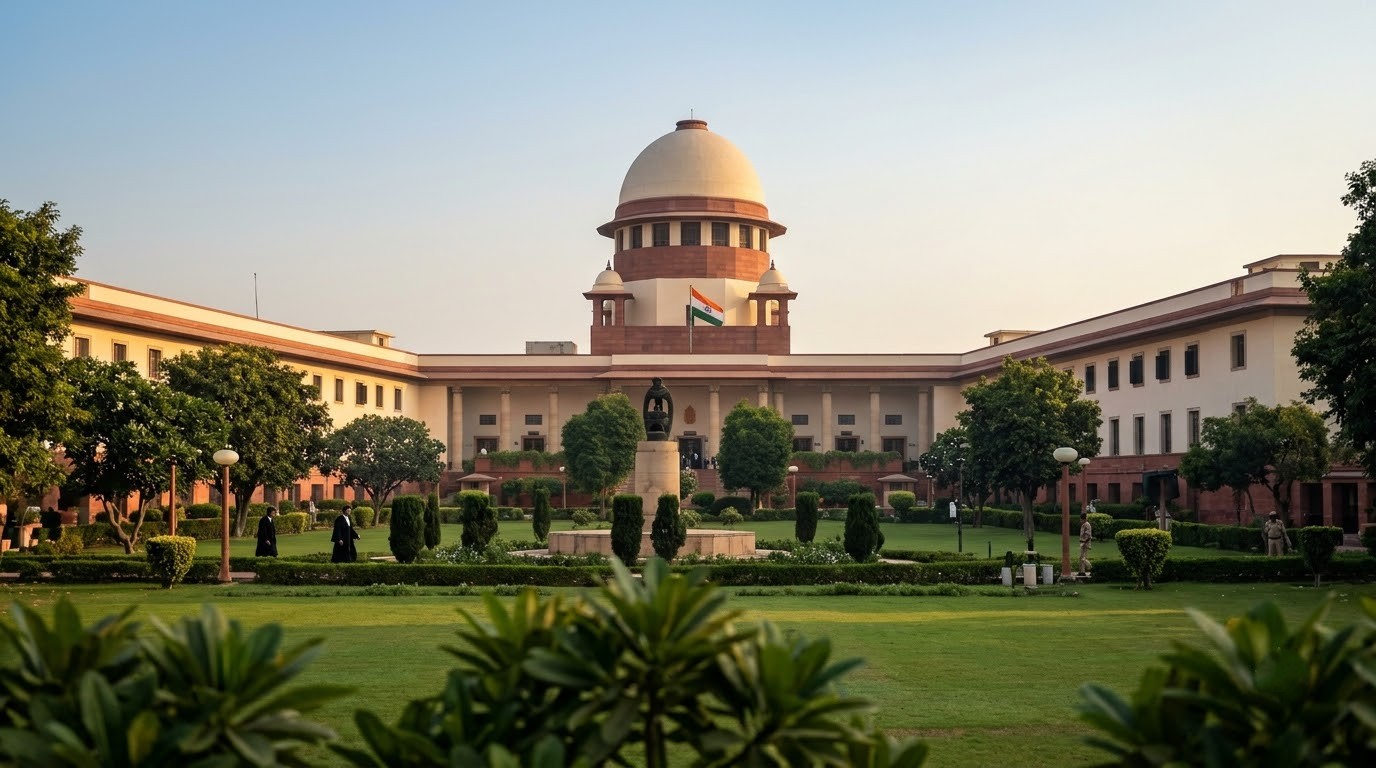
The Supreme Court of India delivered critical rulings safeguarding procedural justice and personal liberty. Addressing violations under Article 22(1), the Court held that the failure to communicate written grounds of arrest renders the custody illegal and strictly barred unilateral re-arrest. Emphasizing fair trial accountability, a Bench comprising Justices Dipankar Datta and Sheel Nagu demanded formal explanations from the Bihar Police and a Gaya trial court after an accused was left unproduced before the trial court for nearly 14 months.
On bail jurisprudence and criminal oversight, the Court reiterated strict administrative scrutiny. Setting aside a Karnataka High Court order, the Bench cancelled the anticipatory bail granted to a Karnataka-cadre IPS officer in an alleged Lokayukta corruption case, holding that public servants facing graft charges cannot claim parity with ordinary citizens. The Court also ruled that High Courts cannot instruct trial courts to grant regular bail under preset conditions while formally denying pre-arrest protection.
In significant constitutional and regulatory challenges, the Supreme Court issued notice to the Union Government on petitions moved by the Digital News Publishers Association (DNPA) challenging the Digital Personal Data Protection (DPDP) Act for omitting explicit journalistic exemptions, while inviting recommendations on safeguards against misuse. The Bench further agreed to examine challenges against executive mandates prescribing the compulsory singing of six stanzas of Vande Mataram, and directed notice on a PIL challenging Tripura tribal customary provisions that permit the private settlement of rape through monetary fines.
Institutional integrity, legislative limits, and executive compliance were underscored in several decisive orders. In Srinivasa T. v. State of Karnataka, the Court struck down a 2022 Karnataka enactment that sought to validate a tainted 2011 civil service selection, reaffirming that the legislature cannot directly annul judicial verdicts. The Court also sharply rebuked the Appellate Tribunal for Electricity (APTEL) in Damodar Valley Corporation v. Maithan Alloys for overruling Supreme Court precedent during review proceedings, while reprimanding authorities over the lack of enforcement data regarding firecracker bans.
On property, corporate liability, and commercial regulation, the Court rejected title claims over 550 acres of Miyapur land in Telangana, ruling that jagir rights do not confer ownership and the land vests in the State. It likewise quashed a 1988 Bengaluru land acquisition initiated for a cooperative housing society due to established fraud. Additionally, the Bench directed Atibir Industries to remit ₹1,375 crore to resolve an SBI loan dispute, clarified that Maharashtra moneylenders must produce valid licenses at threshold stages in Section 138 NI Act proceedings, and proposed strict liability on commercial banks for cyber fraud where institutional due diligence lapses.