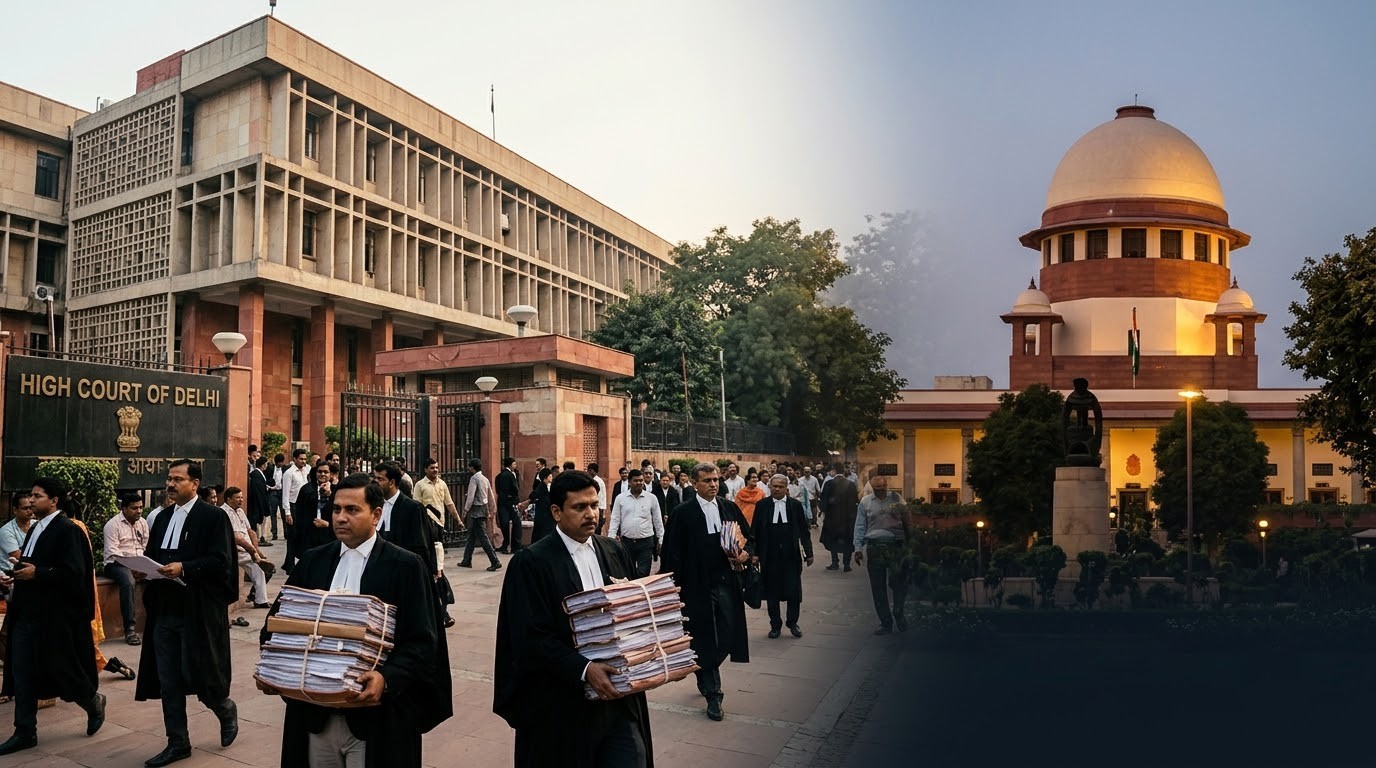
Chief Justice of India Surya Kant stated that the Delhi High Court bears a disproportionate burden off the Supreme Court when compared to other high courts across the country. Speaking at an event commemorating the diamond jubilee celebrations of the Delhi High Court, which marked sixty years of its establishment, the Chief Justice remarked that the apex court frequently reminds counsel appearing before it that the high court is located nearby and that appropriate relief might be sought there before approaching the highest judicial forum.
How does the Delhi High Court reduce the burden on the Supreme Court according to the judiciary?
The Chief Justice of India explained that the location of the high court in the national capital places a responsibility of extraordinary magnitude upon its bench, as matters concerning governmental authority, public accountability, and individual liberty frequently reach its courtrooms. By effectively adjudicating these complex disputes at the regional level, the institution diverts substantial litigation that might otherwise escalate directly to the Supreme Court.
Addressing the gathering inside the high court auditorium, the Chief Justice noted that the responsibilities of the institution have multiplied concurrently with the physical expansion of the city, the rapid growth in commercial sectors, and a general surge in litigation over the past decades. Having commenced its journey as a judicial body comprising merely four judges, the institution has transformed into a comprehensive forum resolving disputes of remarkable variety and complexity.
The administrative head of the judiciary lauded the high court for its substantial contributions to civil and commercial jurisprudence, drawing particular attention to its pioneering role in advancing alternative dispute resolution frameworks. Specifically, the institution established India's first high court annexed arbitration centre in the year 2009. Furthermore, the exercise of its original civil jurisdiction enables significant commercial and civil disputes to be instituted directly before the high court without necessitating prior recourse to district judicial forums.
Jurisdictional Feature | Scope and Impact | Institutional Contribution |
|---|---|---|
Original Civil Jurisdiction | Direct filing of significant civil and commercial disputes | Eliminates the mandatory requirement to approach district courts first |
Arbitration Framework | Establishment of India's first high court annexed arbitration centre | Pioneered alternative dispute resolution mechanisms in 2009 |
Intellectual Property | Specialised division handling technical matters | Earned national and international acclaim for specialized jurisprudence |
The specialized Intellectual Property Division of the high court was also commended for earning a formidable reputation both domestically and internationally regarding the high quality of its legal rulings. Addressing contemporary judicial hurdles, Justice Kant observed that modern courts routinely confront unprecedented legal questions that were scarcely imaginable a decade prior. Such emerging dilemmas include determining whether artificial intelligence generated works can claim statutory copyright protection, formulating legal responses to deepfake technology, and balancing technological innovation without undermining fundamental individual rights.
Emphasizing that statutory books rarely contain ready answers for such technological complexities, the Chief Justice asserted that courts must rely primarily on constitutional principles when statutory law remains silent. The enduring constitutional promises relating to human dignity, personal liberty, and equality do not alter with technological advancements, requiring every novel question to be evaluated through that constitutional framework. The Chief Justice expressed absolute confidence that the Delhi High Court will continue to navigate these evolving challenges while remaining steadfastly protective of individual rights and personal dignity.
Echoing similar sentiments during the celebrations, Supreme Court Judge Justice Vikram Nath praised the institutional growth of the Delhi High Court over the past sixty years. In a lighter vein, Justice Nath observed that the judges of the high court occasionally project an aura and presence that commands exceptional respect and authority, noting that they carry that distinct confidence even when appearing or sitting in the Supreme Court. Justice Nath further acknowledged the exceptional standards maintained by the local bar, stating that well-prepared advocates appearing before the bench frequently compel judges to reconsider their preliminary opinions.