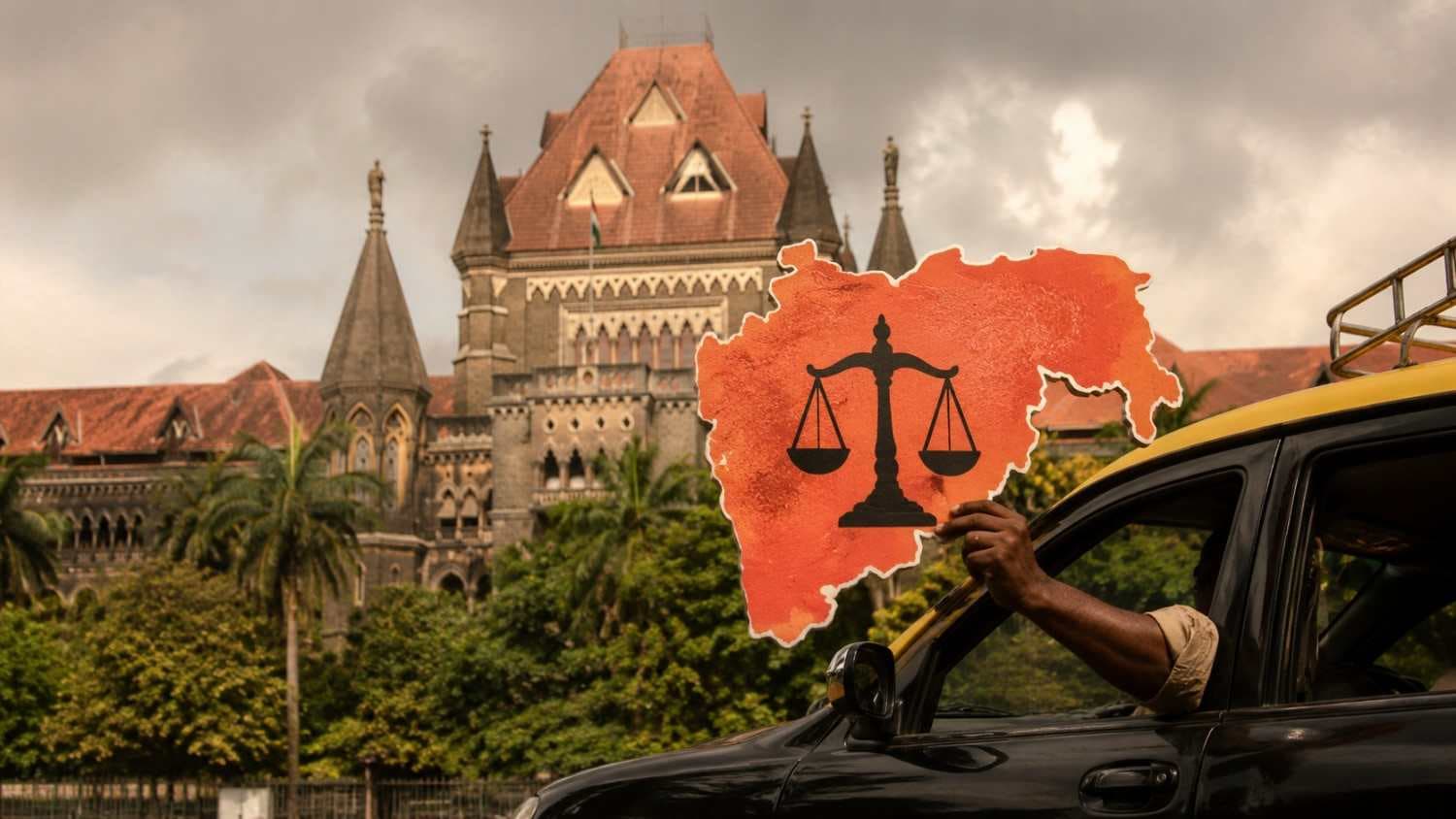
Commercial vehicle drivers in Maharashtra have approached the Bombay High Court to challenge the state government’s directive making a working knowledge of Marathi compulsory for auto-rickshaw, traditional taxi, and app-based cab operators. The petition argues that the newly enforced requirement puts the basic livelihood of lakhs of working-class and migrant drivers at immediate risk.
The legal challenge arises following an official transport notification that mandates local language proficiency for passenger vehicle operators. Under this mandate, drivers who fail to prove adequate Marathi communication skills face show-cause notices, temporary badge suspensions, and the potential cancellation of their commercial driving permits.
In their plea, the drivers highlight that nearly 9.65 lakh permits and badges have been issued across the state. Enforcing strict language criteria at this scale, they argue, creates an unfair barrier for poor and migrant workers who have been providing transport services for years without passenger safety or operational issues.
The petitioners contend that the new regulation exceeds the authority granted under the parent Motor Vehicles Act. According to the petition, central transport legislation does not prescribe regional language proficiency as a prerequisite for granting driving licences or issuing commercial badges.
Constitutional validity forms a core pillar of the challenge. The plea states that the mandate infringes upon fundamental protections guaranteed under the Constitution of India, including the right to equality, the freedom to practice any trade or profession, and the right to earn a livelihood.
While clarifying that they respect the cultural and linguistic importance of the Marathi language, the petitioners maintain that language promotion should not come at the cost of employment. Many drivers already use functional, day-to-day terms to communicate routes and fares, making formal language tests disproportionate and punitive.
The drivers are seeking an immediate stay on the state notification to halt ongoing crackdowns, fines, and badge suspensions. The court's upcoming review is expected to address the balance between local language communication policies and the fundamental economic rights of everyday transport workers.