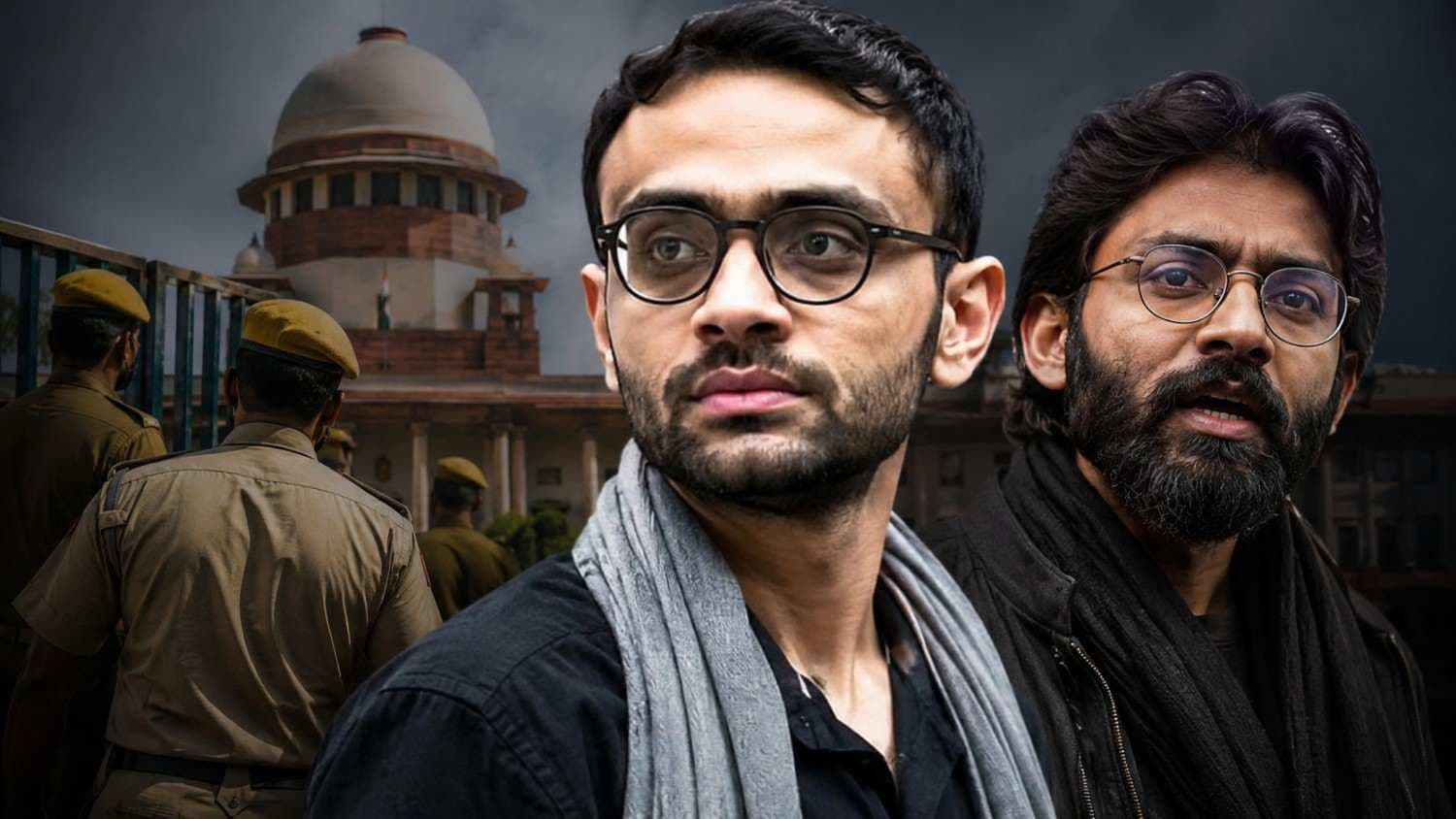
The Delhi Police has filed separate affidavits opposing the fresh bail petitions submitted by Umar Khalid and Sharjeel Imam before the Delhi High Court in connection with the Delhi riots of 2020. The police contend that the applicants are the 'masterminds' of the riots and that their current bail pleas are legally untenable and constitute an attempt to mislead the court.
According to the police affidavits, the present bail proceedings are misconceived and illegal on several grounds. First, the applicants are identified as masterminds of the Delhi riots. Second, the bail pleas are filed in teeth of the binding directions issued by the Supreme Court of India in Gulfisha Fatima v. State (Govt. of NCT of Delhi), reported as 2026 SCC Online SC 10, which pertained to the applicants' own case. Third, the police allege that the applicants have sought to mislead the High Court by invoking the judgment in Syed Iftikhar Andrabi v. NIA, reported as 2026 SCC Online SC 881, as a change in circumstance to sustain the bail proceedings, despite the judgment being delivered in an unrelated case.
The police clarify that this is the third round of bail petitions filed by Khalid and Imam before the Delhi High Court. Their earlier bail applications, submitted on two prior occasions, were rejected by the trial court and subsequently upheld by the Supreme Court. The most recent Supreme Court pronouncement in January 2026 granted bail to five individuals but explicitly denied relief to Khalid and Imam. Following that denial, the applicants approached the trial court, which dismissed their pleas on July 4, 2026, leading them to move the High Court.
The Delhi Police further submitted that the Supreme Court's January 2026 order in Gulfisha Fatima expressly described Khalid and Imam as the alleged 'masterminds' of the Delhi riots, thereby justifying their continued detention. The police emphasized that the applicants have misinterpreted the January 2026 judgment, which stipulated that a fresh bail plea could only be entertained after the examination of protected witnesses was completed or one year had elapsed from the date of the order, whichever occurred first. The police asserted that neither condition has been satisfied as of the date of the current bail pleas.
The affidavits state that a plain reading of the operative portion of the Gulfisha Fatima judgment confirms that the applicability of Section 43D(5) of the Unlawful Activities (Prevention) Act, 1967 (UAPA) to the applicants' case was upheld by the Supreme Court. Consequently, the statutory embargo against granting bail to the applicants, in accordance with the UAPA framework, has attained finality and cannot be reopened or re-agitated on speculative grounds.
The police also addressed the applicants' reliance on the Syed Iftikhar Andrabi judgment, wherein a different bench of the Supreme Court had questioned the denial of bail in the Gulfisha Fatima case. The police countered that a judgment from a co-ordinate bench in a distinct case cannot override the specific findings and directions rendered by the Supreme Court in the applicants' own case. They added that the Syed Iftikhar Andrabi judgment does not pertain to the Delhi riots case or the applicants' involvement therein, and the factual findings recorded in Gulfisha Fatima—particularly the invocation of Section 43D(5) of UAPA—have not been doubted in the Andrabi case. Therefore, the statutory bar against bail remains undisturbed and fully applicable to the proceedings before the High Court.
Additionally, the police opposed the applicants' reliance on the Supreme Court's judgment in the case of co-accused Tasleem Ahmed, in which the apex court referred the divergence of opinion between the Syed Iftikhar Andrabi and Gulfisha Fatima judgments to a larger bench and granted interim bail to Ahmed. The police maintained that such a reference to a larger bench cannot unsettle the legal position definitively settled in the applicants' own case of January 2026, when their bail was denied.