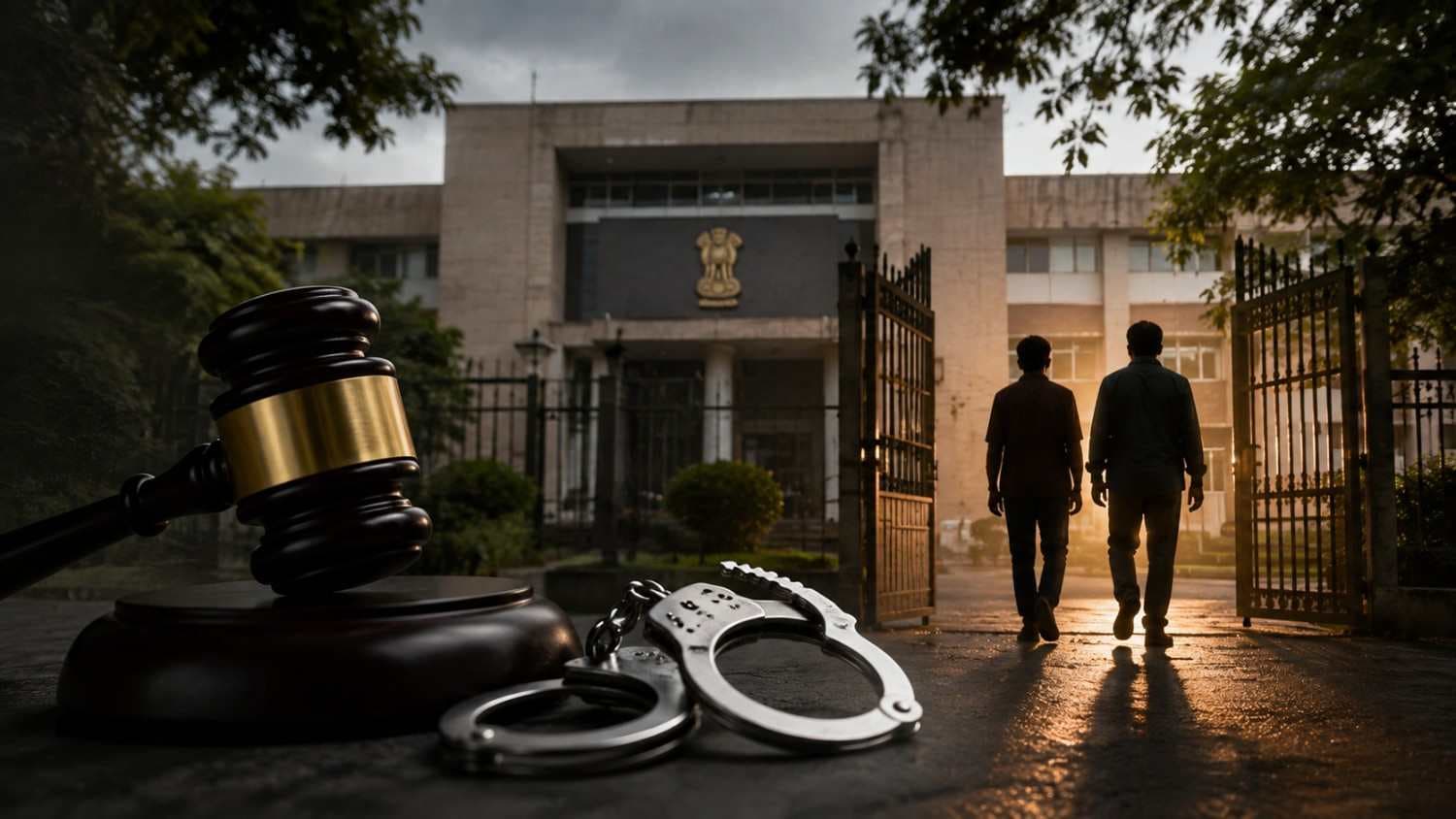
Delhi High Court Grants Bail in UAPA Case Citing Prolonged Incarceration
The Delhi High Court recently granted bail to two individuals, Sobiya Aziz and Kamran Ashraf Reshi, who were accused in a case registered under the Unlawful Activities (Prevention) Act (UAPA). The case pertained to an alleged wide-ranging terror conspiracy orchestrated by proscribed organisations in Jammu and Kashmir. A Division Bench comprising Justices Navin Chawla and Ravinder Dudeja issued the order, noting that both accused had spent nearly five years in custody awaiting trial, which showed no signs of an imminent conclusion.
Background of the Allegations
The National Investigation Agency (NIA) had alleged a significant terror conspiracy involving various banned organisations, including Lashkar-e-Taiba, Jaish-e-Mohammed, Hizb-ul-Mujahideen, Al Badr, The Resistance Front, People Against Fascist Forces, and Mujahideen Gazwatul Hind. The NIA contended that these groups, active in Jammu and Kashmir and allegedly orchestrated from Pakistan, were conspiring to execute terror attacks across Kashmir and other Indian cities, alongside radicalising Indian citizens.
Specific allegations against Sobiya Aziz, who was arrested in October 2021, included assisting active terrorists, purportedly transporting a militant, and possessing incriminating diaries and an Islamic State flag. Kamran Ashraf Reshi, arrested at the age of 21, was accused of associating with online propaganda groups and handlers based in Pakistan.
Court's Rationale for Granting Bail
In the case of Kamran Ashraf Reshi, the Division Bench meticulously reviewed the allegations and the material presented by the NIA. While refraining from a detailed exposition to avoid prejudicing the ongoing trial, the Court concluded that Reshi had successfully established a case for bail, particularly considering the extensive period of his incarceration juxtaposed against the evidence marshalled by the NIA. For Sobiya Aziz, the Bench acknowledged the NIA's assertion of some prima facie material but observed that she nonetheless presented an arguable case for the grant of bail.
A crucial factor influencing the Court's decision was the protracted nature of the trial. The Bench noted that out of 359 witnesses cited by the prosecution, only 21 had been examined thus far. This slow pace indicated that the trial was unlikely to conclude in the near future, thereby prolonging the detention of the accused.
Observations on Trial Progress and Article 21 Rights
The Delhi High Court further observed that several co-accused in the same case had already been granted bail. Significantly, the Bench reiterated that Section 43D(5) of the UAPA, which imposes stringent conditions for bail in terror-related cases, does not divest constitutional courts of their inherent power to grant bail. This power remains exercisable, especially in circumstances where prolonged incarceration and undue delays in trial proceedings impinge upon the fundamental rights guaranteed under Article 21 of the Constitution, which protects the right to life and personal liberty.
The Court's order underscores the principle that while the gravity of offences under UAPA is undeniable, the right to a speedy trial and protection against indefinite pre-trial detention are fundamental aspects of justice. The decision reflects a judicial balancing act between national security concerns and the constitutional rights of individuals facing prolonged legal proceedings.
Legal Representation
Kamran Ashraf Reshi was represented by Advocates Kartik Murukutla and Abu Bakr Sabbaq. Sobiya Aziz's legal team included Advocates Kartik Venu, Arjan Ajai Singh Chonker, R Jude Rohit, Agrim Tandon, and Alisha Sharda. The National Investigation Agency was represented by Special Public Prosecutor Amit Tiwari, alongside Advocates Ayushi Srivastava, Kushagra Malik, Arpan Narwal, and Ujjwal Tyagi.