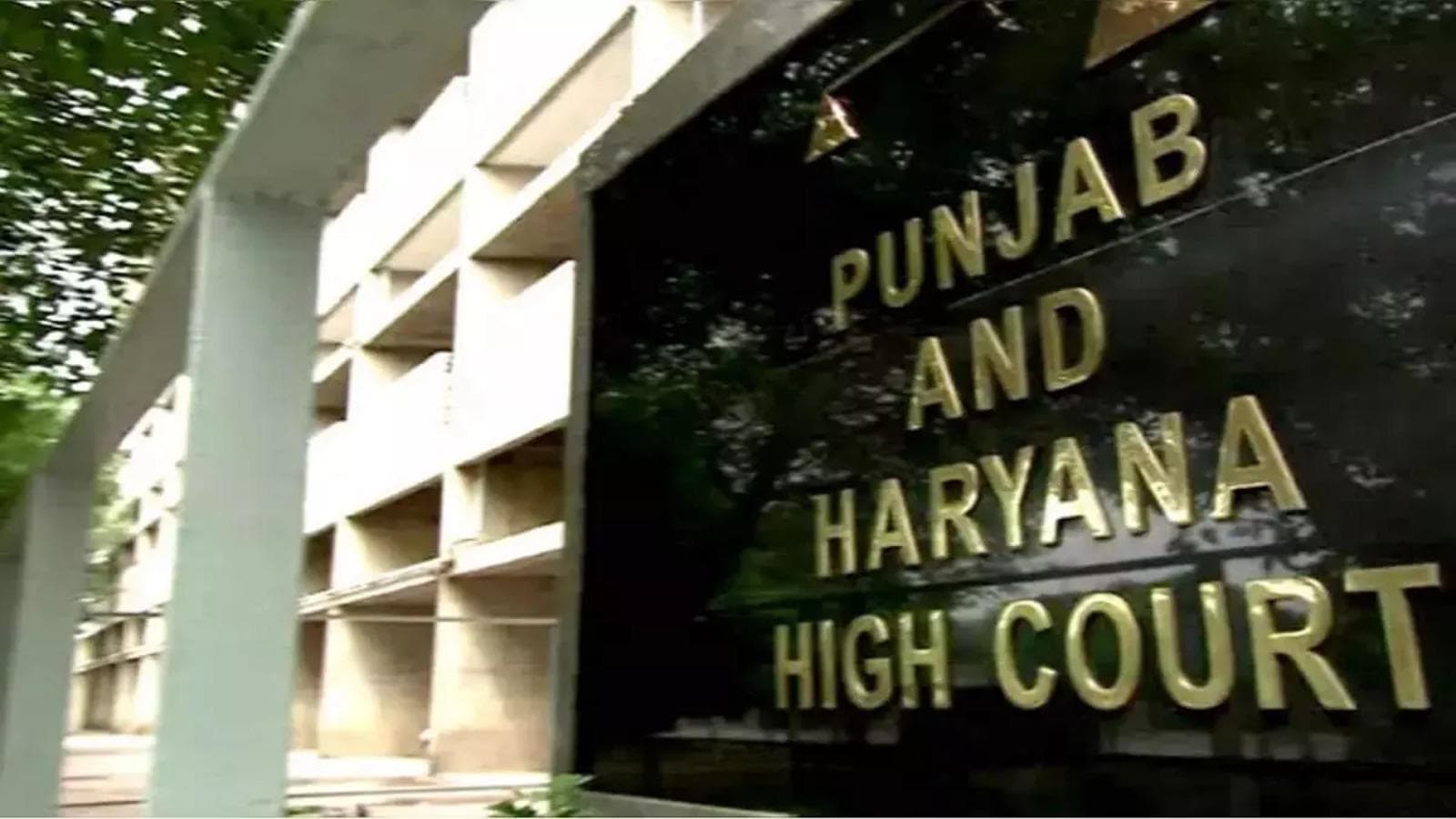
The Punjab and Haryana High Court was hearing a bail appeal filed by Parwinder Singh @ Pindu, who challenged the order of the Special Judge, NIA Court, Chandigarh, that had dismissed his application for regular bail. The case against him was registered under the Arms Act, 1959, various provisions of the Indian Penal Code, and Sections 17, 18, 18‑B and 20 of the Unlawful Activities (Prevention) Act, 1967. The prosecution alleged that Singh, acting on the instructions of the designated terrorist Goldy Brar, had facilitated a conspiracy to murder a rival gangster, Bhupinder @ Bhuppi Rana, during one of his court appearances.
Prosecution’s Case
According to the prosecution’s case, on 12 February 2024, co‑accused persons carried out a reconnaissance of the District Court premises at Mohali, Chandigarh and Panchkula with the intention of killing Bhupinder Rana when he appeared before the court. Singh was said to have used his mobile phones to communicate with Goldy Brar and Vicky Chauhan through Facebook Messenger. He allegedly brought two individuals, identified as Sunny and Umang, from the railway station and sheltered them first at his flat and later at a friend’s flat. Bank records showed that Singh had received amounts of Rs 49,900 and Rs 16,000 from Goldy Brar and Vicky Chauhan, which he subsequently handed over to Sunny and Umang.
Defence Submissions
Counsel for the appellant argued that, apart from the recovery of two mobile phones, no other incriminating material had been seized from Singh. It was contended that there was no legally admissible evidence linking him to a designated terrorist so as to attract the rigours of the UAPA. The defence submitted that, at best, the case amounted to harbouring members of a gang under Section 19 of the UAPA, which carries a punishment of three years to life imprisonment. Relying on the period of incarceration already served—more than two years—the defence urged that Singh was entitled to bail on the ground of prolonged custody alone.
Court’s Examination of Statutory Requirements
The Bench, comprising Justice Deepak Sibal and Justice Lapita Banerji, first examined Section 43‑D of the UAPA, which provides that no person accused of an offence under Chapters IV and VI of the Act shall be released on bail unless the Public Prosecutor has been heard and the Court, after perusing the case diary or the Section 173 CrPC report, is satisfied that there are no reasonable grounds to believe the accusation is prima facie true. The Court noted that these restrictions operate in addition to those prevailing under ordinary criminal law.
After reviewing the comprehensive affidavit filed by the prosecution, the Court found that the bank statements corroborated the alleged transfer and handover of funds from Goldy Brar and Vicky Chauhan through Singh to Sunny and Umang. Furthermore, the forensic examination conducted by the Central Forensic Science Laboratory on the recovered mobile phones revealed a recorded conversation involving Goldy Brar, whose voice matched publicly available material. The Court also took note that Goldy Brar, Rohit Godara and Vicky Chauhan had each been declared proclaimed offenders.
On this basis, the Bench held that it could not be said that there was no material, even prima facie, connecting the appellant to designated terrorists. Consequently, the precondition for bail under Section 43‑D was not satisfied.
Consideration of the Prolonged Custody Argument
The Court then addressed the appellant’s reliance on the duration of his custody. While acknowledging that Article 21 of the Constitution guarantees a right to a speedy trial and that precedents recognise prolonged detention as a ground for bail under the UAPA, the Bench distinguished the present case. It observed that the State had not failed to attribute a specific role to Singh; rather, the material on record showed a prima facie link between Singh, the individuals Sunny and Umang, and the designated terrorist Goldy Brar. Having undergone approximately two years and five months of actual custody, Singh’s detention was not deemed unjustified in light of the evidence linking him to the alleged terrorist conspiracy.
Terrorist Intent and the Temple of Justice
Turning to the definition of a “terrorist act” under Section 15 of the UAPA, the Court held that a conspiracy to kill a person within the precincts of a court—described as the “Temple of Justice”—reflects an intent to strike terror in the minds of the public. The Bench quoted its observation: “If a conspiracy is hatched with a ‘designated terrorist’ like Goldy Brar to murder a person albeit a gangster within the precincts of a Court which is considered to be the ‘Temple of Justice’ then such an act would definitely create terror or would intend to create terror in the minds of the people of the country. Inside Court premises also, if a person is not secure, then the ordinary citizens at large would be naturally shocked and terrorised.”
By linking the alleged plot to the broader objective of spreading terror, the Court concluded that the conduct fell within the ambit of a terrorist act as defined by the UAPA, thereby justifying the denial of bail.
Operative Outcome
Accordingly, the Punjab and Haryana High Court dismissed the bail appeal and affirmed the order of the Special Judge, NIA Court, Chandigarh, refusing regular bail to Parwinder Singh @ Pindu. The Bench emphasized that the security of judicial institutions is paramount and that any attempt to undermine that security through terror‑motivated conduct attracts the stringent provisions of the UAPA.