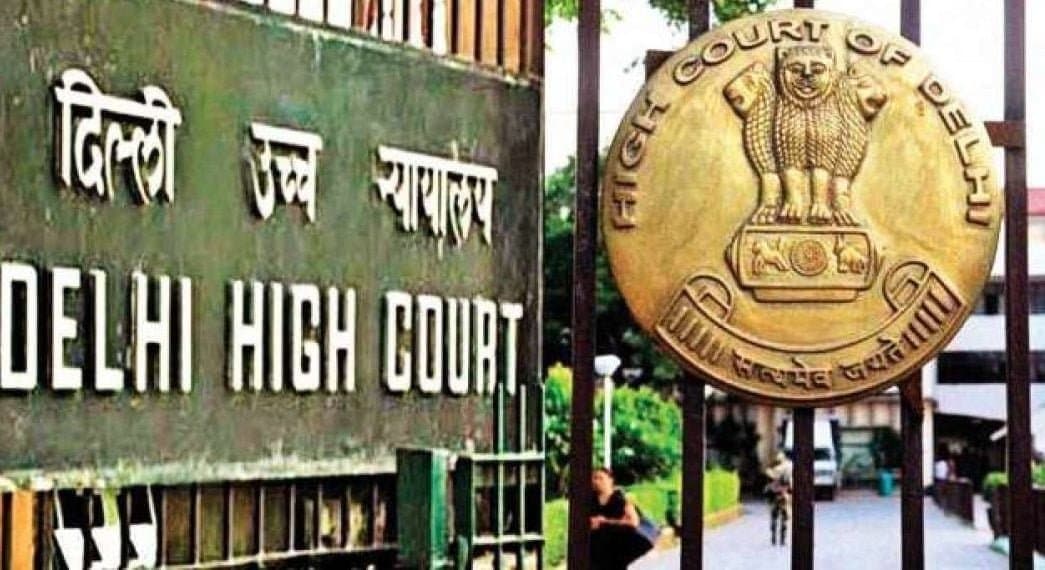
The Delhi High Court, comprising Justice Prathiba M Singh and Justice Vikas Mahajan, issued notice on Monday on the appeals filed by the National Investigation Agency challenging the bail granted to Khurram Parvez and Irfan Mehraj. The bench directed the respondents to file their replies and listed the matter for hearing on the following day. The court clarified that no interim order staying the bail was passed at this stage.
Both Parvez and Mehraj remain in judicial custody as they have not yet been released despite the bail orders. The bail in question was originally granted by the Principal and Sessions Judge, Pitamber Dutt, of the Patiala House Courts on 18 July 2024. The trial court’s order allowed Parvez to be released on bail in the case registered by the NIA in October 2020 under the Unlawful Activities (Prevention) Act.
NIA’s Contentions
The NIA submitted that the trial court erred in granting bail because the allegations involve serious offences under the UAPA, including allegations of terror financing. The agency contended that the impugned bail order failed to adequately consider the nature and gravity of the accusations, the potential for tampering with evidence, and the likelihood of the accused influencing witnesses.
The NIA highlighted that the case stems from an investigation into alleged funding of terror‑related activities by certain non‑governmental organisations, trusts and societies operating in the Kashmir Valley. According to the agency’s submissions, some of these entities, whether registered or not, have been observed collecting funds domestically and abroad under the pretext of charitable and welfare activities such as public health and education. The NIA asserted that a number of these organisations have developed links with proscribed terrorist groups, namely Lashkar‑e‑Toiba and Hizbul Mujahideen.
Specifically, the NIA alleged that Khurram Parvez, who served as the coordinator of a rights organisation, provided material support to protestors during the 2016 Kashmir agitation. Irfan Mehraj, identified as a researcher with the Jammu and Kashmir Coalition of Civil Society until March 2022, was also named in the same FIR. The agency argued that the accused’s roles and the alleged connections to prohibited organisations warranted a stricter approach to bail.
Trial Court’s Reasoning
The trial court, while granting bail, had taken into account the period of incarceration already undergone by the accused, the lack of direct evidence linking them to the commission of a terrorist act, and the possibility of securing their presence during trial through suitable conditions. The order noted that Parvez had previously been granted bail in another UAPA matter by the High Court, which the trial court considered as a factor indicating that stringent custodial measures were not indispensable at that stage.
The trial court further observed that the allegations, while serious, did not automatically justify denial of bail, especially when the accused had cooperated with the investigation and there was no demonstrable risk of flight or obstruction of justice.
High Court’s Observations
The division bench, after hearing the NIA’s preliminary submissions, issued notice to the respondents but refrained from passing any order that would suspend the bail. The court emphasized that the matter required a detailed examination of the rival contentions and that the respondents must be afforded an opportunity to present their case.
The bench clarified that the issuance of notice does not constitute a finding on the merits of the NIA’s appeal. It also noted that the absence of a stay on the bail means that the accused continue to enjoy the benefit of the trial court’s order unless a subsequent order modifies that position.
Implications
The present development underscores the procedural safeguards embedded in bail jurisprudence under the UAPA, where the burden lies on the prosecution to demonstrate compelling reasons for denying bail even after a trial court has granted it. The High Court’s decision to seek a detailed response before considering any interim relief reflects a cautious approach aimed at balancing the liberty of the accused with the investigative imperatives of the agency.
The matter is now set for further hearing, during which the court will evaluate the NIA’s arguments concerning alleged terror financing, the role of NGOs, and the sufficiency of the conditions imposed by the trial court to ensure the accused’s availability for trial.