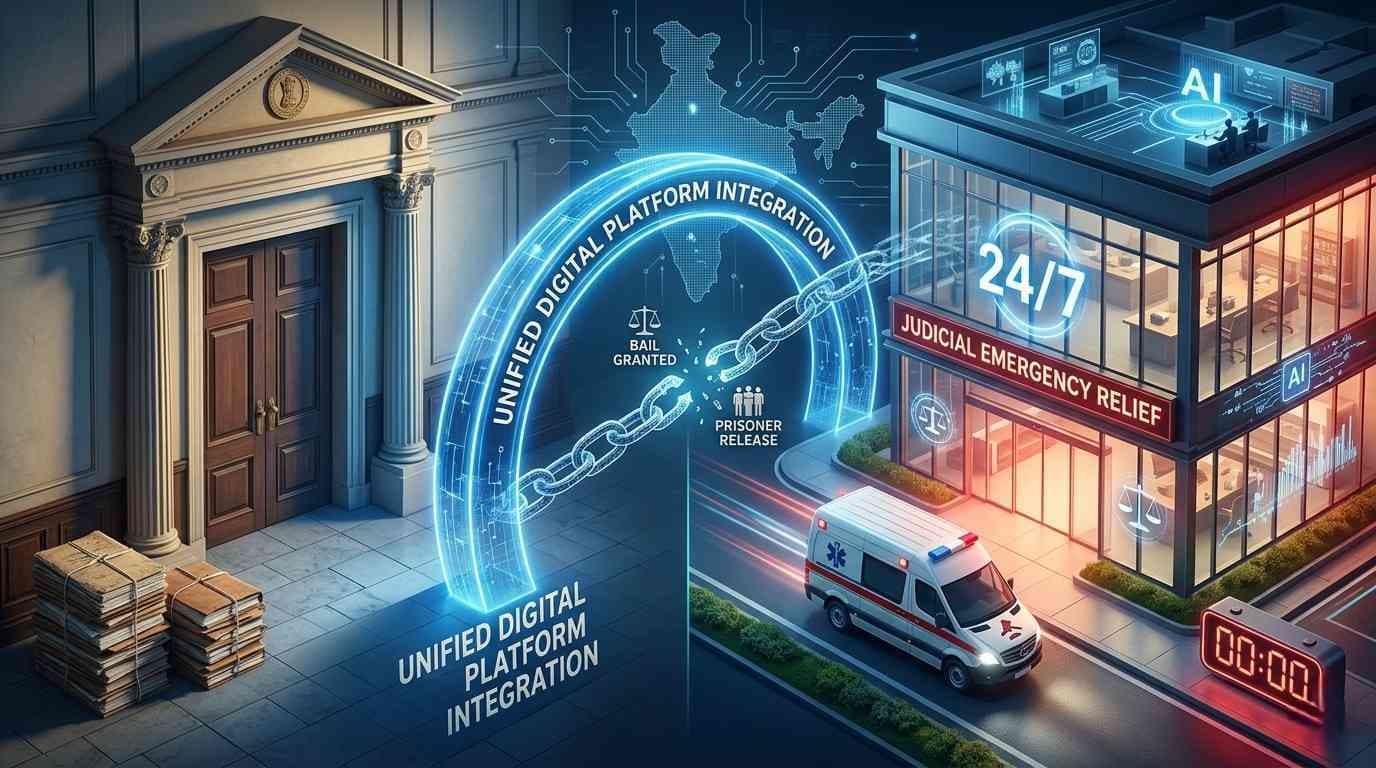
The traditional imagery of the legal system is one of fixed hours, structured terms, and slow-moving paperwork. However, the Chief Justice of India, Surya Kant, has proposed a radical shift in this design by stating that the time has come for the judiciary to function like hospitals operating twenty-four hours a day, seven days a week. Speaking at a high-level judicial seminar, the head of the nation's legal infrastructure stressed that the primary purpose of the courts must evolve from a prolonged deliberative process into an immediate, responsive relief-giving mechanism. For a citizenry accustomed to multi-year litigation cycles, this comparison marks a profound change in the state's approach to the public's grievances.
The core motivation behind this vision is a deep-seated desire to alleviate the daily burdens faced by regular citizens. When individuals approach the legal system, they are often carrying a heavy burden of personal, financial, or systemic vulnerability. The Chief Justice pointed out that just as emergency medical services exist to address sudden, acute physical pain without delay, a modern legal system should be structurally equipped to address the legal anxieties, systemic pressures, and immediate requirements of the common man. To treat justice as a limited-hour commodity, he argued, fails to meet the expectations of an evolving and fast-paced democratic society.
Achieving a constant state of operational readiness does not mean keeping judges sitting at their benches through the middle of the night. Instead, this shift relies on a complete modernization of our technological infrastructure. The call for twenty-four-hour accessibility is fundamentally a push for deep integration of artificial intelligence and automated digital systems. By migrating routine administrative filings, automated documentation, case tracking, and scheduling to intelligent networks, the legal machinery can run continuously in the background, significantly reducing the amount of time human judges must spend on routine clerical tasks.
A practical example of this shift was showcased through a unified digital platform developed by the Madhya Pradesh High Court, titled "Fragmentation to Fusion: Empowering Justice via United Digital Platform Integration." This software initiative demonstrates how fragmented state systems can be consolidated into a single, cohesive network to dramatically accelerate the pace of legal procedures. By digitizing court orders and integrating real-time communication across state departments, this unified interface ensures the prompt release of prisoners once bail is granted, facilitates urgent case hearings, and removes the administrative lag that frequently keeps individuals trapped in systemic gridlock.
However, moving toward an AI-assisted, continuous operational framework introduces several challenges that the legal system must carefully manage. As automated tools handle a larger share of the daily workflow, the responsibility of the judge shifts from basic processing to serving as a crucial safeguard for human fairness and constitutional values. The integration of advanced algorithms requires judicial training to adapt, ensuring that potential automated biases are quickly spotted and corrected. Technology must remain a useful tool that expands access to the law, rather than a detached mechanism that detaches the administration of justice from human empathy.
Furthermore, for digital court reforms to be genuinely effective, they must extend far beyond urban legal centers and reach deep into rural communities. The rollout of advanced software applications remains incomplete if the underlying code is confusing or inaccessible to the average citizen. To bridge this digital divide, there is a clear need to deploy and train local paralegal volunteers who can assist litigants in navigating these new platforms. Simplicity in user interface design is essential to turning these technical upgrades into broad, democratic tools for empowerment.
Ultimately, this blueprint for a continuous, hospital-style judicial system represents a critical path forward for a modern legal order. Transforming the judiciary from a slow, paper-heavy bureaucracy into a dynamic, tech-driven institution is no longer an optional upgrade or a luxury; it is a clear necessity for fulfilling constitutional promises. By embracing automated tools and unified state platforms, the court system can shift away from a legacy of endless delays, working toward a future where access to legal remedy is as fast, continuous, and reliable as an emergency medical response.