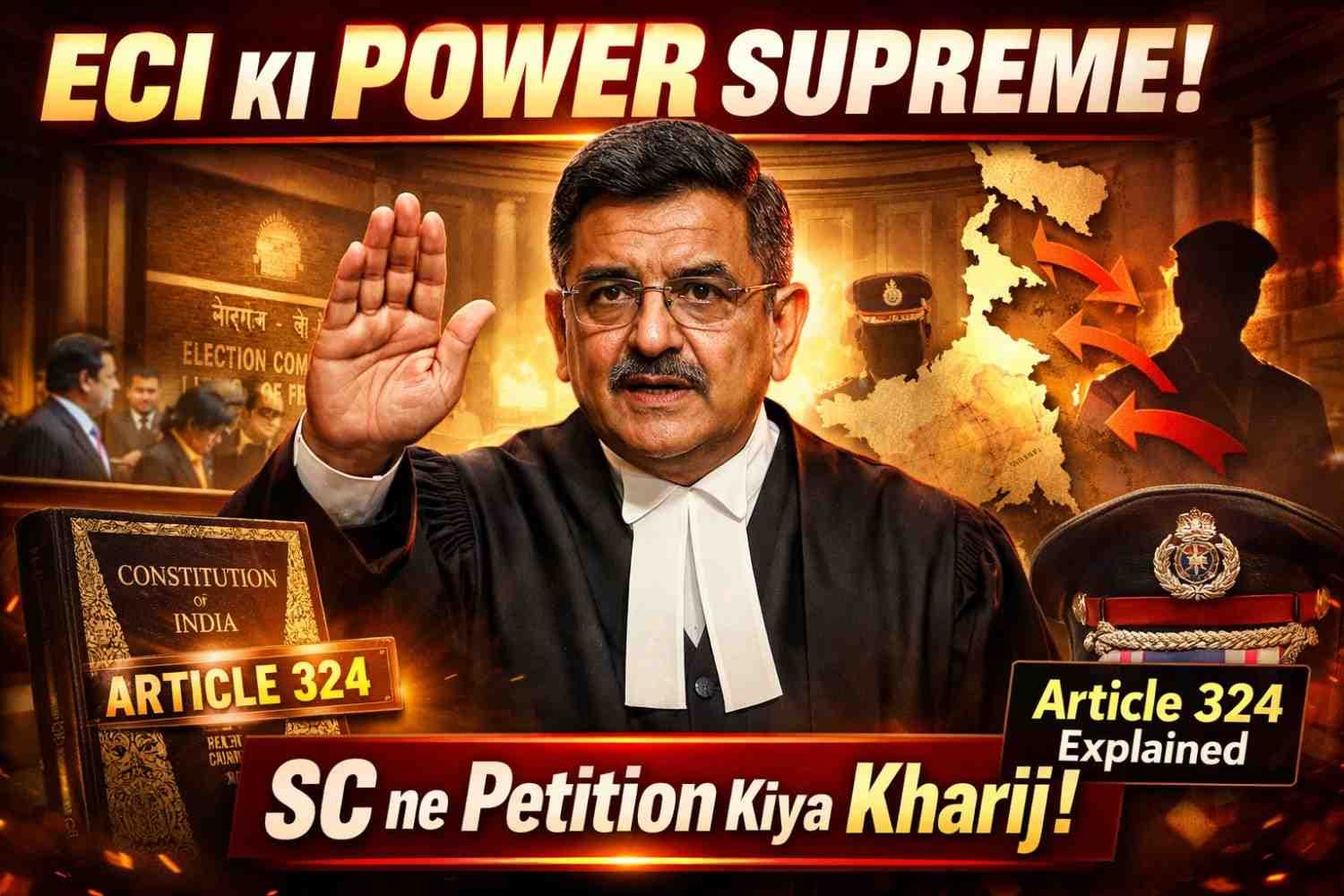
The Supreme Court of India has dismissed a petition challenging the Election Commission of India’s (ECI) decision to transfer several top officials in West Bengal, including the Chief Secretary and the Director General of Police (DGP), ahead of the 2026 Assembly elections. A Bench led by Chief Justice Surya Kant ruled that the ECI possesses the plenary power under Article 324 of the Constitution to ensure the conduct of free and fair elections, which includes the authority to shift officials to prevent any perception of bias or interference.
The petition, filed by a group of concerned citizens, argued that the mass transfers were "arbitrary" and undermined the administrative stability of the state during a sensitive period. They contended that the ECI had not provided specific reasons for the removal of these high-ranking bureaucrats, suggesting the move was politically motivated. However, the Court maintained that the ECI is the "sole judge" of the requirements for a level playing field once the Model Code of Conduct (MCC) is in effect.
The Bench emphasized that judicial interference in the ECI’s administrative maneuvers during an election cycle should be minimal. Justice Kant observed that the ECI often acts on "field reports and intelligence" that cannot always be made public. The Court noted that as long as the transfers do not violate statutory rules or fundamental rights, the judiciary must respect the ECI's mandate to "insulate the electoral process" from local political influence.
This ruling reinforces the precedent that the ECI’s power of superintendence and control is at its zenith during the election window. By dismissing the plea, the Supreme Court has signaled that the State government must comply with the ECI's directives regarding personnel management. This development is a significant boost for the ECI's efforts to project neutrality in a highly polarized political environment, ensuring that the local administration remains independent of the incumbent government during the voting phases.
The decision also clarifies that the "discretion" of the Election Commission in personnel matters is a necessary tool to address the unique challenges of regional elections. With the top brass of West Bengal's administration now reorganized as per the ECI's instructions, the focus shifts back to the logistics of the multi-phase polls. Legal experts view this dismissal as a reminder that constitutional bodies must be allowed the functional autonomy to fulfill their primary duties without being bogged down by "speculative" litigation.