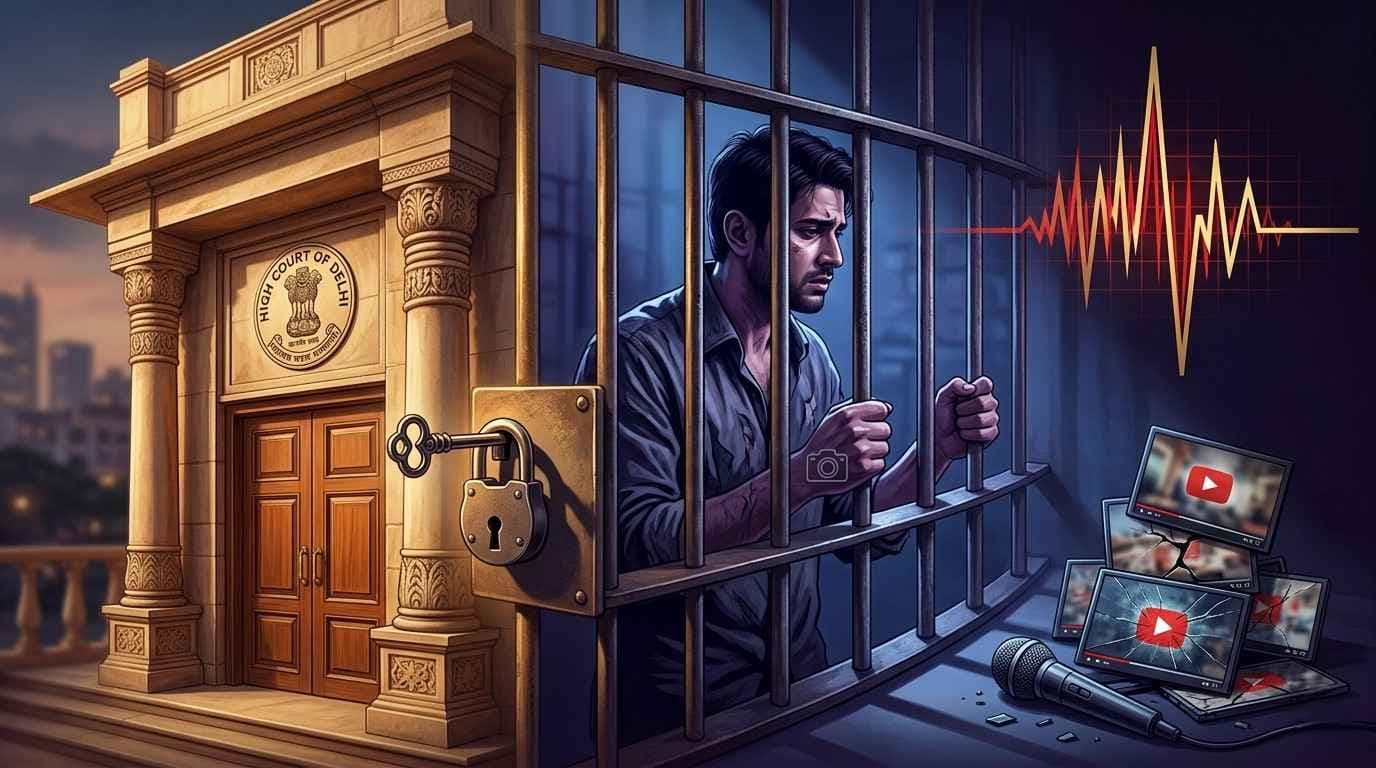
A definitive and sobering precedent has been set for digital content creators across India following a major ruling by the Delhi High Court. Gulshan Pahuja, a YouTuber running the channel “Fight 4 Judicial Reforms,” has been sentenced to the maximum six months of simple imprisonment along with a monetary fine. The division bench ruled that his public commentary and subsequent legal arguments had decisively crossed the line from constructive criticism into criminal contempt of court. The decision serves as a stark reminder of the strict legal boundaries that protect the institutional integrity and public dignity of the judiciary from defamatory online campaigns.
The controversy originated from interviews uploaded to Pahuja’s channel featuring two practicing advocates. During these recordings, derogatory and scandalous remarks were allegedly made against specific judges and the broader court system. The material quickly caught the attention of three judicial officers, who formally flagged the videos and their highly provocative online banners to the Delhi High Court. This referral prompted the court to initiate independent, swift criminal contempt proceedings, thrusting the intersection of digital media, public commentary, and legal accountability directly into the national spotlight.
As the proceedings unfolded, the trajectory of the case split dramatically between the individuals involved. The two advocates featured in the videos offered immediate, unconditional apologies to the bench, clarifying that they had not consented to their raw interviews being published online and were entirely unaware of the scandalous thumbnails used to attract viewers. Finding their remorse to be genuine and sincere, the High Court accepted their apologies and dropped all charges against them. In sharp contrast, Pahuja chose to firmly stand by his content, asserting that his videos were a legitimate exercise in public interest advocacy aimed at securing audio-video recordings of court proceedings.
The case reached a critical tipping point when Pahuja was found guilty of contempt but given a final opportunity to address the court regarding his sentencing. Instead of offering a course correction or expressing regret, he doubled down on his rhetoric in open court. He openly stated that the arbitrary actions of the courts were rising and that he expected no justice from the Indian judicial system, explicitly declaring that the synonym for arbitrariness is dictatorship ("manmarzi ka dusra arth taanashahi hota hai"). He further challenged the procedural validity of the trial, complaining that the original case files had not been summoned and that he was denied the right to cross-examine the complaining judicial officers.
This defiant stance in the courtroom effectively sealed the YouTuber's legal fate. The division bench, comprising Justice Navin Chawla and Justice Ravinder Dudeja, observed with grave concern that the contemnor showed absolutely no remorse or willingness to modify his behavior. The judges noted that rather than seeking leniency, Pahuja actively compounded his original offense by launching further scandalous submissions directly at the bench. The court concluded that showing mercy or granting a lesser punishment would be highly counterproductive, as it would only embolden him and others to repeat such highly damaging acts in the future.
In its final order, the court emphasized that maintaining public confidence in the administration of justice is paramount, and unrepentant attacks on the institution cannot be tolerated under the guise of activism. However, demonstrating a commitment to due process, the bench directed that the six-month prison sentence be held in abeyance for a period of sixty days. This strategic window provides Pahuja with a temporary reprieve, allowing him the legal opportunity to formalize and file an appeal against the conviction before the Supreme Court of India.
Ultimately, this high-profile confrontation highlights the growing friction between viral online activism and traditional institutional authority. While the digital age has democratized public commentary and allowed citizens to advocate loudly for systemic reforms, this ruling underscores that the judiciary possesses robust, uncompromising mechanisms to defend its reputation. As the sixty-day window ticks down, the legal community and digital creators alike are watching closely, fully aware that the final outcome of this battle will heavily define the future boundaries of online free speech and institutional respect in the digital era.