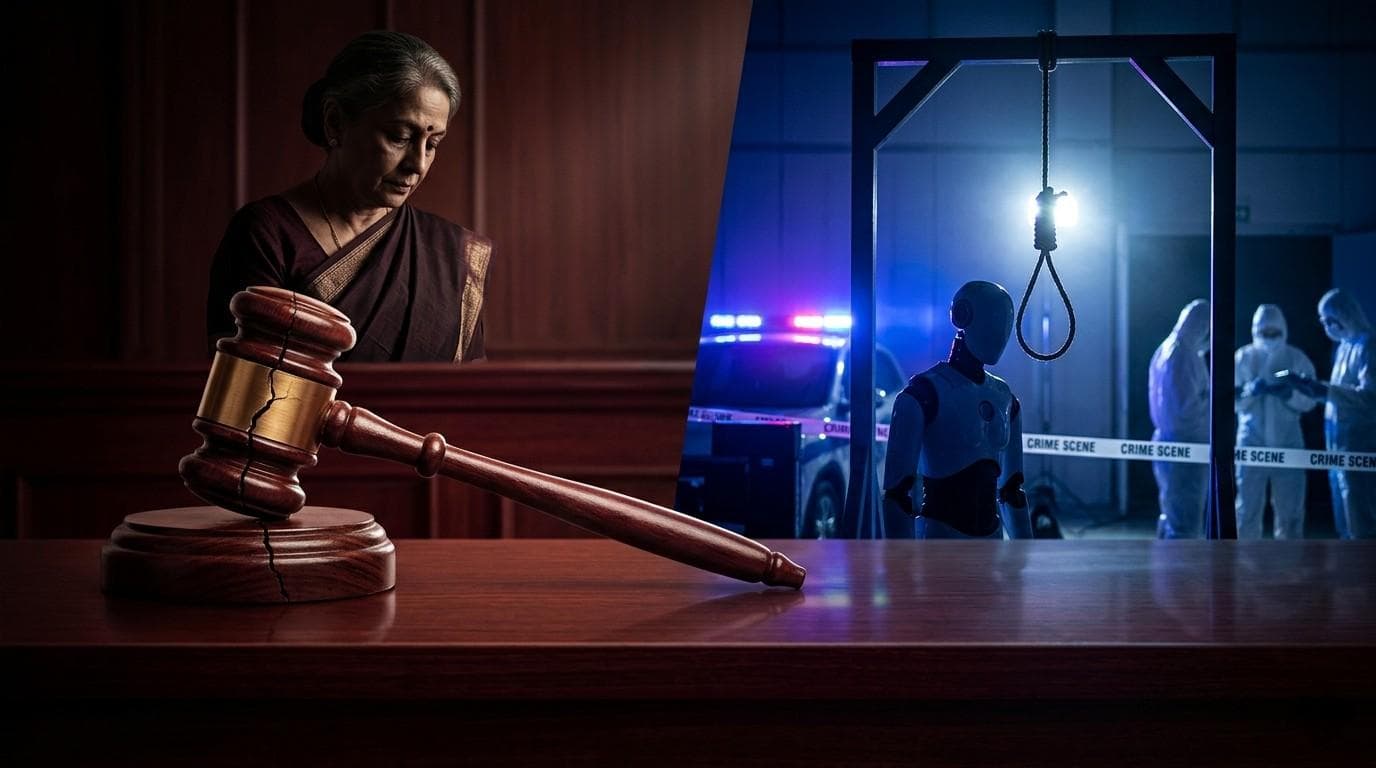
The high-profile investigation into the tragic death of former model-turned-actor Twisha Sharma has reached a critical legal juncture. A specialized court in Bhopal has officially remanded the victim's mother-in-law, retired district judge Giribala Singh, and her husband, Samarth Singh, to 14 days of judicial custody. This decisive shift follows the conclusion of an intense, multi-day interrogation period handled by federal investigators, pushing the highly publicized dowry-death case into a strict punitive phase.
The transition to jail custody marks a stunning reversal of fortunes for the influential family, especially for the retired judicial officer. Immediately following the victim's death under mysterious circumstances at her marital residence on May 12, a lower sessions court had extended a swift protective shield by granting her anticipatory bail within 24 hours of the initial police filing. However, that rapid intervention triggered massive public outcry and heavy resistance from the prosecution, who argued the initial relief was handled with unprecedented and structural haste.
The legal tide turned completely when top government law officers and the victim's family successfully moved the Madhya Pradesh High Court to aggressively dismantle that protective shield. In a scathing review, the high bench formally quashed the retired judge’s pre-arrest bail, citing heavy evidence of non-cooperation and a calculated refusal to join the ongoing probe. Higher judicial authorities noted that despite receiving multiple official summonses, the accused party actively avoided investigators, going so far as to refuse physical notices.
Behind the closed doors of the courtroom, prosecutors presented alarming medical and digital evidence that completely contradicted the defense's narrative of a simple domestic suicide. The state revealed that a detailed post-mortem examination uncovered six distinct antemortem injuries across the victim's head, arm, and fingers, pointing to severe physical struggles prior to her death. Furthermore, retrieved encrypted text messages from the preceding weeks exposed a toxic pattern of domestic hostility, where the in-laws allegedly cast malicious doubts over her character.
The federal agency's aggressive approach was put on full display just 24 hours prior to the custody hearing through a meticulous, high-tech reconstruction of the crime scene. Forensic experts and investigators descended upon the Bhopal residence to replicate the physical dynamics of the incident, deploying an 80-kilogram sand-filled dummy rigged with iron weights to precisely analyze the body's suspension points. This rigorous testing aims to definitively answer whether the fatal event was a self-inflicted act or a heavily staged crime scene.
During the latest courtroom production, the atmosphere grew incredibly tense as the former district judge openly went on the offensive against the surrounding legal and media infrastructure. Addressing the presiding bench directly, she lodged formal complaints alleging that her son had been physically assaulted by opposing counsel during a previous appearance. She also issued an emotional plea demanding an immediate halt to what she characterized as a destructive media trial, claiming relentless press hounding has put her family’s physical safety at risk.
With the Central Bureau of Investigation opting not to seek a further extension of their direct interrogation window for now, the federal team made it clear that their tactical pause is entirely conditional. The agency explicitly informed the trial court that it reserves the absolute right to demand fresh, hands-on custody of both individuals should new contradictions emerge from the ongoing forensic analysis. As the accused duo is moved to a high-security prison facility until June 16, the legal community watches closely to see how the system handles one of its own.