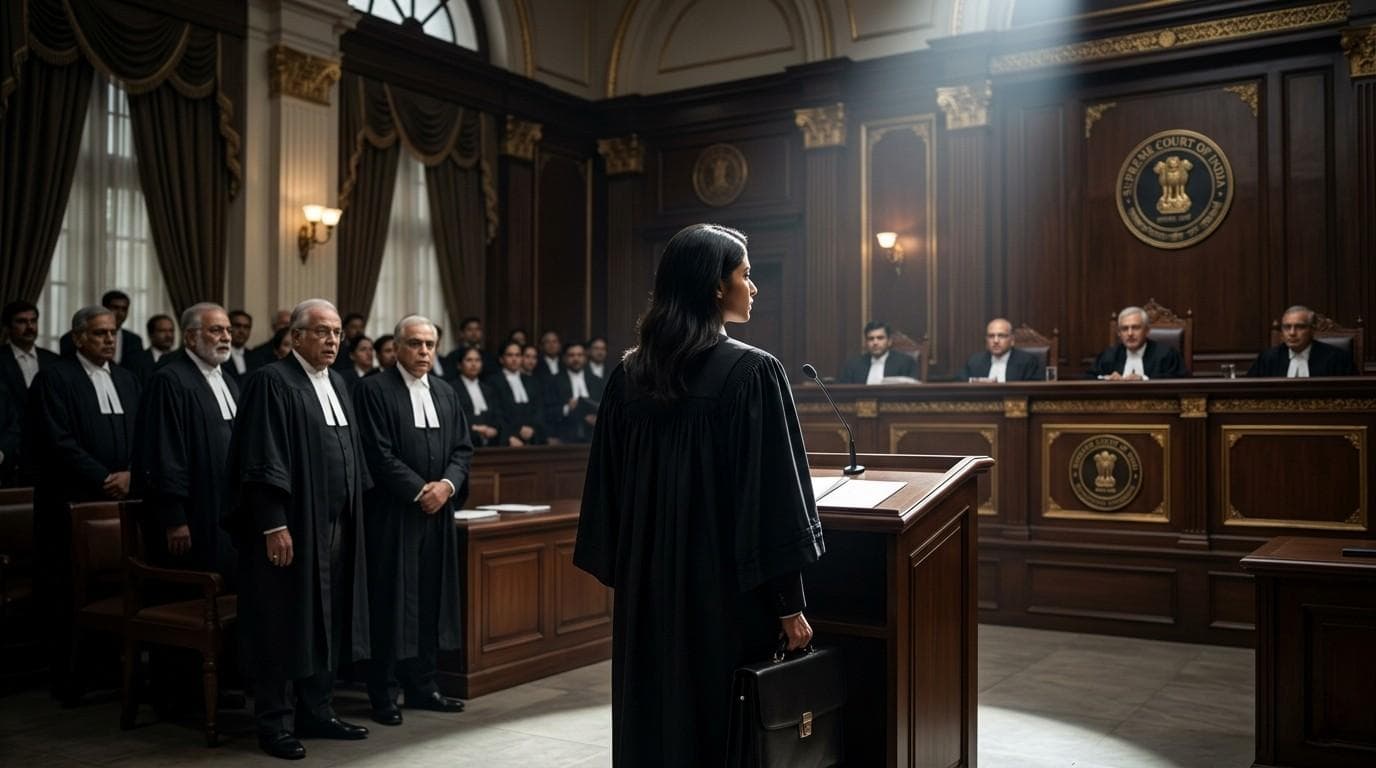
A refreshing procedural shift has taken over the highest court of the land, signaling a massive push to level the playing field for the next generation of legal talent. On the first day of the summer recess, multiple Supreme Court vacation benches took a decisive and unified stand by refusing to allow Senior Advocates to either mention matters for urgent listing or argue cases. The bold directive aims to break up the traditional monopoly over courtroom floor time and force young, non-designated lawyers into the spotlight.
The unexpected courtroom shake-up unfolded across several benches as the summer session, recently re-designated as "partial court working days," officially commenced. Leading the charge, a bench headed by Justice Vikram Nath flatly rejected standard intervention attempts from prominent senior counsel, clarifying that the restriction will remain strictly active throughout the multi-week vacation period. The bench made it perfectly clear that this temporary embargo is explicitly designed to carve out an exclusive training ground for junior members of the Bar and Advocates-on-Record.
The transition triggered brief, lively friction inside the packed courtrooms as senior stalwarts of the legal community expressed surprise over the sudden restriction. Some senior advocates pushed back, arguing they had been formally retained for complex matters where notice had already been issued and that clients expected their representation. Unmoved by the resistance, the judiciary maintained a firm posture, with the bench lighter-heartedly instructing the court master to clear senior designates from the front lines so the younger cohort could step up to the podium.
Fears of immediate administrative retaliation or dismissals due to the forced absence of senior counsel were quickly laid to rest by the handling justices. The court provided a strong blanket assurance to the legal community that no client matters would be penalized or thrown out simply because a junior lawyer was handling the podium. Instead, the benches explained that if a complex matter genuinely required a senior's touch, the court would reasonably grant an adjournment and push the substantive hearing into July when normal, full-capacity court operations resume.
Interestingly, parallel vacation benches strongly echoed this youth-first sentiment, providing a fascinating psychological perspective on courtroom dynamics. One of the sitting benches observed that letting junior advocates handle the pressure significantly changes the operational flow of a hearing. The justices noted that when a younger lawyer presents a case fresh, there is actually a statistically higher chance of the court issuing a formal notice, whereas a seasoned senior's aggressive push occasionally risks a quick, outright dismissal.
This institutional push addresses a long-standing grievance within the legal fraternity regarding the intense gatekeeping of high-stakes litigation. Historically, wealthy litigants heavily favor hiring designated seniors for urgent morning "mentionings," a practice that routinely forces brilliant junior lawyers into the shadow of the back benches. By temporarily suspending this hierarchy during the summer recess, the apex court is creating a structured sandbox where rising legal professionals can develop raw advocacy skills directly before the country's top judges.
Ultimately, this judicial experiment breathes new life into an old, forgotten tradition of mentorship within the legal framework. The move forces a structural shift where senior advocates must now actively delegate vital court arguments to their instructing juniors rather than dominating the microphone. As junior lawyers spend the coming weeks holding the line in high-stakes vacation matters, this temporary rule might just pave the way for a more inclusive, confident, and highly capable generation of courtroom advocates.