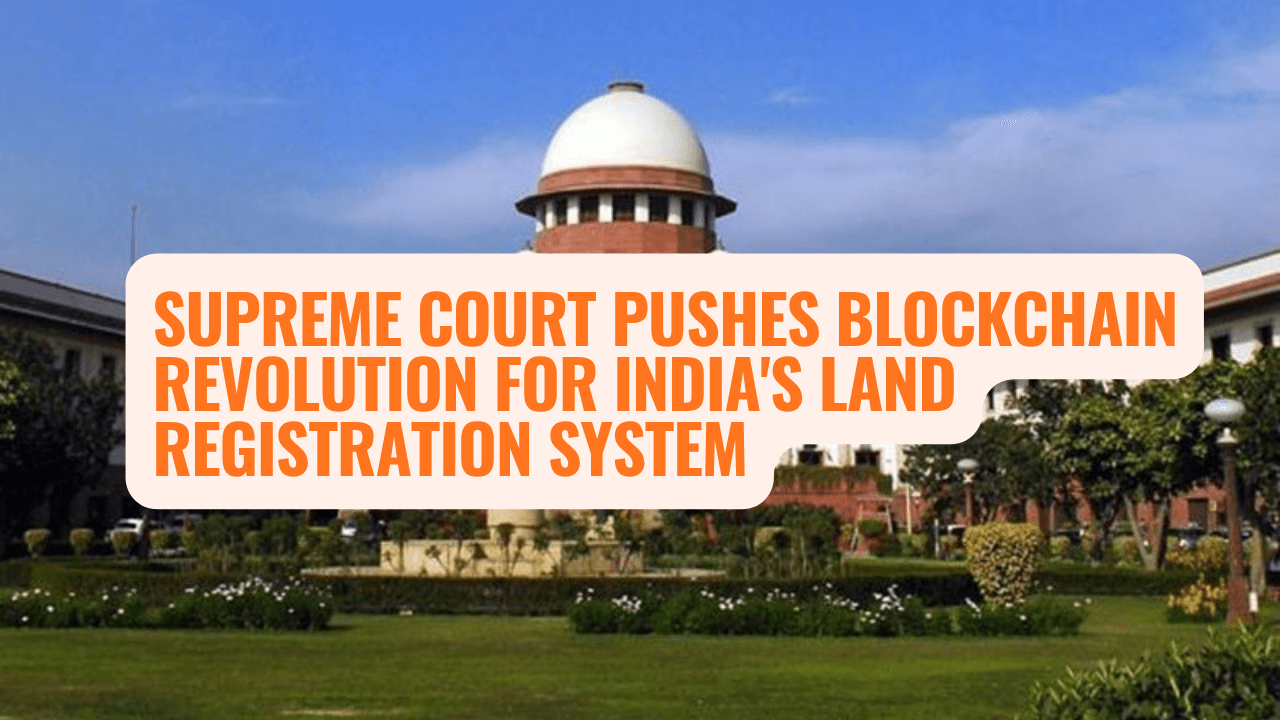
In a bold move that could redefine property ownership in India, the Supreme Court has recently suggested that the country should consider using cutting-edge blockchain technology to overhaul its outdated and often chaotic land registration system. This direction has the potential to end decades of property disputes, fraudulent claims, and the endless paper chase that currently haunts buyers and landowners alike.
Why Did the Supreme Court Step In?
Property transactions and land titling in India have long been problematic. Every year, thousands of buyers fall victim to multiple sales of the same property, fake documents, tampered records, and endless legal battles. Recognizing this, a Supreme Court Bench led by Justices P.S. Narasimha and Joymalya Bagchi described the experience of buying property in India as "traumatic." The Bench has now asked the Law Commission to explore the feasibility of using blockchain to make land records secure, transparent and tamper-proof.
What Is Blockchain and How Will It Help?
Blockchain is a digital technology that records information in a way that makes it extremely difficult to change or hack. Once a transaction is recorded on the blockchain, it is practically immutable and can be traced at any time. By moving land and property records to a blockchain-based platform:
- Fraudulent sales and fake documents can be eliminated
- Ownership transfers will be fast, transparent, and secure
- All stakeholders—from buyers and sellers to banks and courts—can verify records instantly
- Legal disputes arising from unclear or manipulated records can be drastically reduced
What Did the Court Direct?
The Supreme Court has asked the Law Commission to coordinate with technology experts and state governments to create a framework for "guaranteed land titling" backed by the state. The Bench openly stated that the world is moving on, and "We must dare to think of alternatives" to our colonial-era system. If adopted, the blockchain model would mean that once you buy a property and it's registered on the digital platform, you would have full, government-guaranteed ownership—with no fear of hidden claims or old legal issues surfacing years later.
What Happens Next?
The Law Commission will now study international best practices and suggest a model roadmap suited to India's needs. State governments will have to be part of this process, and existing laws will require updates. The Supreme Court expects a comprehensive proposal within a defined timeline.
Why Does This Matter to You?
If you have ever tried to buy land or a flat, you know that current processes are time-consuming and uncertain. The Supreme Court's move offers hope for a day when every property owner in India can enjoy secure, simple, and indisputable ownership—just a few clicks away.
Stay tuned for further updates as India takes a historic step towards making property ownership secure, transparent, and truly yours.