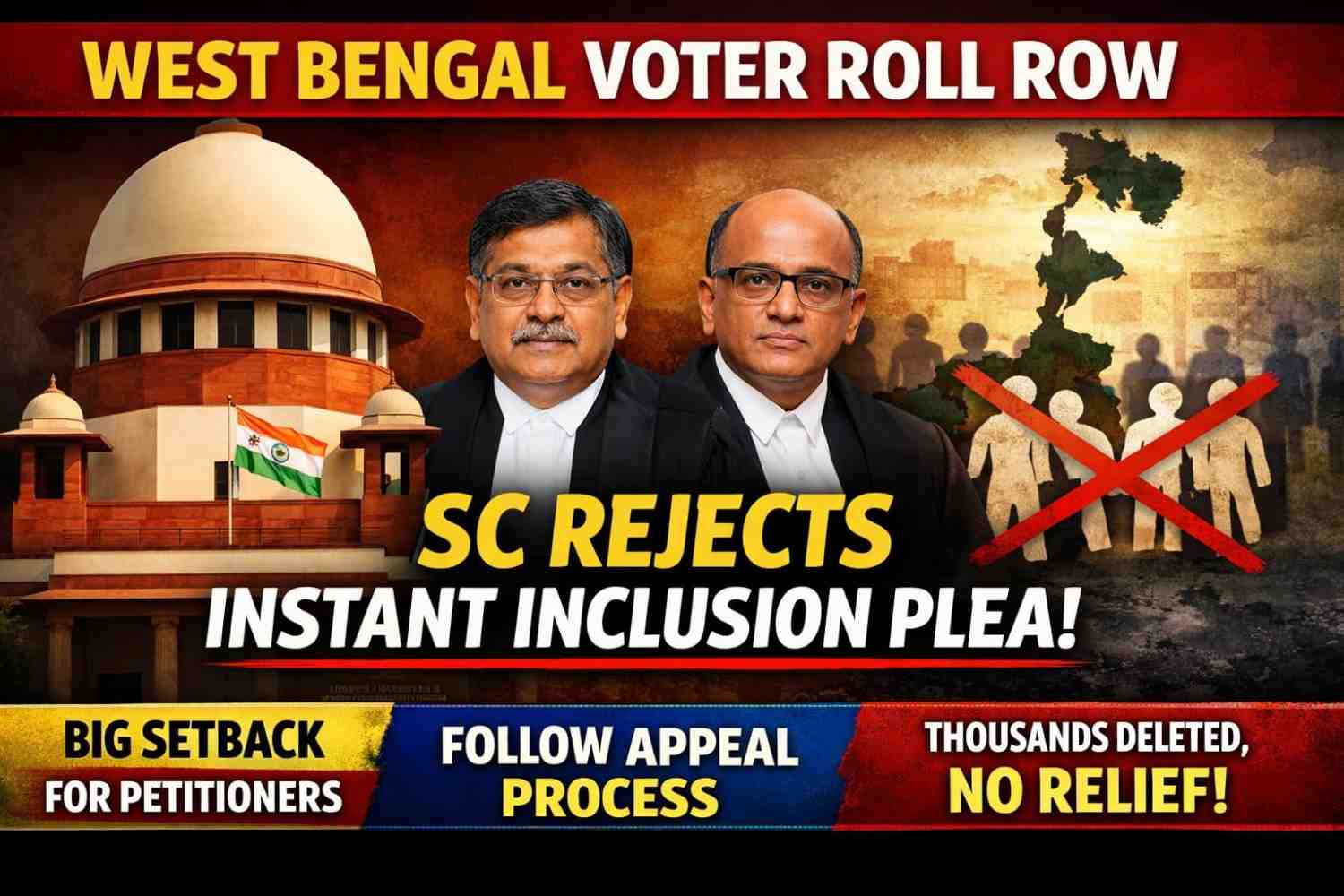
The SUPREME COURT OF INDIA has declined to grant interim relief to petitioners seeking the immediate inclusion of allegedly deleted voters in the WEST BENGAL electoral rolls. A bench presided over by JUSTICE B.R. GAVAI and JUSTICE K.V. VISWANATHAN heard the arguments concerning the administrative process of voter verification and deletion. The court emphasized that while the appellate process for affected individuals may be time consuming, the judiciary cannot permit the interim inclusion of voters who were removed from the rolls simply because they were mapped previously.
The legal challenge arose from concerns regarding the transparency and methodology employed during the ELECTION COMMISSION OF INDIA voter list revision exercises. Petitioners argued that thousands of voters were removed without adequate notice or a robust verification process. Counsel for the petitioners contended that the exclusion of these voters threatens the democratic mandate by disenfranchising a large segment of the population prior to the upcoming electoral cycles. They sought a directive from the court to restore these names to the electoral rolls pending the final outcome of their individual appeals before the relevant authorities.
JUSTICE GAVAI observed during the proceedings that the electoral roll is a dynamic document subject to continuous scrutiny and updating by statutory bodies. The court noted that if every voter who has been deleted were allowed to be included on an interim basis, it would undermine the statutory integrity of the election process. The bench stated that there is a well defined legal mechanism for aggrieved individuals to challenge their removal through the ELECTION COMMISSION designated appellate officers. The court maintained that judicial intervention at this stage to bypass these procedures would create administrative chaos.
The counsel representing the ELECTION COMMISSION OF INDIA defended the deletions, asserting that the exercise was conducted following standard operating procedures. This includes physical verification and the issuance of notices to addresses where voters were reported to be shifted, deceased, or nonexistent. The commission highlighted that the digital mapping process used for administrative convenience in previous years does not guarantee permanent residency or eligibility for a specific constituency. Therefore, mapping alone cannot serve as proof of current residency for the purpose of maintaining electoral validity.