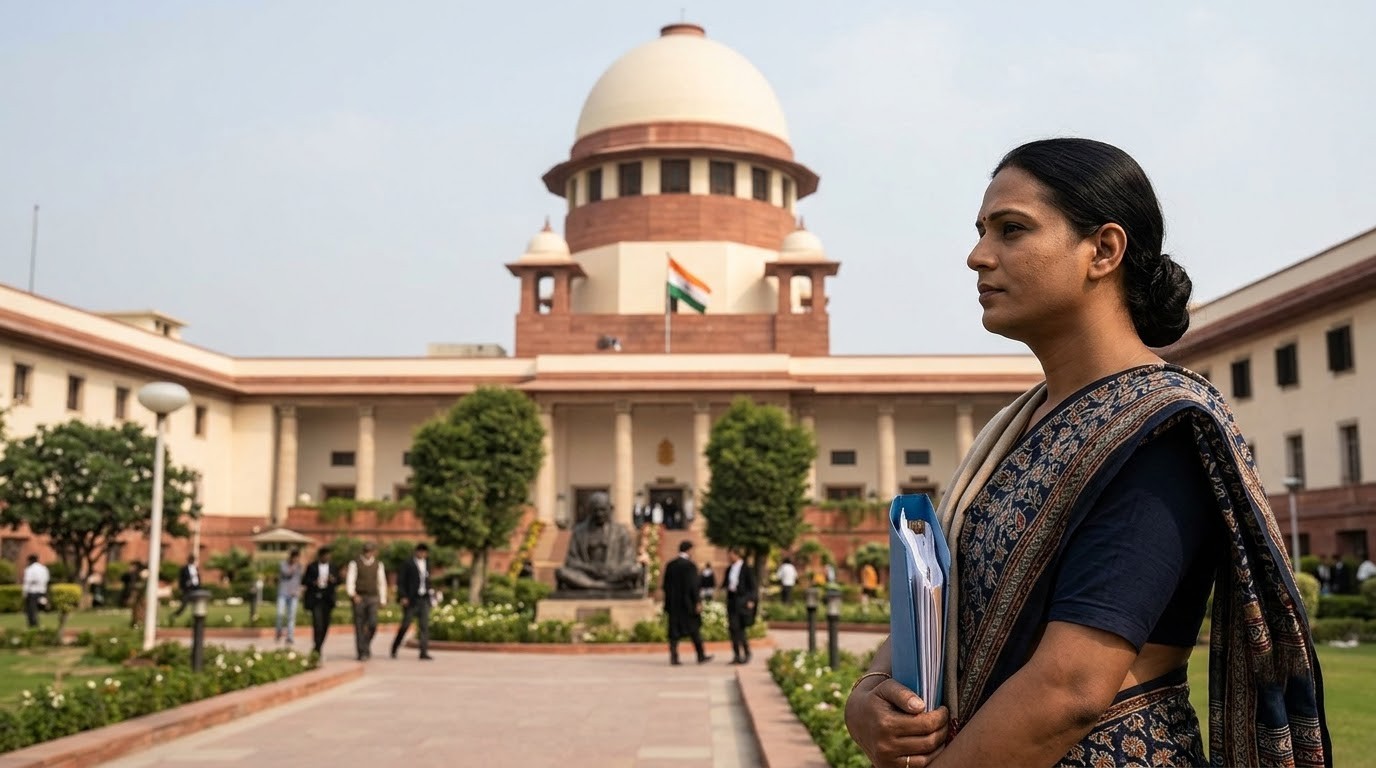
The Supreme Court of India has commenced a critical constitutional examination of whether legal recognition of gender identity automatically entitles transgender women to rights and protections historically reserved for biological women. On 28 October 2026, a bench of the Supreme Court heard a petition filed by Women's Declaration International India challenging provisions of the Transgender Persons (Protection of Rights) Act, 2019, as amended in 2026. The Court issued notice to the Union government and tagged the matter with existing challenges pending against the 2026 amendment.
Core Constitutional Conflict
The petition raises a distinct constitutional question that diverges from previous litigation. While earlier challenges to the 2026 amendment questioned the State's power to restrict the recognition of gender identity, the present petition asks whether such recognition, once granted, determines eligibility for statutory benefits tied to biological sex. These benefits include political reservations, public employment quotas, sporting classifications, prison assignments, and institutional accommodation.
The controversy centres on the interaction between the right to self-identify gender, affirmed in National Legal Services Authority v. Union of India (2014), and the legislative purpose underlying sex-specific classifications. The NALSA judgment established gender identity as an intrinsic element of personal autonomy, dignity, and liberty under Article 21, extending protections under Articles 14, 15, 16, and 19. However, the present litigation requires the Court to determine whether the principles of NALSA mandate identical treatment across all statutory contexts where the law distinguishes between men and women.
Legislative Framework Under Scrutiny
The 2026 amendment to the 2019 Act has altered the statutory definition of a transgender person and removed the earlier express recognition of self-perceived gender identity contained in Section 4(2) of the original legislation. These amendments are themselves subject to constitutional challenge in parallel proceedings. The Supreme Court is therefore seized of two interconnected issues: the permissible extent of State regulation over gender recognition, and the legal consequences that flow from such recognition regarding sex-specific entitlements.
Distinction Between Recognition and Eligibility
The petition argues that legal classifications serve varied legislative purposes. Reservations for women in legislative bodies and public employment aim to remedy historical structural disadvantages in political representation. Provisions concerning reproductive health and pregnancy engage biological factors. Sporting regulations may rely on physiological parameters relevant to safety and competitive fairness. The petition contends that a single gender identity certificate cannot uniformly govern eligibility across these divergent contexts without undermining the specific legislative objectives of each category.
A gender identity certificate serves the vital purpose of protecting individual dignity and ensuring access to public services. However, the petition submits that its operation as an automatic gateway to every sex-specific benefit requires independent constitutional justification. Conversely, the State cannot rely on biological sex as a universal ground to deny transgender persons the protections guaranteed by NALSA.
Can Transgender Women Automatically Access Women-Specific Reservations and Protections?
The Supreme Court has not yet ruled on the merits. The Court has sought the Union government's response and tagged the petition with pending challenges to the 2026 amendment. The core issue pending adjudication is whether legal gender recognition under the Transgender Persons Act confers an automatic entitlement to statutory benefits—such as political reservations, sports quotas, and prison placements—historically attached to biological sex, or whether the State may differentiate based on the legislative purpose of each specific provision.
Comparative Overview: Key Constitutional Provisions and Legislative Changes
Aspect | NALSA Judgment (2014) | Transgender Persons Act, 2019 (as amended 2026) |
|---|---|---|
Gender Recognition | Right to self-identify gender upheld under Article 21 | Amendment removed express statutory recognition of self-perceived gender identity (formerly Section 4(2)) |
Constitutional Basis | Articles 14, 15, 16, 19, 21 | Subject to constitutional challenge regarding scope of recognition and resultant entitlements |
Scope of Entitlements | Directed State to extend legal recognition and welfare measures | Petition argues recognition does not automatically mandate eligibility for all sex-specific statutory benefits |
Implications for Constitutional Jurisprudence
The outcome of this litigation will define the intersection of gender identity rights and sex-based classifications in Indian constitutional law. The Court must reconcile the dignity and autonomy interests recognised in NALSA with the legislative objectives underlying disparate statutory schemes that distinguish between men and women. The Union government's response will frame the executive's position on whether the 2026 amendment intends to create a uniform legal status for transgender women across all gendered statutory categories, or whether sector-specific criteria remain permissible. The matter remains pending for further hearing.