Akash Sarkar, an aspirant for the Agniveer scheme of the Indian Army, applied for a fresh Police Clearance Certificate (PCC) after successfully clearing the recruitment process. The police authorities declined to process his application, stating that his name had been deleted from the electoral roll during the Special Intensive Revision (SIR) exercise conducted by the Election Commission. The authorities maintained that the PCC could not be issued until the SIR appeal challenging the deletion was decided. Sarkar contended that the denial was unlawful because deletion from the electoral roll does not affect citizenship status and therefore cannot be a ground for withholding a police clearance.
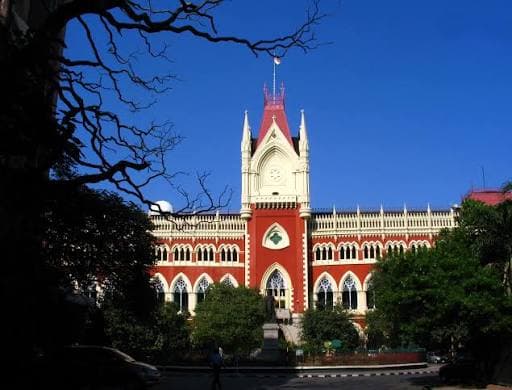
Sarkar approached the Calcutta High Court through his counsel Biprojyoti Bhowmick, filing a writ petition (WPA 928 of 2026) seeking direction to the police to issue the PCC. During the hearing, the State submitted that the police were bound to await the outcome of the SIR appeal before issuing the certificate, and gave an assurance that, immediately after the disposal of the appeal, the PCC would be issued expeditiously upon completion of the requisite verification. Justice Bivas Pattanayak, after recording the State’s assurance, disposed of the writ petition on 17 June 2026. In his order, the Judge requested the SIR Appellate Tribunal to decide the appeals filed by Sarkar and his father, Faruk Sarkar, as expeditiously as possible, noting that the petitioner’s grievance was linked to the pendency of the SIR proceedings.
Acting on the Calcutta High Court’s direction, the SIR Appellate Tribunal took up the appeals of Akash Sarkar and his father. After examining the material on record, the Tribunal found that the deletion of their names from the electoral roll during the SIR exercise did not constitute a determination of non‑citizenship. The Tribunal emphasized that, in accordance with the Supreme Court’s pronouncements on the limited scope of SIR, the exercise has consequences only for the preparation of electoral rolls and does not confer any authority to question a person’s citizenship. Consequently, the Tribunal set aside the order that had barred the issuance of the PCC and directed the concerned police authorities to process Akash Sarkar’s application without further delay, subject to the usual verification procedures.
The Tribunal’s reasoning aligns with the Supreme Court’s recent jurisprudence on SIR deletions. The apex court has clarified that while the Election Commission possesses the power to undertake a limited scrutiny of citizenship for electoral purposes, a deletion from the electoral roll is not a declaration that the person is not an Indian citizen. Any determination of citizenship must be made by the competent authority under the Citizenship Act, 1955. The police, in refusing the PCC solely on the basis of the SIR deletion, effectively treated the electoral roll amendment as a proxy for doubtful citizenship, a stance that the Tribunal found unsupported by law.