The West Bengal Assembly on Monday passed the West Bengal Public Safety and Control of Anti-Social Activities Bill, 2026, a measure that the government describes as necessary to tackle organised crime and anti‑social elements. The legislation was approved with 176 members voting in favour and 41 members voting against.
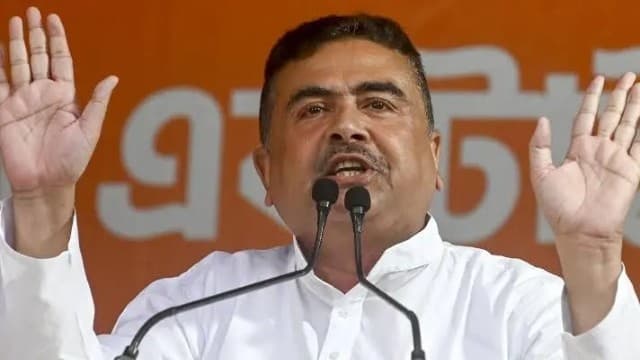
Chief Minister Suvendu Adhikari introduced and defended the Bill in the House, stating that its purpose is to curb organised crime, prevent riots and violence, and ensure that persons responsible for the destruction of public and private property are held accountable. He assured the Assembly that the law would not be employed for political ends.
The Bill creates a preventive detention regime that allows the State Government to detain an individual for up to twelve months if it is satisfied that such detention is required to prevent the person from engaging in anti‑social activities. A detention order may be made on the basis of a report submitted by a police officer holding the rank of Superintendent of Police or higher. The State Government may also authorise District Magistrates and Commissioners of Police to exercise detention powers in notified areas, provided that any such order obtains subsequent approval from the Government.
To oversee the use of preventive detention, the legislation establishes an Advisory Board. The Board is headed by a serving or former High Court Judge and includes two additional members who are qualified to be appointed as High Court Judges. The Board is required to review detention orders within the period prescribed by the statute.
The definition of “goonda” contained in the Bill is expansive. It covers habitual offenders, persons who attempt, finance, facilitate or promote anti‑social activities, leaders or members of criminal gangs or syndicates, and individuals who have been charge‑sheeted for organised crime under the Bharatiya Nyaya Sanhita. The scope further extends to offences under the Arms Act, the Narcotic Drugs and Psychotropic Substances Act, the Explosive Substances Act and the Immoral Traffic (Prevention) Act. Illegal mining, unauthorised quarrying, sand extraction, forest offences and wildlife‑related crimes are also included when they affect public safety or order.
Beyond preventive detention, the Bill empowers authorities to issue externment orders directing a person to leave a specified area, district or group of districts and to prohibit re‑entry for up to one year. The legislation also permits the initiation of proceedings against persons who abscond from detention orders, the seeking of court proclamations, the attachment of properties and the search, seizure and confiscation of assets alleged to be linked with anti‑social conduct.
The Bill declares that offences under its provisions shall be cognisable and non‑bailable, notwithstanding any contrary stipulation in the Bharatiya Nagarik Suraksha Sanhita, 2023. This means that a person arrested under the Act may be denied bail and the police may investigate without a warrant.
The Statement of Objects and Reasons accompanying the Bill notes that the legislation has been introduced because of a perceived increase in the threat posed by organised anti‑social elements and because existing legal mechanisms have been found inadequate to prevent such activities effectively.
During the debate, Chief Minister Adhikari characterised the law as more than a tool for incarceration, emphasizing that it aims to secure recovery of compensation and confiscation of assets from those responsible for violence and destruction of property.
The Bill has attracted criticism from opposition parties and various civil liberties organisations. Critics contend that the preventive detention provisions confer sweeping powers on the executive and may be susceptible to misuse. They have also questioned the breadth of the definition of “goonda” and the provision that permits detention on the basis of anticipated future conduct rather than a proven criminal conviction.
Legislative analysts observe that the Act introduces a hybrid approach that combines criminal procedural tools with preventive measures traditionally associated with special statutes. The requirement of an Advisory Board headed by a judicial officer is intended to provide a check on executive discretion, although the effectiveness of such oversight will depend on the Board’s independence and the timeliness of its reviews.
The passage of the Bill marks a significant expansion of the State’s authority to address perceived threats to public order. Its implementation will be watched closely by courts, civil society groups and legal scholars to determine whether the safeguards embedded in the statute operate as intended in practice.