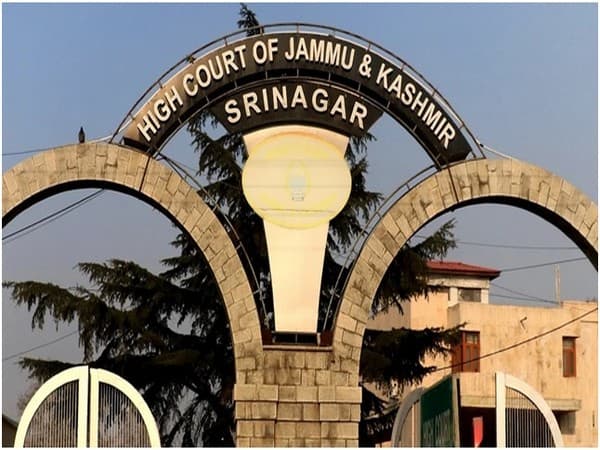
The High Court of Jammu & Kashmir and Ladakh, sitting through Justice Rahul Bharti, allowed a habeas corpus petition filed on behalf of Fayaz Ahmad Lone and quashed the preventive detention order issued against him under Section 8 of the Jammu & Kashmir Public Safety Act, 1978. The petitioner, who was detained in District Jail, Rajouri, approached the court through his father, challenging the order passed by the District Magistrate, Pulwama, which alleged that the petitioner posed a threat to the security of the State.
The detention order was predicated on a dossier submitted by the Senior Superintendent of Police, Awantipora. The dossier asserted that the petitioner had developed separatist ideology from his teenage years, had established links with the banned terrorist organisation Jaish‑e‑Mohammad (JeM), and had voluntarily assisted an eliminated JeM commander, Waqas, in carrying out subversive activities. It also referred to earlier FIRs and preventive proceedings initiated against the petitioner under Section 107 of the Code of Criminal Procedure in 2024.
Upon examining the record, the Court observed that the grounds of detention were a verbatim reproduction of the police dossier. Justice Bharti noted that the District Magistrate had not applied an independent mind but had merely borrowed the police’s subjective satisfaction. The Bench stated, “The grounds of detention in support of the preventive detention order are mirror image of the dossier submitted by the Sr. Superintendent of Police (SSP), Awantipora meaning thereby even the subjective satisfaction… came to be borrowed literally by the respondent No. 2 – District Magistrate.”
The Court described the police dossier as “barren”, emphasizing that it contained no recent factual material capable of establishing a live or imminent threat to State security. Justice Bharti remarked that the dossier amounted to an ipse dixit assertion, requiring no factual basis beyond the police’s own impressions and assumptions. The Bench held that preventive detention, being an extraordinary measure, cannot be employed as a routine administrative tool on the strength of subjective impressions unsupported by objective facts.
Further, the Court pointed out that the petitioner had previously been proceeded against under Section 107 CrPC and had furnished a bond for maintaining good behaviour. Neither the police nor the District Magistrate explained why, if the petitioner had subsequently violated the bond conditions, the statutory consequences under the Code of Criminal Procedure were not invoked before resorting to preventive detention. This omission was treated by the Bench as a significant circumstance reflecting a lack of proper application of mind.
Justice Bharti underscored the constitutional primacy of personal liberty, observing that personal liberty of a citizen is not a play thing for the District Police and District Magistracy to flirt with. The Court reiterated that the mere existence of preventive detention provisions in the Jammu & Kashmir Public Safety Act, 1978 does not confer a licence on the District Police or District Magistrate to resort to such detention as a matter of routine.
Consequently, the High Court set aside the preventive detention order and granted the habeas corpus petition, directing the immediate release of the petitioner unless lawfully detained on other grounds. The judgment reinforces the safeguard that preventive detention must be founded on recent, concrete factual material and must involve independent judicial scrutiny by the executive authority before deprivation of liberty.