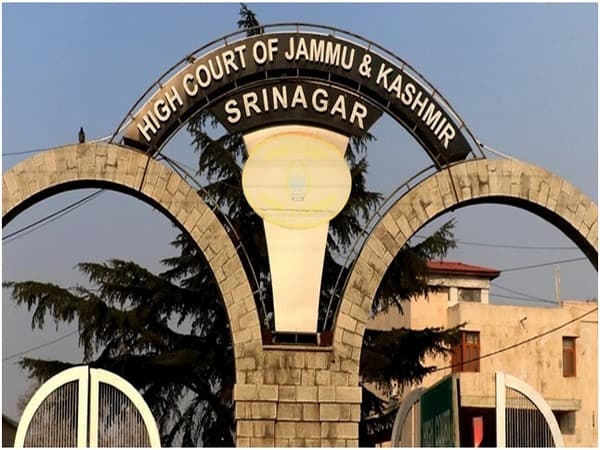
The Jammu & Kashmir and Ladakh High Court allowed a petition filed under Section 528 of the Bharatiya Nagarik Suraksha Sanhita, 2023, challenging an order passed by the Special Mobile Magistrate (Sub Judge), Poonch. The impugned order had rejected a Final Closure Report submitted by the police and directed the Station House Officer to conduct fresh investigation either himself or through another Investigating Officer not below the rank of Sub‑Inspector. The petitioners contended that the Magistrate had passed the order without assigning any reasons and solely on the basis of unsubstantiated allegations made in a protest petition.
The dispute originated from a complaint lodged before the Chief Judicial Magistrate, Poonch, by a respondent who alleged that the petitioners had trespassed into his house, assaulted him and his mother, damaged his motorcycle and threatened to kill him in connection with a boundary dispute concerning already partitioned land. Acting on the complaint, the Chief Judicial Magistrate directed registration of an FIR. Consequently, an FIR was registered at Police Station, Poonch, for offences punishable under Sections 452, 323, 427, 506 and 34 of the Ranbir Penal Code.
Upon completion of the investigation, the police concluded that no offence was made out and filed a Final Closure Report before the Magistrate. Along with the report, the investigating agency produced the statements of the complainant, his mother and other material witnesses recorded during the investigation, all of which, according to the police, did not support prosecution of the accused. The complainant thereafter filed a protest petition alleging that the Investigating Officer had deliberately altered the statements of the witnesses because of the influence allegedly exercised by a senior police officer related to both the complainant and one of the accused.
Accepting the protest petition, the Magistrate rejected the closure report and directed fresh investigation by another Investigating Officer without recording any detailed reasons. Aggrieved by this order, the accused approached the High Court under Section 528 BNSS.
Examining the impugned order, the Bench headed by Justice M. A. Chowdhary found that the Magistrate had neither analysed the material collected during investigation nor indicated any legal or factual infirmity in the Final Closure Report. The Court observed that before rejecting a closure report and directing further investigation, the Magistrate is duty‑bound to scrutinise the evidence collected by the investigating agency and record reasons explaining why such investigation cannot be accepted.
The Bench held that a mere allegation made in a protest petition that witness statements had been manipulated could not, by itself, justify an order for further investigation. The Court observed that if the Magistrate entertained doubts regarding the allegation that witness statements had been altered, it was incumbent upon him to summon the concerned witnesses and compare their statements with those recorded during investigation before arriving at any conclusion regarding alleged manipulation by the Investigating Officer.
The Court remarked that at least it was incumbent upon the learned Magistrate to call for those witnesses and confront them with the statements recorded so as to draw a satisfaction that their statements had been tampered with by the Investigating Officer and not recorded properly. The Bench further noted that the Magistrate had accepted the protest petition without examining the underlying material or providing a reasoned basis for concluding that the investigation was deficient.
Accordingly, the High Court allowed the petition, set aside the order of the Special Mobile Magistrate directing further investigation, and restored the Final Closure Report wastage of the Final Closure Report. The judgment underscores the requirement that judicial oversight of police investigations must be exercised with due diligence, and that magistrates must not act on protest petitions alone without applying their mind to the evidence on record.