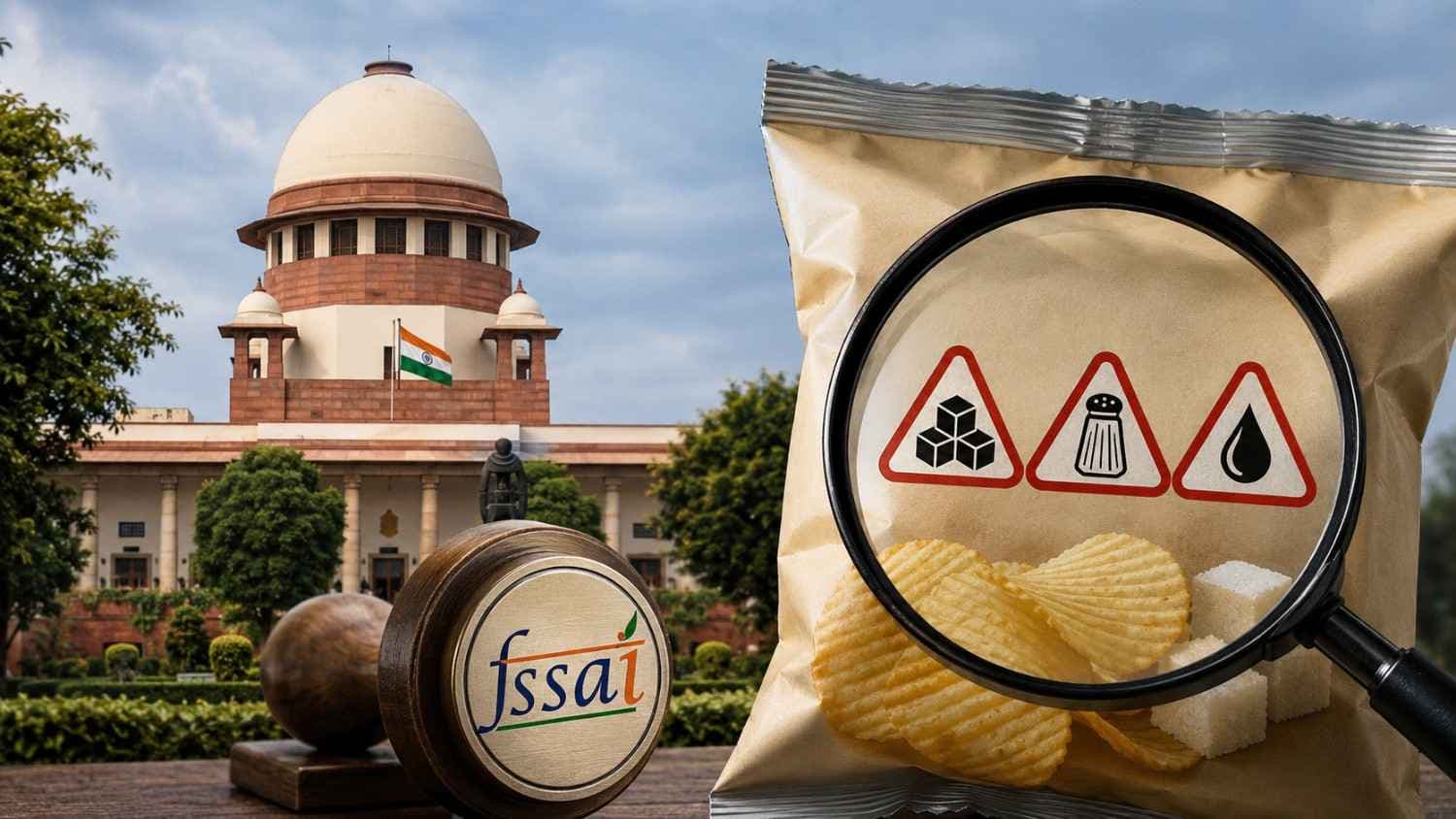
Have you ever picked up a packet of chips, biscuits, or a soft drink and struggled to understand the tiny nutrition table printed on the back? Making a genuinely healthy choice at the grocery store is about to get much simpler. The Food Safety and Standards Authority of India (FSSAI) has proposed bold, red-coloured warning labels on the front of packaged food products that are excessively high in added sugar, saturated fat, and salt.
This major consumer-friendly move comes after strong observations from the Supreme Court during hearings on public health petitions. The apex court emphasized that standard nutrition charts on the back of packages are often too technical for the average citizen to understand. Calling for simple and direct visual cues, the court underlined that clear labelling is essential to protect public health, especially when children are targeted by heavily advertised ultra-processed items.
Under the new proposal, packaged foods exceeding healthy nutritional limits will carry a distinct red hexagonal warning symbol directly on the front cover. Depending on the ingredients, these badges will feature clear, unmistakable alerts such as "High Sugar", "High Salt", "High Fat", or "Highly Sweetened Beverage". To ensure these alerts cannot be overlooked, the regulator has proposed that the warning text be printed in a font size larger than the standard nutritional table on the back.
The nutritional thresholds for these warnings will be aligned with the Dietary Guidelines for Indians developed by the Indian Council of Medical Research and the National Institute of Nutrition (ICMR-NIN). These standards are designed to curb the rapid rise of non-communicable diseases such as diabetes, hypertension, and obesity by setting scientific limits on daily nutrient consumption.
To allow the food manufacturing industry adequate time to adjust and reformulate their recipes, the warning system will be introduced in two distinct phases. In Phase I, the red warning symbol will be mandatory for products that exceed safety limits for two or more critical nutrients, as well as specific sweetened beverages. In Phase II, the rule will expand to cover items that are high in even a single specified nutrient.
A central goal of this initiative is to safeguard children and young adults, who are most vulnerable to catchy packaging and sugary snacks. A bright, eye-level warning helps parents, students, and everyday shoppers instantly spot ultra-processed snacks without needing to decode complex percentages or chemical terms in the ingredients list.
However, these warning labels will not apply universally to every grocery item. Single-ingredient products and traditional staples that are naturally rich in fat, sugar, or salt—such as pure ghee, edible cooking oils, raw sugar, jaggery, honey, and table salt are exempt from these front warnings, though they will continue to comply with standard safety regulations.
This proposed shift from complicated fine print to prominent front-of-pack visual warnings marks a decisive step toward transparent consumer rights. Once implemented, a simple glance at the packet will give you the clear truth about what is inside, making it easier than ever to build healthier eating habits for your family.