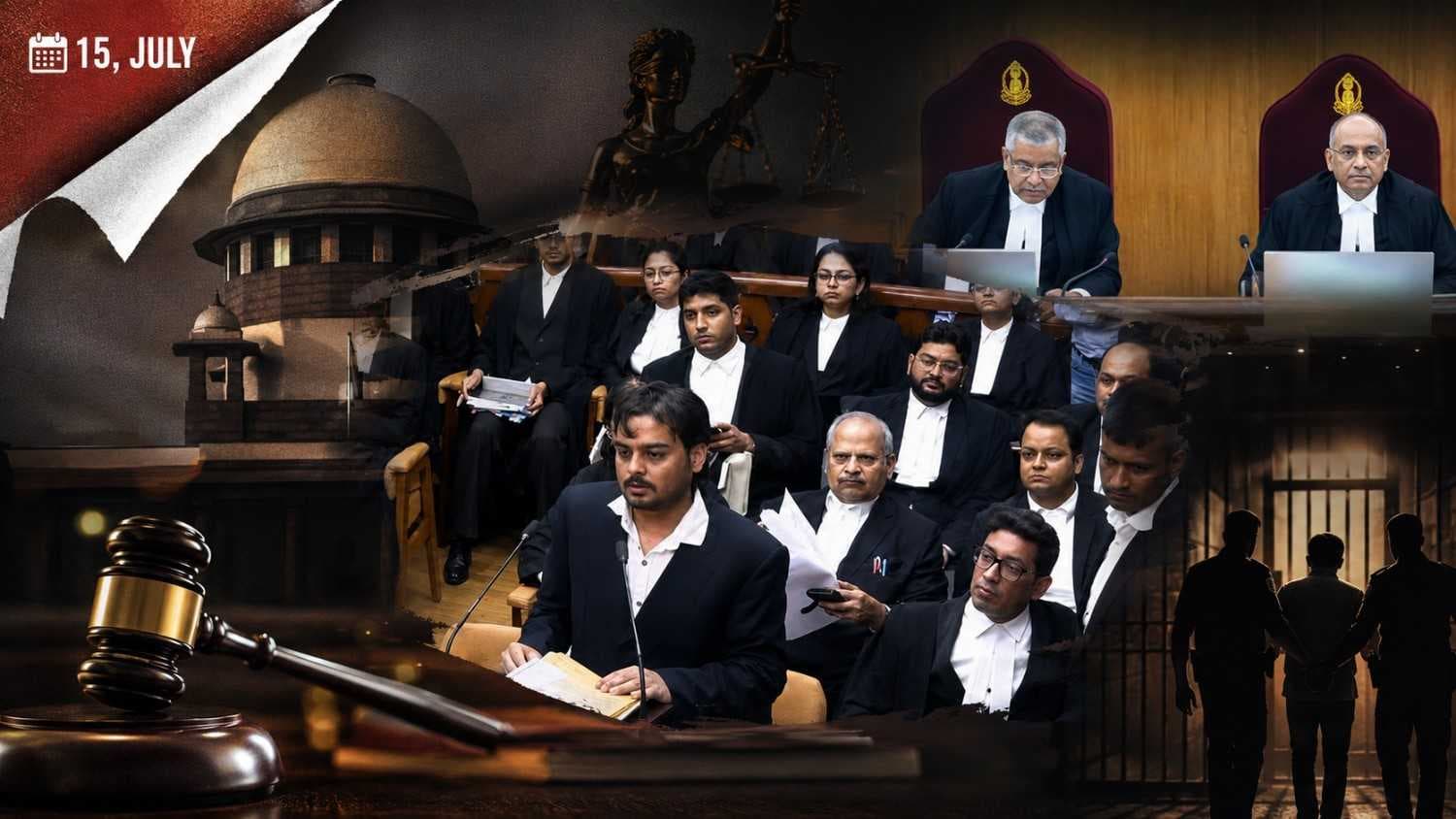
It was meant to be a routine hearing at the Supreme Court on July 10, 2026. Justice KV Viswanathan and Justice Alok Aradhe were presiding over a case, expecting the usual legal arguments. Instead, they were met with something entirely unexpected. Prabal Pratap Singh, a third-year law student from Lucknow University, stood before the bench as a petitioner-in-person, but he had no legal submissions to offer. Instead, he addressed the judges with a startling demand: “Mr. judicial servant, I order you to order the registration of an FIR.”
The courtroom went still. Justice Viswanathan, clearly taken aback, asked, “You are ordering me? You are ordering us?” Rather than engaging in a professional dialogue, the student simply replied that everything was on record and, in a shocking turn of events, threw his case files into the air. The situation escalated rapidly as he began using abusive language in open court. Even as security officers escorted him away, his disruptive behavior continued, allegedly extending to verbal abuse toward the Chief Justice of India.
The fallout was immediate. Court security personnel reported the incident to the Tilak Marg police station, leading to the arrest of two individuals: Prabal Pratap Singh and his associate, Chander Bhan, also a law student at Lucknow University. While the police have kept the specific legal provisions under wraps for now, it is clear the charges stem from the severe disruption of judicial proceedings and the use of abusive language against officers of the court.
Interestingly, the Supreme Court chose a path of restraint. In an order passed that same day, the Bench observed that they would not initiate contempt of court proceedings against the student. They seemed to weigh the incident against his status as a litigant appearing on his own behalf, choosing not to pursue punitive action for the lack of decorum. However, they did dismiss his underlying appeal against an earlier Allahabad High Court judgment, finding no grounds to interfere.
While the Supreme Court opted not to use its contempt powers, the law takes a different view. Under the Contempt of Courts Act, 1971, actions that scandalize or obstruct the administration of justice can carry serious penalties, including imprisonment and fines. Furthermore, the Indian Penal Code includes strict provisions for intentional insults and criminal intimidation directed at public servants. By pursuing this as a police matter rather than a judicial one, authorities have signaled that such behavior remains a criminal offense, regardless of the court’s personal decision to show leniency.
This bizarre episode highlights the delicate balance between the freedom of a citizen to represent themselves in court and the absolute necessity of maintaining order. It raises difficult questions: Where should the line be drawn for those appearing before the highest court in the land? Is there a need for stricter behavioral guidelines for self-represented litigants to ensure that the dignity of the judicial process is never compromised again?
As of now, both students remain in police custody while the investigation continues. The Supreme Court has moved on, having closed the book on the original case, but the echoes of this disruption remain a stark reminder of the respect required in the halls of justice. It serves as an cautionary tale for any aspiring legal mind about the weight of the bench and the serious consequences of forgetting one’s place in the courtroom.