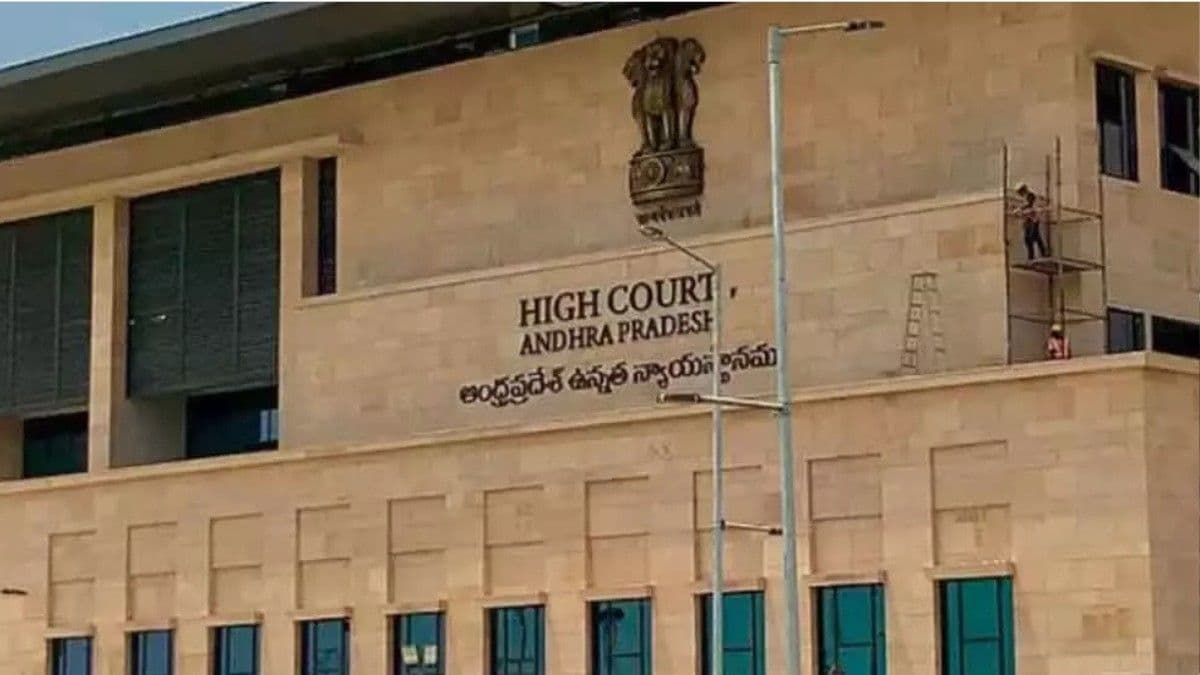
The Andhra Pradesh High Court, presided over by Justice Nyapathy Vijay, examined a petition filed by an MBBS student who had been declared ineligible to appear for the First Professional examination because the university had counted a period of discontinuation caused by financial hardship towards the statutory four‑year limit prescribed under the Graduate Medical Education Regulations, 2019 (GMER). The student contended that the break was necessitated by genuine financial constraints and that the university’s interpretation of the regulation was overly rigid and contrary to the object of the provision.
The Court began its analysis by noting the stringent nature of the MBBS curriculum and the intense preparation required for the National Eligibility cum Entrance Test (NEET). It observed that, in ordinary circumstances, a student would not voluntarily interrupt the course after successfully clearing NEET. This observation was made to underscore that any interruption is likely to be driven by compelling circumstances rather than mere lack of diligence.
Turning to the text of GMER 2019, the Court highlighted that the regulation stipulates a maximum period of four years within which a candidate must pass the First Professional examination. The regulation, however, does not expressly define whether periods of authorised discontinuation for valid reasons are to be excluded from this computation. The Court reasoned that the purpose of the time limit is to ensure timely progression through the medical course while preventing indefinite delay. It emphasized that the regulation was not intended to penalise students who are forced to suspend studies due to factors beyond their control, such as acute financial distress or serious health conditions.
The Bench further observed that treating such involuntary breaks as part of the limitation period would defeat the humanitarian intent underlying the regulation and could result in the exclusion of deserving candidates from the medical profession solely on account of socioeconomic adversity. The Court therefore held that the period of discontinuation taken by the student on account of genuine financial hardship must be excluded when calculating the four‑year window. Consequently, the student’s eligibility to appear for the First Professional examination was restored.
The judgment also addressed the broader implications for universities and examining bodies responsible for implementing GMER. The Court directed that institutional authorities must scrutinise claims of discontinuation and, where satisfied that the break arose from genuine financial hardship or health issues, exclude such periods from the computation of the prescribed limit. It warned against a mechanical application of the regulation that ignores the individual circumstances of students.
In practical terms, the decision provides a clear precedent for MBBS students across the country who encounter unavoidable interruptions in their studies. It affirms that the statutory time frame is not an absolute bar but is subject to equitable considerations. The ruling is likely to influence the formulation of internal policies by medical colleges, prompting them to establish transparent procedures for assessing and condoning genuine breaks.
The Court concluded by reiterating that the law must be interpreted in a manner that balances the objective of maintaining academic standards with the need to protect students from disproportionate hardship. It emphasized that the judgment does not dilute the requirement to complete the course within a reasonable period but merely ensures that genuine impediments are not held against the student’s progress.