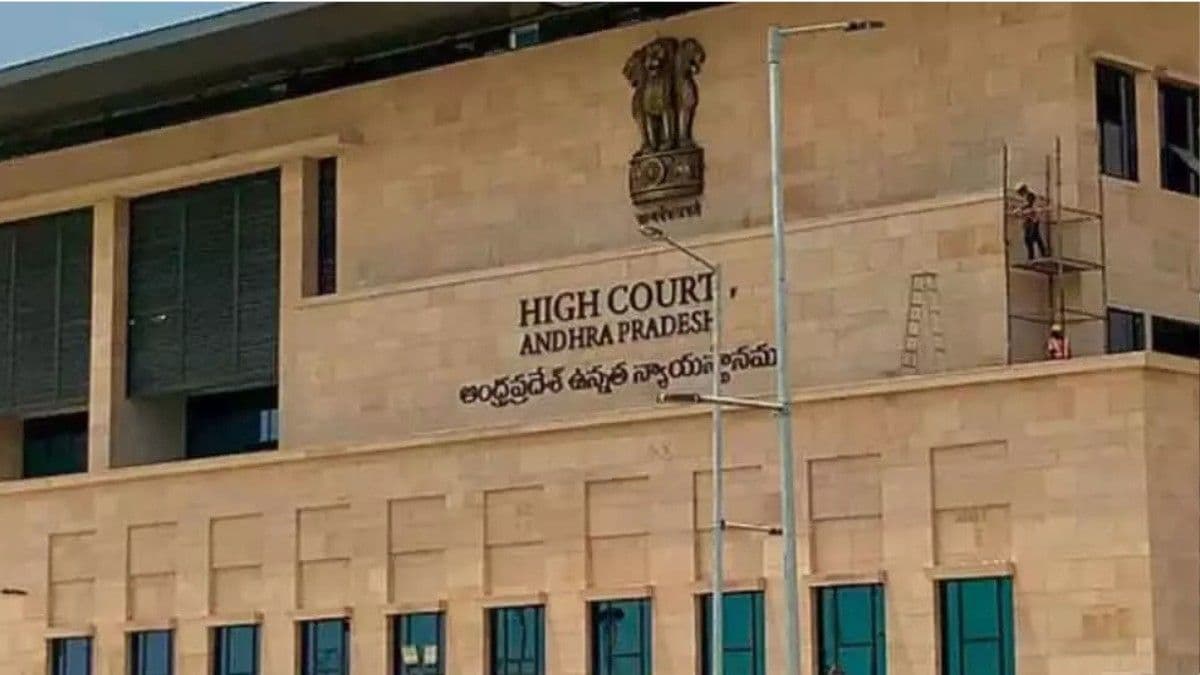
The Andhra Pradesh High Court considered a batch of petitions filed by candidates who had applied for Assistant Professor positions at Sri Venkateswara University. The petitioners contended that the Government Order issued by the State, which reduced the number of sanctioned teaching posts in various departments, violated their legitimate expectation to be considered for appointment. They argued that the reduction of posts thwarted the recruitment process and therefore infringed upon their right to equal treatment in public employment.
The Court, comprising Chief Justice Lisa Gill and Justice R. Raghunandan Rao, examined the scope of the State’s authority to create, abolish or rationalise posts in government educational institutions. It observed that the power to determine the cadre strength of teaching staff resides with the executive and is subject only to the constraints of statutory provisions, financial availability and administrative efficiency. The Court emphasized that this power is not fettered by the expectations of individuals who seek employment.
On the question of legitimate expectation, the Court held that a mere hope or desire to be considered for a vacancy does not give rise to a legally enforceable right to compel the State to retain or create a post. It clarified that legitimate expectation can arise only when there is a clear promise or an established practice that has been consistently followed, and even then it is subject to overriding public interest. In the present case, no such promise or practice was shown to exist.
The Court further noted that the rationalisation exercise was undertaken after a detailed review of the university’s financial position, student‑teacher ratios and workload norms. The Government Order was based on objective criteria aimed at ensuring optimal utilization of resources. The Court found no indication of mala fide intent, arbitrariness or discrimination in the impugned order. Consequently, the rationalisation survived judicial scrutiny.
Regarding the argument that the reduction of posts hampered the recruitment process, the Court stated that the State is not obliged to maintain posts merely to facilitate a selection procedure. It held that the recruitment process must conform to the existing cadre strength and cannot be used as a tool to compel the creation of additional positions. The Court observed that allowing such a contention would undermine the executive’s prerogative to manage public finances and administrative structures.
The judgment also referred to earlier pronouncements of the Supreme Court and various High Courts which have consistently held that the State’s power to rationalise posts is plenary and that claims based on legitimate expectation are limited in the context of public employment. The Court reiterated that any challenge to such executive action must demonstrate either a violation of statutory provisions or a manifestly unreasonable exercise of power.
In disposing of the petitions, the Court upheld the Government Order and directed that the recruitment proceedings continue on the basis of the revised sanctioned strength. It clarified that the decision does not affect the eligibility of candidates who meet the prescribed qualifications; it merely affirms that the State may adjust its faculty strength as it deems necessary in the interest of fiscal prudence and efficient administration.
The ruling underscores the principle that public employment opportunities are contingent upon the posts sanctioned by the appropriate authority and that aspirants cannot insist on the retention or creation of positions to suit their personal interests. It reaffirms the executive’s discretion in managing human resources within state‑run educational institutions while reminding that such discretion remains subject to judicial review for illegality or unreasonableness.