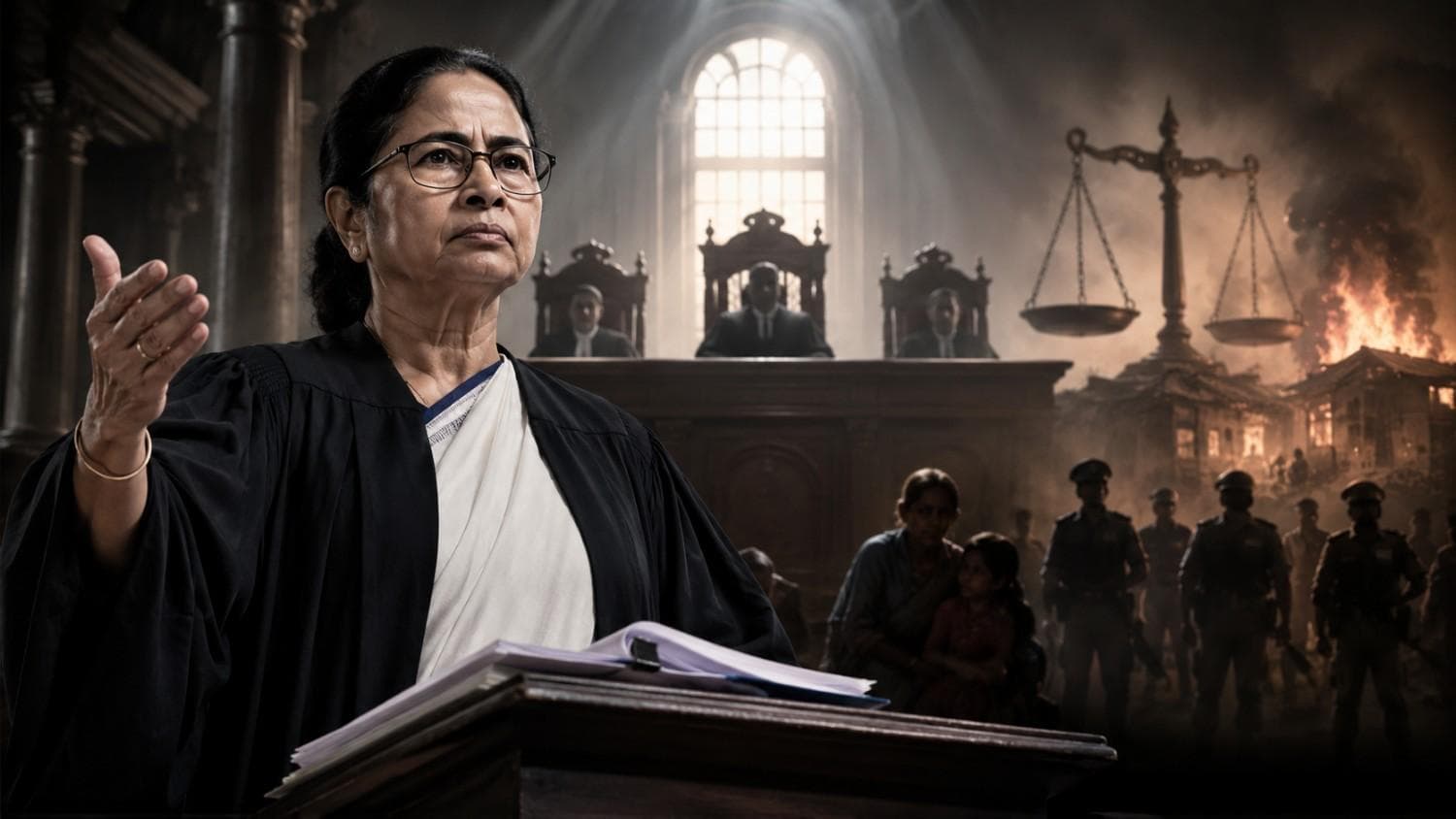
In a dramatic turn of events, former West Bengal Chief Minister Mamata Banerjee has once again stepped into the legal arena, donning her lawyer’s gown to personally argue a case before the Calcutta High Court. This appearance, which took place on May 14, 2026, marks a significant moment in regional politics, as the Trinamool Congress (TMC) leader transitions from the executive seat to the courtroom to address escalating post-poll violence in the state.
The case centers on a Public Interest Litigation (PIL) filed by advocate Shirshanya Bandyopadhyay, which alleges widespread attacks on TMC party offices and workers following the 2026 assembly elections. By appearing in person as a lawyer, a profession she has held a degree in since 1982, Banerjee is signaling that she views the current situation not just as a political crisis, but as a fundamental breakdown of the rule of law.
During the hearing before a division bench led by Chief Justice Sujoy Paul, I noted the intensity with which she argued for the "immediate protection of people". She brought forward harrowing accounts of arson and violence, claiming that police have been inactive while homes and shops were burned in their presence. Her rhetoric was clear: Bengal must not become a "bulldozer state," a direct jab at the political tactics she attributes to her opponents.
One of the most striking aspects of her submission was the human cost she detailed. She alleged that minorities, women, and even children have not been spared in the unrest. By submitting a list of ten murdered party workers and highlighting the displacement of a 92-year-old widow, she aimed to provide the court with tangible evidence of a deteriorating law and order situation that requires urgent judicial intervention.
This move is also a powerful symbolic gesture. For a leader whose party recently faced a major electoral defeat—ending a 15-year tenure—returning to her roots as a lawyer serves to reinforce her image as a "street fighter" who refuses to abandon her followers. It is a strategic attempt to reclaim the narrative, shifting the focus from the election loss to the defense of constitutional values and the safety of her supporters.
I believe this appearance highlights the deep-seated political friction currently gripping West Bengal. The allegations that police are refusing to register FIRs and that girls as young as 12 are being threatened with violence suggest a state of extreme polarization. By taking her arguments directly to the High Court, Banerjee is bypassing the executive machinery she once led, indicating a lack of faith in the current administrative response.
Furthermore, the legal specifics of the case involve challenges to the Election Commission’s special intensive revision (SIR) of voter lists, which Banerjee previously challenged in the Supreme Court. This suggests a multi-layered legal strategy aimed at questioning the very foundations of the recent electoral process while simultaneously seeking protection from its aftermath.
As the Calcutta High Court continues its deliberation on these PILs, the sight of a former Chief Minister in robes will likely remain a defining image of this post-election period. It serves as a reminder that in the complex landscape of Indian democracy, the courtroom often becomes the final battlefield for political survival and the protection of civil liberties.