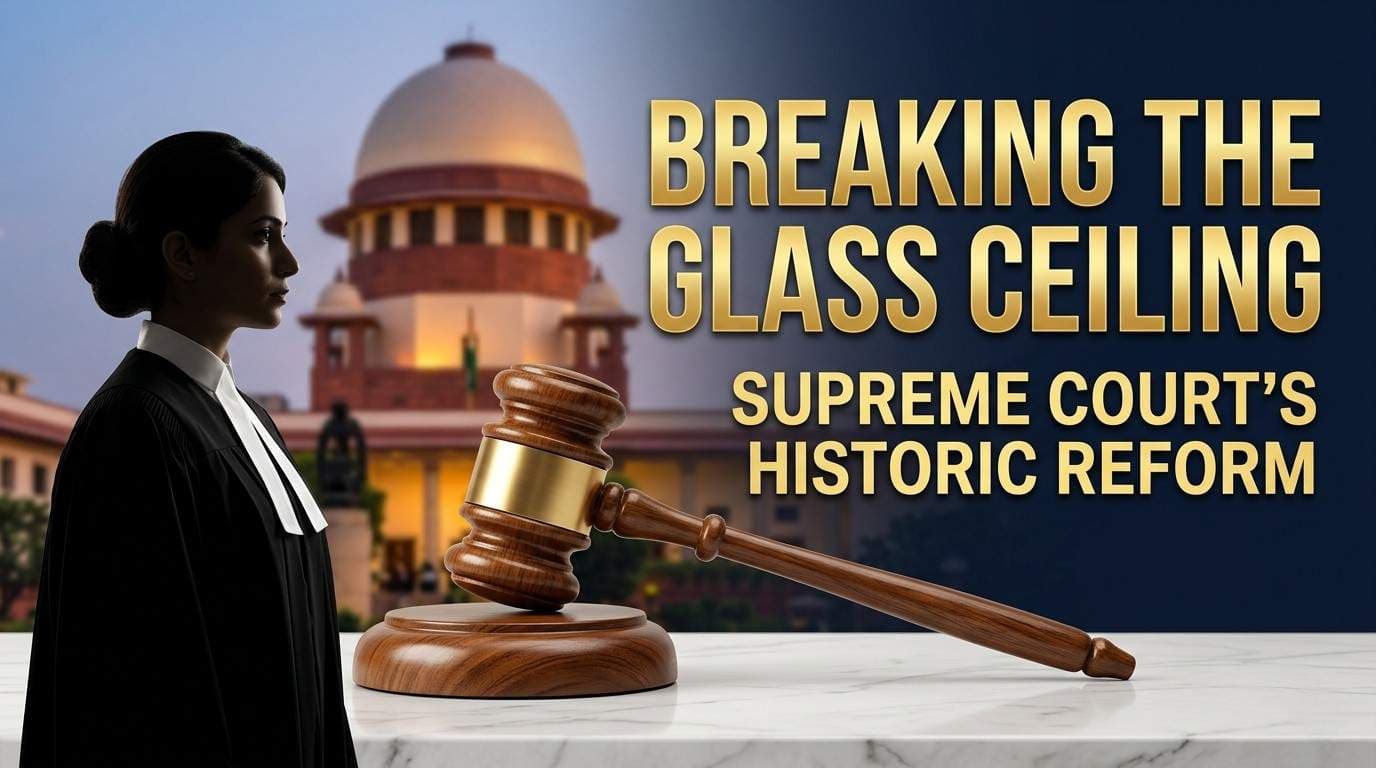
In a move aimed at dismantling the "glass ceiling" within India’s most influential legal body, the Supreme Court has proposed a structural reform to the Supreme Court Bar Association (SCBA). On May 8, 2026, a bench led by Justice Surya Kant suggested the creation of a second Vice President post, specifically reserved for women members, to be implemented from the 2027-2028 term onwards. This proposal is a significant step toward institutionalizing gender parity, ensuring that the leadership of the Bar reflects the increasing number of women practitioners who are shaping the future of the Indian judiciary.
The suggestion came during a hearing regarding the upcoming SCBA elections, where the Court is acting as a facilitator for internal reforms. Currently, the SCBA leadership is often dominated by a small, historically male-centric circle. By advocating for a reserved senior executive post, the Court is moving beyond symbolic inclusion toward "substantive representation." The bench noted that such a reform would provide women with a guaranteed voice in the decision-making processes that govern the professional welfare and ethical standards of the Supreme Court's advocate community.
From a legal standpoint, this proposal aligns with the broader constitutional mandate of Article 15(3), which allows the State (and by extension, the judiciary in its administrative capacity) to make special provisions for women. While the SCBA is a private society, its role is deeply intertwined with the functioning of the "Court of Record." The Supreme Court’s intervention underscores the belief that the Bar cannot be truly "representative" if its executive committee does not actively promote the leadership of its female members.
Strategically, the 2027 timeline provides the Association with a "cooling-off period" to amend its bylaws and prepare for the transition. This staggered implementation avoids disrupting the current 2026 election cycle while setting a clear, mandatory goal for the future. The Court also suggested that a similar reservation should be considered for the post of a "Joint Secretary" or "Treasurer," aiming to create a pipeline of female leadership across different levels of the Association’s hierarchy.
The proposal has sparked a healthy debate within the legal fraternity. Supporters view it as a long-overdue correction of historical imbalances, while some critics question whether "reservation" is the right tool for a merit-based profession. However, the Court’s stance appears rooted in the reality that "merit" often lacks opportunity without structural support. By creating a dedicated space, the Court is ensuring that talented women advocates have a platform to demonstrate their administrative and leadership capabilities without being overshadowed by traditional voting blocs.
Furthermore, this reform mirrors the national shift toward the Nari Shakti Vandan Adhiniyam (Women's Reservation Act) in legislative bodies. The judiciary is effectively saying that the Bar must lead by example. If the legal profession is to be the vanguard of social change, its own administrative structures must be the first to adopt modern standards of inclusivity. The SCBA, as the "Premier Bar," often sets the tone for State Bar Councils across India, making this proposal a potential catalyst for nationwide reform.
In the final analysis, the Supreme Court's suggestion for a woman Vice President is a masterclass in "Evolutionary Justice." It recognizes that traditions must evolve to remain relevant. As the SCBA moves toward its next election, the shadow of this proposal will encourage a more diverse field of candidates. To understand this move is to realize that the halls of justice are most effective when the people who manage them represent the full diversity of the society they serve. The robe may be black, but the leadership of the Bar is finally being invited to be more colorful.