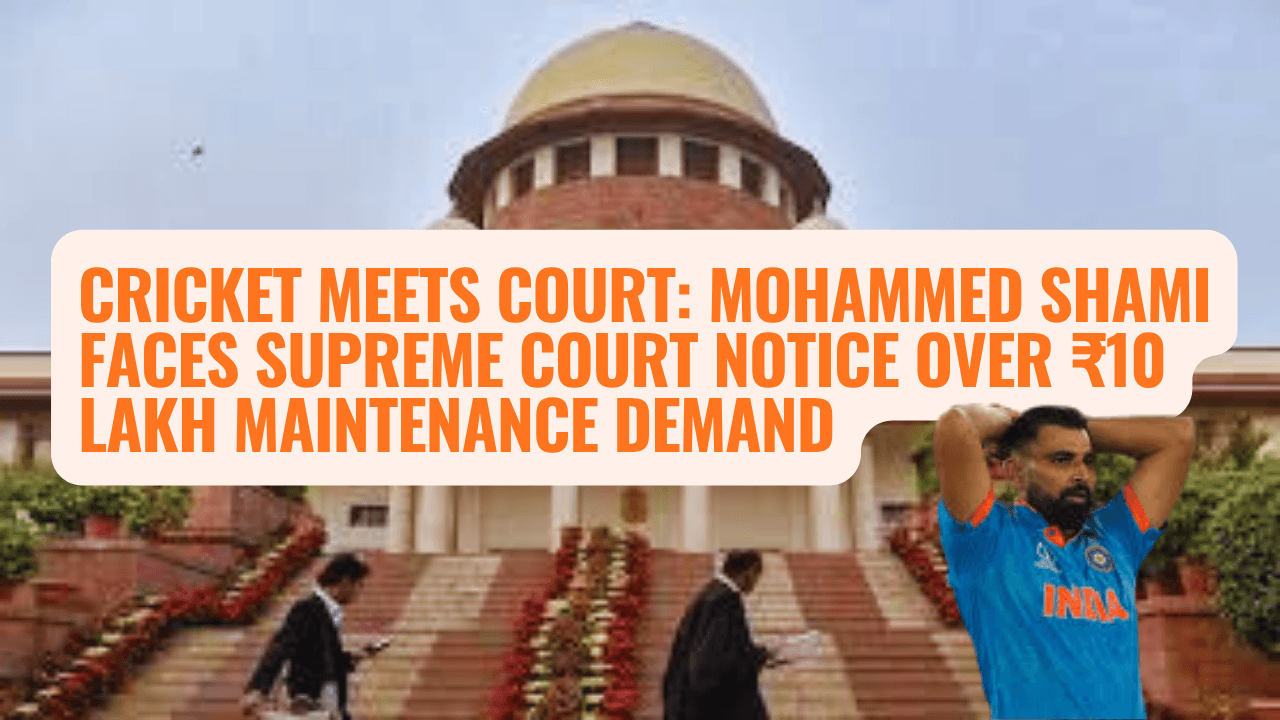
The Supreme Court has issued notice to Indian cricketer Mohammed Shami on his estranged wife Hasin Jahan's petition seeking ₹10 lakh monthly maintenance for herself and their daughter. Jahan challenged the Calcutta High Court's order granting ₹4 lakh per month (₹1.5 lakh for herself and ₹2.5 lakh for her daughter), calling it "grossly inadequate" given Shami's status as an A-list cricketer and his "lavish lifestyle." However, the Supreme Court bench of Justices Manoj Misra and Ujjal Bhuyan remarked, "Why have you filed this? Isn't ₹4 lakh per month quite handsome?"
The Background: A Marriage That Broke Down
The legal battle stems from a tumultuous marital breakdown that became public in 2018. Hasin Jahan filed an FIR against Mohammed Shami alleging domestic violence, adultery, and abuse. She accused him of having extramarital affairs and subjecting her to physical and mental cruelty. The cricketer denied the allegations, but the marriage had irretrievably broken down.
Since then, the couple has been locked in legal proceedings regarding maintenance for Jahan and their daughter. The case highlights the intersection of celebrity status, domestic violence allegations, and maintenance jurisprudence in India.
The Maintenance Dispute: How Much Is Adequate?
Hasin Jahan's argument is straightforward: Mohammed Shami is one of India's premier fast bowlers with a BCCI Grade A contract, lucrative IPL deals, and numerous endorsements. She contends that his earnings are substantial and that he maintains a lavish lifestyle. Therefore, ₹4 lakh per month does not reflect his actual financial capacity or provide adequate support for her and their daughter.
The Supreme Court's initial reaction, however, suggests skepticism about this claim. The bench's observation that "₹4 lakh per month is quite handsome" reflects a view that this amount is substantial by most standards. For context, this is significantly higher than what most Indian families earn or spend monthly.
Celebrity Status and Maintenance: The Legal Framework
Under Indian law, maintenance amounts are determined based on several factors: the husband's income and assets, the wife's needs and standard of living during marriage, the needs of children, and reasonable expenses. When celebrity status is involved, courts must balance the spouse's actual earning capacity against what constitutes reasonable maintenance.
The challenge in celebrity maintenance cases is that high earnings don't automatically translate to proportionately higher maintenance obligations. Courts must distinguish between providing adequate support and penalizing success. The question becomes: should maintenance mirror the celebrity lifestyle, or should it provide comfortable support while being reasonable?
This case will test how courts approach maintenance in high-profile marriages where earning capacity is exceptional but the marriage has ended in acrimony. As the Supreme Court examines the matter, it will need to balance Hasin Jahan's right to adequate support with concerns about what constitutes reasonable maintenance. The outcome could influence how celebrity divorce cases are handled in India's courts.