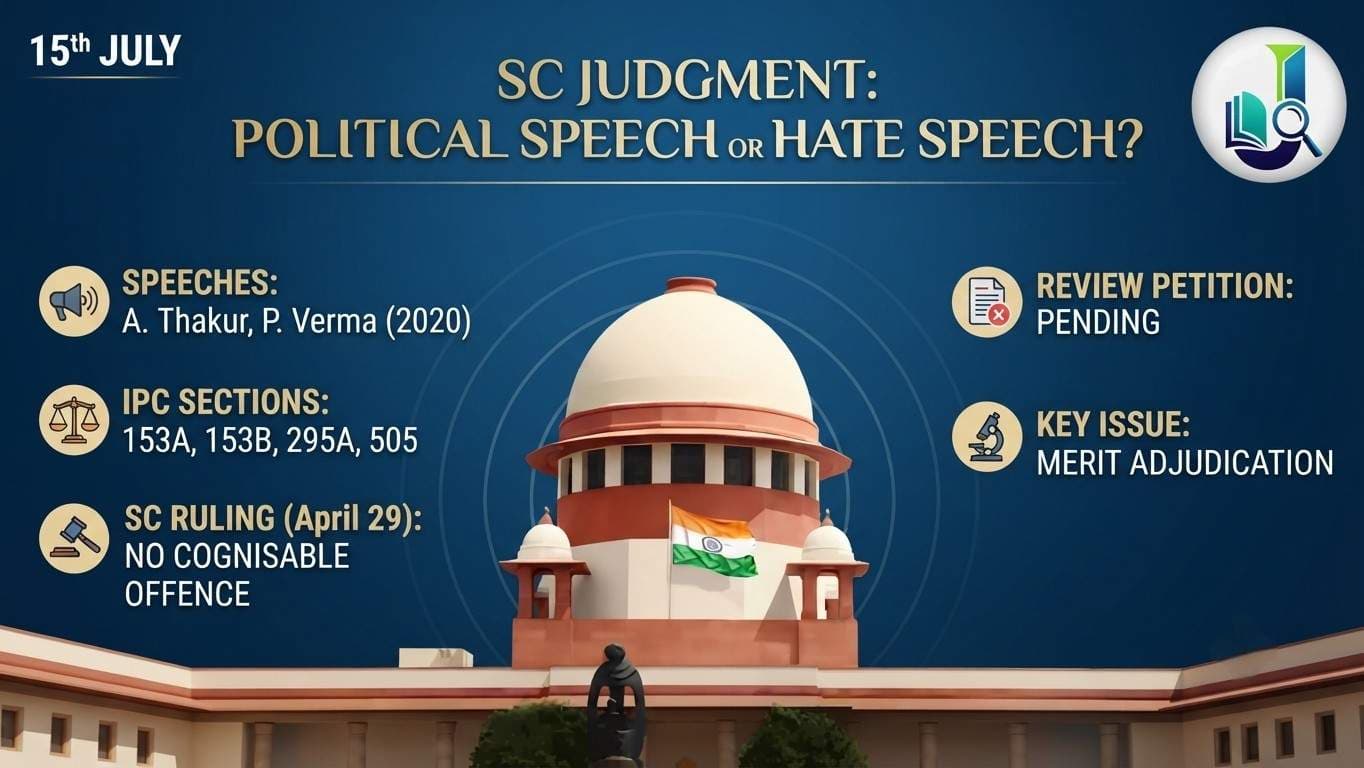
The controversy stems from speeches delivered by Anurag Thakur on January 27, 2020, at a rally where he reportedly shouted the slogan “desh ke gaddaron ko, goli marron saalon ko”, and from remarks made by Parvesh Verma during the same period describing the Shaheen Bagh protestors as “infiltrators” who would “enter your homes and rape your daughters and sisters and kill them”. Brinda Karat, acting through counsel, submitted a complaint alleging that these statements disclosed offences under Sections 153A, 153B, 295A and 505 of the Indian Penal Code. She approached the Magistrate seeking direction for registration of a First Information Report under Section 156(3) of the Code of Criminal Procedure. The Magistrate declined to register an FIR, a decision that was upheld by the Delhi High Court.
The High Court’s order was confined to the question of whether prior sanction under Section 196 of the CrPC was required before a Magistrate could direct investigation under Section 156(3). The High Court expressly recorded that it had not examined the merits of the allegations and that any observations made in its judgment would have no bearing on the substantive issues in any future proceeding.
Supreme Court’s April 29 Judgment
A Bench comprising Justice Vikram Nath and Justice Sandeep Mehta dismissed Karat’s special leave petition. While the Bench partly allowed her appeal by overruling the High Court’s stance on the requirement of prior sanction, it proceeded to record its agreement with the conclusion that no cognisable offence was made out. This observation appears in paragraphs 136 to 138 of the judgment. The Court reasoned that the impugned speeches did not refer to any particular community, and therefore the ingredients of the alleged offences under the cited IPC sections were not satisfied. The Bench endorsed the view taken by the High Court and the police status report, which had similarly concluded that the slogan constituted political criticism rather than hate speech.
The Supreme Court did not undertake an independent examination of the evidentiary material, which included video recordings of the speeches and the findings of the Election Commission of India. Instead, it relied on the reasoning already expressed by the lower courts and the police report.
Grounds Raised in the Review Petition
The review petition, filed through advocates Sylona Mohapatra, Tara Nirula and Adit Pujari, contends that the Supreme Court committed an error apparent on the face of the record by deciding the merits of the hate speech allegations despite the fact that neither the trial court nor the Delhi High Court had adjudicated those merits. It emphasises that the parties’ arguments before the Supreme Court were limited to the procedural question of sanction under Section 196 CrPC, and that the Court’s foray into the substantive issue was therefore unwarranted.
The petition further points out that the Election Commission of India, in January 2020, had found that the speeches violated the Model Code of Conduct, possessed the potential to aggravate existing differences and create mutual hatred between religious communities, and consequently removed both leaders from the list of the BJP’s star campaigners while imposing campaign bans. Karat argues that this authoritative finding, together with the audiovisual evidence, warranted a fresh consideration of whether the speeches disclosed a cognisable offence.
According to the petition, the Supreme Court’s reiteration of the “no cognisable offence” conclusion was made without assigning independent reasons, despite the evidentiary material placed before it. The review seeks the recall of that finding and a direction to the Court to adjudicate the merits of the allegations after hearing the parties on that specific issue.
Implications of the Review
If the review petition is admitted, the Supreme Court will be required to revisit the substantive question of whether the alleged speeches constitute hate speech under the IPC. Such a determination would have bearing on the applicability of Sections 153A, 153B, 295A and 505, and could influence the threshold for prosecuting political speech that is alleged to target or vilify particular groups. The outcome may also clarify the interplay between the Election Commission’s findings under the Model Code of Conduct and the criminal law framework governing hate speech.
At present, the matter remains pending before the Supreme Court, awaiting a decision on the maintainability of the review petition. The parties have not yet been directed to file counter‑affidavits, and no interim order has been passed on the merits of the allegations.