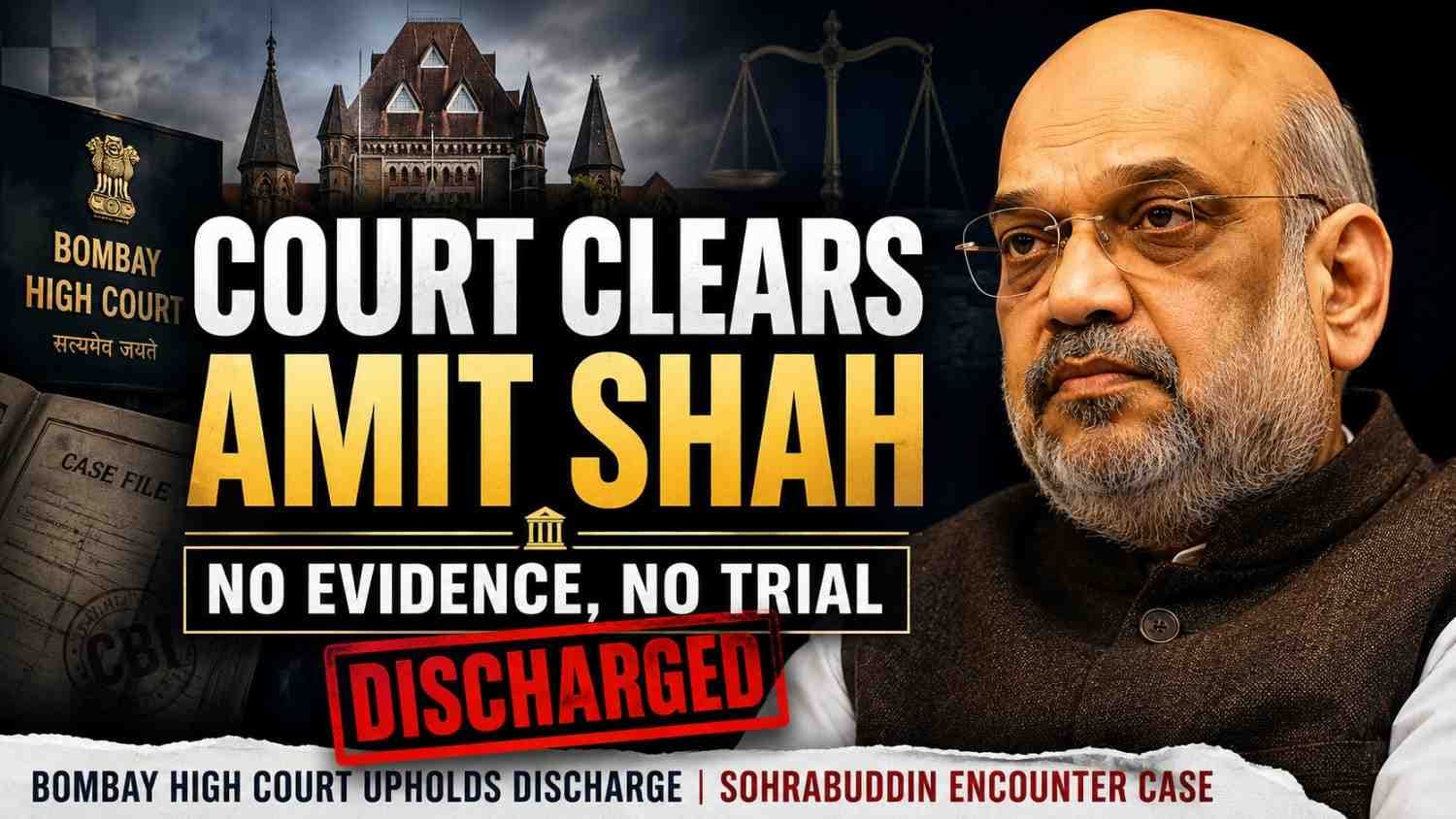
The Bombay High Court has officially upheld the discharge of Amit Shah in the Sohrabuddin Sheikh fake encounter case, dismissing several revision petitions that challenged the lower court's decision. This ruling marks a significant judicial conclusion to years of litigation surrounding the 2005 encounter. The court’s decision reinforces the earlier findings of the Special CBI Court, which had cleared the leader of all charges due to a lack of substantial evidence linking him to the alleged conspiracy.
The legal challenge was brought forward by the brother of the deceased, Rubabuddin Sheikh, and later supported by various social activists. They argued that the discharge was premature and that there was sufficient circumstantial evidence to warrant a full trial. However, after a detailed review of the records, the High Court found that the prosecution had failed to establish a prima facie case that would justify putting the politician on trial for the encounter and the subsequent disappearance of Kausar Bi.
In the judgment, the court emphasized that the mere presence of phone calls or administrative contact between a Home Minister and police officials does not automatically imply a criminal conspiracy. The bench noted that the evidence presented by the CBI was largely based on hearsay and lacked the necessary corroboration to link the respondent to the specific criminal acts. Consequently, the court found no "patent illegality" in the Special Court's original order of discharge.
The court also addressed the petitions filed by several high-ranking police officers who were seeking similar discharge. While the court upheld the discharge for some, it maintained a strict standard of evidence for all parties involved. The ruling clarifies that the judicial process must rely on concrete legal proof rather than public perception or political narratives, ensuring that the rights of the accused are protected against unsubstantiated claims.
A key aspect of the ruling was the dismissal of the plea filed by the Bombay Lawyers Association, which had questioned the CBI’s decision not to challenge the discharge. The High Court maintained that it is within the investigative agency's discretion to decide whether to appeal, provided the decision is not based on external pressure. This aspect of the judgment underscores the autonomy of investigative bodies, even in high-profile political cases.
From an expert legal perspective, this judgment highlights the high threshold required to overturn a discharge order in a criminal revision. To succeed, petitioners must demonstrate that the lower court ignored vital evidence or committed a grave error in law. The High Court’s refusal to interfere suggests that the initial discharge was legally sound and that the evidence against the respondent was "thin" and insufficient to sustain a conviction.
The closure of this case regarding the primary accused has broad implications for the remaining defendants in the trial. By affirming that the alleged "mastermind" or central figure could not be linked to the crime by the evidence at hand, the structural integrity of the prosecution’s conspiracy theory was significantly weakened. This result serves as a reminder of the burden of proof that rests squarely on the shoulders of the prosecution in the Indian criminal justice system.
Ultimately, the Bombay High Court's decision brings an end to a long-standing legal controversy. By meticulously reviewing the case files and upholding the discharge, the judiciary has signaled its commitment to the rule of law, focusing strictly on the merits of the evidence. The ruling ensures that legal proceedings are governed by the strength of the case presented in court, rather than the stature of the individuals involved.