
Manjit Thakur
Law Student | Passionate about Advocacy, Legal Research & Social Justice | Future Litigator
Articles by Manjit Thakur
Page 24 of 29
 High Court Judgements
Child Born Within Four Months of Marriage Entitled to Equal Share in Father’s Property: Kerala High Court
The Kerala High Court has ruled that a child born shortly after marriage is a legitimate heir entitled to an equal share of their father's property. Relying on Section 112 of the Evidence Act, the Court clarified that legitimacy is determined by the date of birth within a valid marriage, not the date of conception, protecting children's rights against claims of pre-marital conception.
 High Court Judgements
Customary Divorce Beyond HMA Requires 'Solid Evidence' to be Recognised, Reiterates Delhi High Court
This article details the Delhi High Court's significant ruling on Hindu customary divorce, emphasizing that any custom asserted to override the provisions of the Hindu Marriage Act, 1955, must be supported by "solid evidence." It highlights the "heavy burden of proof" placed on the asserting party to establish the custom's antiquity, certainty, and conformity with public policy.
 Supreme Court Judgement
Delayed Chargesheet Can Quash Criminal Case, Supreme Court Says
Quashing proceedings against an IAS officer facing an 11-year unexplained delay in further investigation, the Supreme Court lays down crucial guidelines to ensure judicial control, transparency, and timely completion of criminal probes.
 Constitutional
Supreme Court Answers Presidential Reference on Bill Assent Timelines: Key Takeaways
In a landmark ruling on a Presidential Reference, the Supreme Court has clarified the limits of the Governor’s powers under Articles 200 and 201. The Constitution Bench held that Governors cannot indefinitely withhold assent to State Bills and must choose among constitutionally permitted options. While preserving gubernatorial discretion, the Court barred judicially imposed timelines and rejected any concept of ‘deemed assent,’ reshaping the legislative relationship between States and the Union.
 Supreme Court Judgement
Landmark SC Ruling: Boarding the Wrong Train Does Not End Bona Fide Passenger Status
The Supreme Court of India delivered a landmark judgment holding that Railways cannot deny compensation merely because a passenger boarded the wrong train. The Court restored ₹8 lakh compensation to the victim’s family, reaffirming strict liability under Section 124A of the Railways Act.
 Supreme Court Judgement
Supreme Court Recalls ‘Vanashakti’ Judgment: 2:1 Majority Restores Grant of Post-Facto Environmental Clearances; Justice Bhuyan Dissents
In a major relief to the real estate and infrastructure sectors, the Supreme Court has recalled its May 2025 judgment that barred ex-post facto Environmental Clearances. In a 2:1 split verdict, CJI B.R. Gavai and Justice K. Vinod Chandran prioritized public interest and precedent, while Justice Ujjal Bhuyan penned a sharp dissent terming the move a "step in retrogression."
 Supreme Court Judgement
Virtual Witnesses Must Get Prior Statements Electronically: SC
The Supreme Court of India has issued a landmark directive requiring Trial Courts to electronically transmit previous statements to witnesses testifying via video conferencing. This ruling closes a major procedural gap in virtual trials, ensuring effective cross-examination and protecting the fundamental right to a fair trial.
 High Court Judgements
Mother Can Claim Maintenance From Son, Kerala HC Says
In a landmark judgment reinforcing the rights of senior citizens, the Kerala High Court has held that a son’s legal obligation to maintain his mother is independent of her husband's support. Justice Dr. Kauser Edappagath termed it a "moral failure" for an affluent son to expect his 60-year-old mother to rear cattle for a livelihood. Read the full analysis of Farookh vs. Kayyakkutty and what Section 144 BNSS means for parental maintenance.
 News
GST Notice By Registered Email Is Valid Service: Delhi HC
A major ruling by the Delhi High Court clarifies that official notices, orders, and summons under the GST Act are validly served when sent solely to the email address provided during registration. This decision solidifies the digital shift in tax compliance and places a strong responsibility on taxpayers to monitor their official email communications.
 News
Can an Accused Approach High Court Directly for Anticipatory Bail? Supreme Court Refers Issue to Larger Bench
The Supreme Court has referred the crucial legal question of whether High Courts should routinely entertain anticipatory bail pleas before Sessions Courts to a larger three-judge bench, while also agreeing to hear the Kerala High Court Advocates' Association, which strongly defends the current practice.
 News
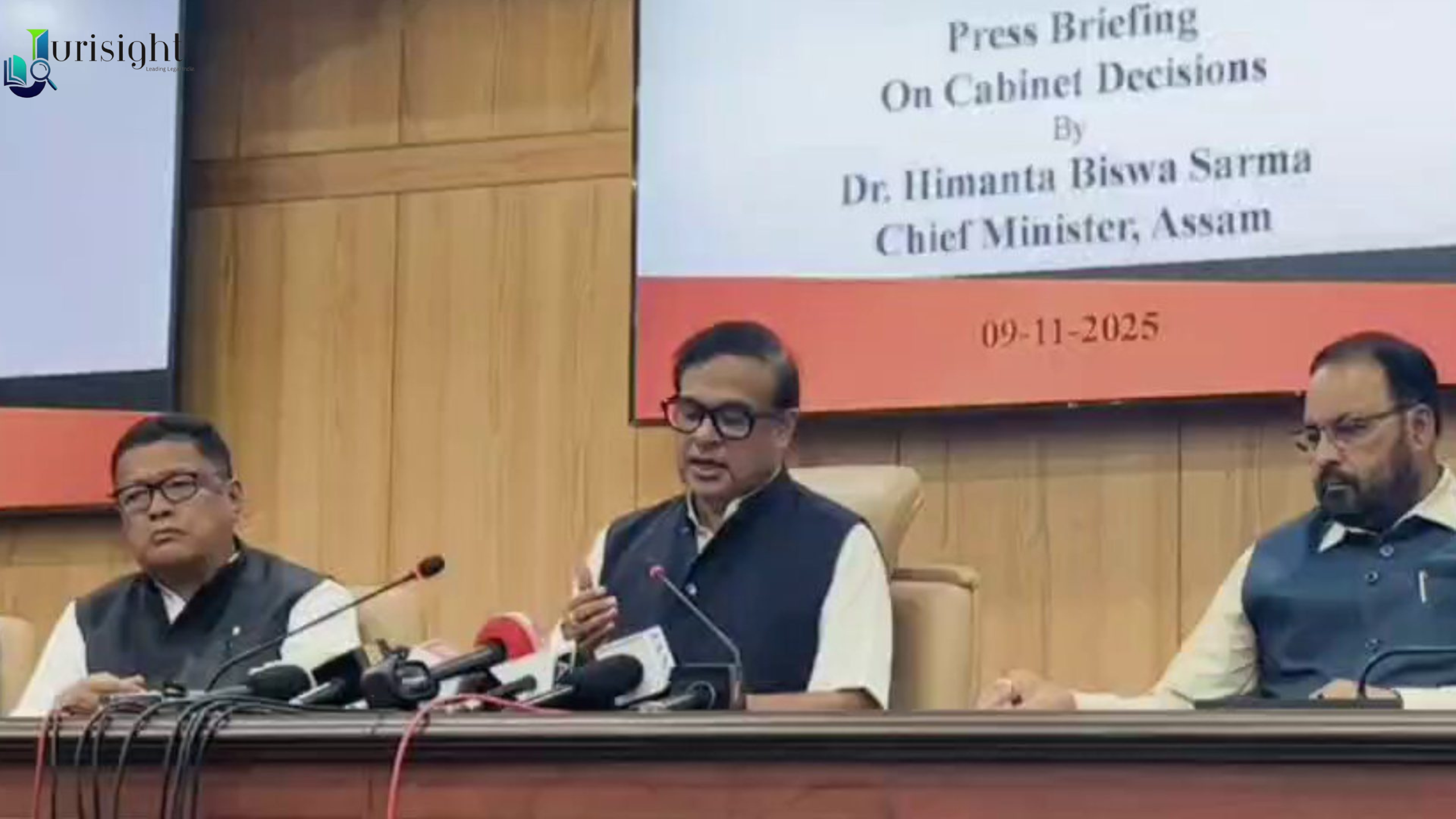
Assam Cabinet Approves Bill to Ban Polygamy; Proposes 7 Years Jail and Compensation for Victims
Assam Cabinet Greenlights Polygamy Ban Bill; proposes seven years rigorous imprisonment for offenders and establishes a dedicated compensation fund for affected women. Tribal and Sixth Schedule areas are exempted initially.
 Supreme Court Judgement
"Arrest and Remand Illegal If Written Grounds of Arrest Not Communicated at Least Two Hours Before Magistrate Appearance: SC"
In a landmark ruling, the Supreme Court held that grounds of arrest must be given in writing for all offences, including BNS/IPC. Failure to provide them at least 2 hours before remand will render the arrest illegal.