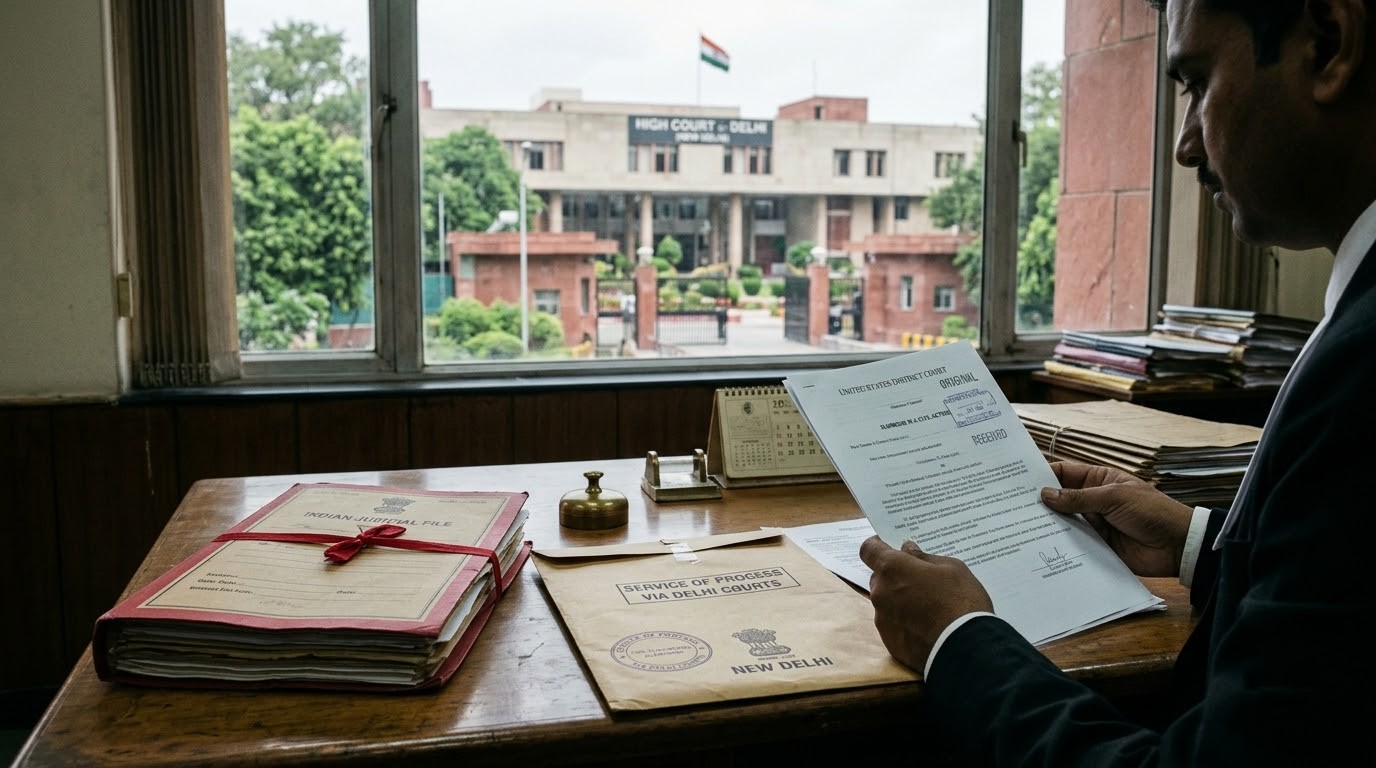
The United States District Court for the Southern District of New York has authorised Gurpatwant Singh Pannun to effect service of process on National Security Advisor Ajit Doval and former Research and Analysis Wing chief Samant Goel through district courts in Delhi. The order, passed by District Judge Katherine Polk Failla on November 9, arises from a civil suit filed by Pannun in 2024 alleging a conspiracy by the Government of India and named officials to assassinate him on American soil in connection with his activities for the Khalistan movement.
How Did the Court Authorise Service Through Indian Courts?
Judge Failla accepted Pannun's argument that Article 19 of the Hague Convention on the Service Abroad of Judicial and Extrajudicial Documents permits service through judicial authorities in the destination state. Pannun demonstrated that prior attempts to serve Doval during his US visits were thwarted by security personnel, and requests routed through India's Central Authority at the Ministry of Law and Justice had failed. The court had previously rejected alternative methods, including email service on India's Attorney General and service by publication, on April 1. The US State Department advised that service through diplomatic channels under the Foreign Sovereign Immunities Act was unavailable due to India's reservation on Article 8 of the Convention, though it took no position on the judicial route now approved.
The court relied on Section 29(c) of India's Code of Civil Procedure (CPC), which allows summons issued by foreign civil courts to be transmitted to Indian courts for service, provided the Central Government has notified the provision's applicability. The court noted a January 2009 notification extending Section 29 to civil courts of countries party to the Hague Convention. It further referenced Order V Rule 21 of the CPC, governing transmission of summons between courts having jurisdiction over a defendant's residence. Pannun has been directed to submit a proposed service packet by November 30 for transmission by the Clerk of Court to the identified Delhi courts.
Method Attempted | Legal Basis | Outcome |
|---|---|---|
Personal service during US visits | Standard process | Blocked by security personnel |
India's Central Authority (Ministry of Law) | Hague Convention Article 5 | Failed |
Email service on Attorney General of India | Court discretion / Hague Convention | Rejected April 1 |
Service on co-defendant's counsel in unrelated case | Court discretion | Rejected April 1 |
Service by publication | Court discretion | Rejected April 1 |
Diplomatic channels (FSIA) | 28 USC 1608 / Hague Article 8 | Unavailable due to India's Article 8 reservation |
Service through Delhi District Courts | Hague Convention Article 19 / CPC Section 29(c) & Order V Rule 21 | Allowed November 9 |
The operative disposition requires Pannun to file the service packet by the stipulated deadline, after which the New York court clerk will transmit documents to the Delhi district courts for execution of service in accordance with Indian procedural law. The ruling addresses only the procedural mechanism for service of process and does not adjudicate the merits of the underlying assassination allegations.