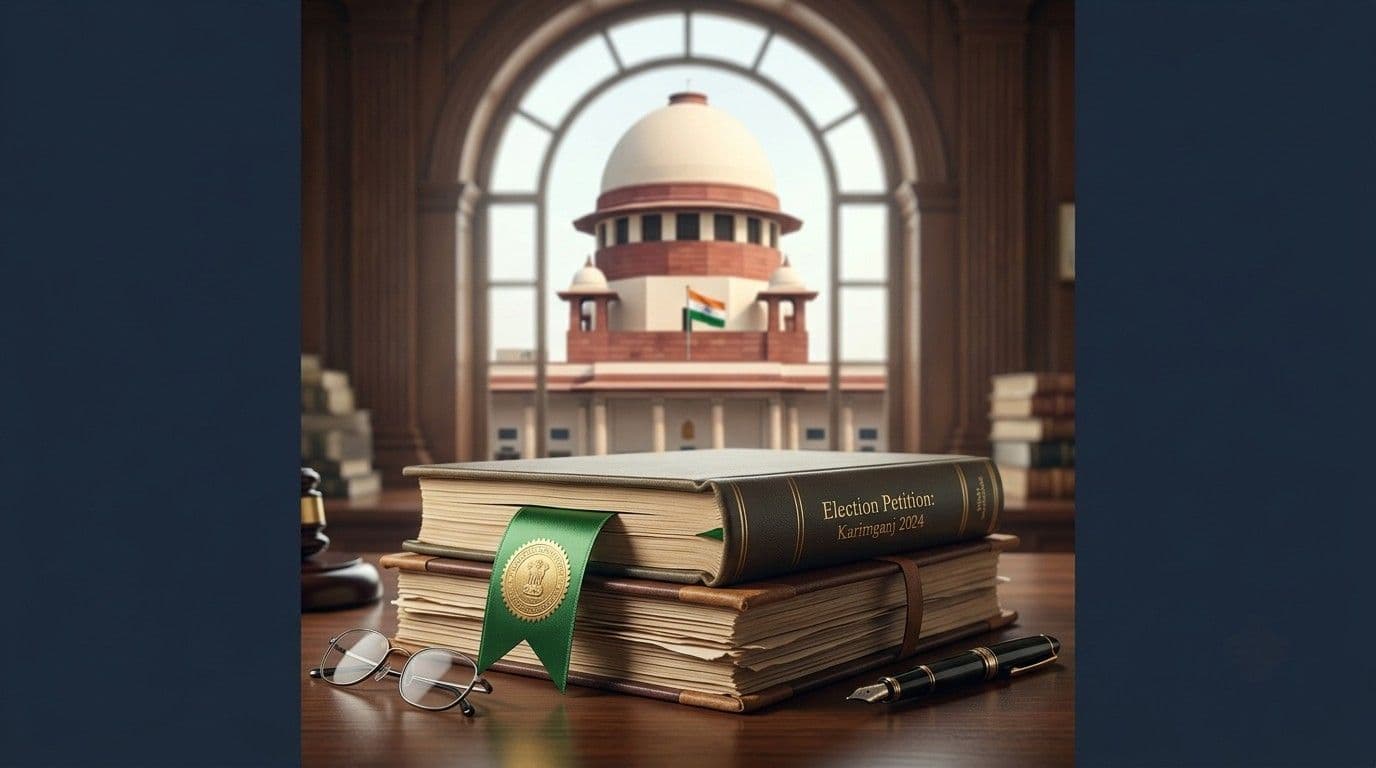
In a notable legal development concerning parliamentary accountability and electoral integrity, the Supreme Court of India has revived a challenge against the election victory of a Member of Parliament from Assam. The top court overturned a previous high court ruling that had thrown out the challenge before a full trial could take place, thereby paving the way for a deeper examination into the allegations surrounding the contest.
The case originates from the Karimganj Lok Sabha constituency in Assam, where senior advocate and Indian National Congress candidate Hafiz Rashid Ahmed Choudhury contested against Bharatiya Janata Party candidate Kripanath Mallah during the 2024 General Elections. Following the declaration of results where the margin between the two contenders stood at 18,360 votes the outcome was formally contested under the provisions of the election laws.
Choudhury approached the Gauhati High Court with an election petition alleging corrupt practices under Section 123 of the Representation of the People Act, 1951. The petition sought judicial scrutiny over the conduct of the election and argued that improper procedures had materially affected the final electoral outcome in the constituency.
However, the returned candidate filed a preliminary objection arguing that the petition lacked adequate material particulars and failed to meet statutory requirements. Agreeing with this initial objection, the Gauhati High Court dismissed the election petition at the threshold under procedural rules, preventing the matter from proceeding to a detailed evidence stage or a full trial.
Aggrieved by the dismissal, the petitioner escalated the dispute to the Supreme Court by filing a statutory civil appeal. The appeal challenged the summary rejection, asserting that serious allegations of electoral malpractice deserve a comprehensive hearing rather than an outright dismissal at the initial stage.
A Supreme Court bench comprising Justice J.B. Pardiwala and Justice K. Vinod Chandran took up the matter for consideration. After evaluating the statutory provisions and established constitutional precedents governing election trials, the bench ruled in favor of the appellant and formally allowed the appeal.
In its pronouncement, the bench underscored the significance of prior Constitution Bench judgments regarding the maintainability and threshold examination of election petitions. By setting aside the High Court's dismissal order, the top court effectively restored the election petition to the judicial docket for further proceedings in accordance with the law.
This ruling brings the electoral contest in Karimganj back under judicial scrutiny, reinforcing the principle that substantial legal challenges to election outcomes must be thoroughly evaluated to maintain public faith in the democratic process.